Import Video Brochures From China: Complete Buyer’s Guide
Whether you are ordering your first sample or planning a large campaign, this page will walk you through the most important things buyers should know before production starts.
Importing video brochures from China may look simple at first. But once a real project begins, most buyers quickly realize that video brochures are very different from ordinary printed products.
You are not only dealing with paper printing. You are also managing screens, batteries, speakers, firmware, charging systems, packaging, shipping regulations, and production coordination — all in one product.
A supplier may show beautiful sample photos online, but the real problems usually appear later:
* The screen color looks different from the proof
* The battery dies too quickly
* Videos are uploaded incorrectly
* Buttons stop working after shipping
* Spot UV placement does not match the artwork
* Customs delays happen because of battery shipping
* Production gets delayed during final assembly
If you are importing video brochures for the first time, or even switching suppliers after a bad experience, this guide will help you avoid the most common mistakes buyers make.
More importantly, it will show you how experienced importers manage video brochure projects smoothly from sampling to final delivery.
Over the years, we’ve worked with real estate companies, healthcare brands, agencies, luxury packaging projects, and product launch campaigns from the United States, Canada, Europe, and Australia.
One thing we’ve learned is this:
Most problems in video brochure projects are not caused by the product itself.
They are usually caused by:
- rushed schedules
- incomplete specifications
- artwork delays
- unrealistic delivery expectations
- poor communication
- choosing suppliers based only on price
This guide was created to help buyers better understand how custom video brochure projects actually work when sourcing from China.
Trusted by clients in real estate, marketing, and corporate industries worldwide.
Table of Contents
- What Is a Video Brochure?
- Why Most Video Brochures Are Manufactured in China
- How the Import Process Works
- Common Problems Buyers Face
- Shipping Methods Explained
- How to Choose a Reliable Manufacturer
- What Buyers Should Prepare Before Production
- Frequently Asked Questions
What Is a Video Brochure?
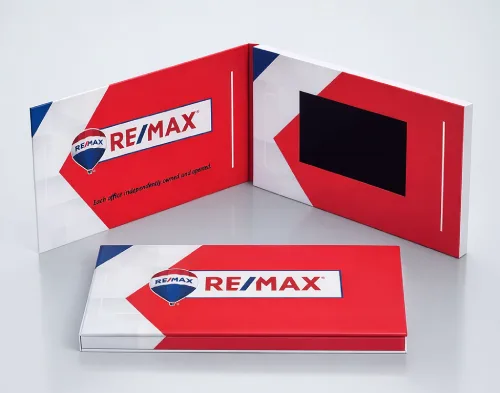
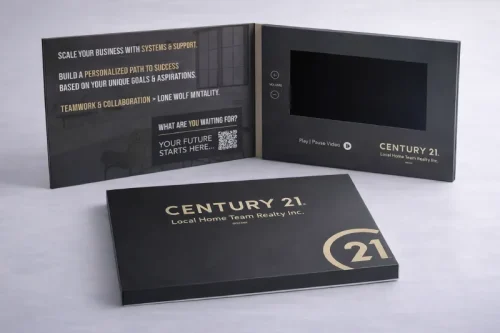
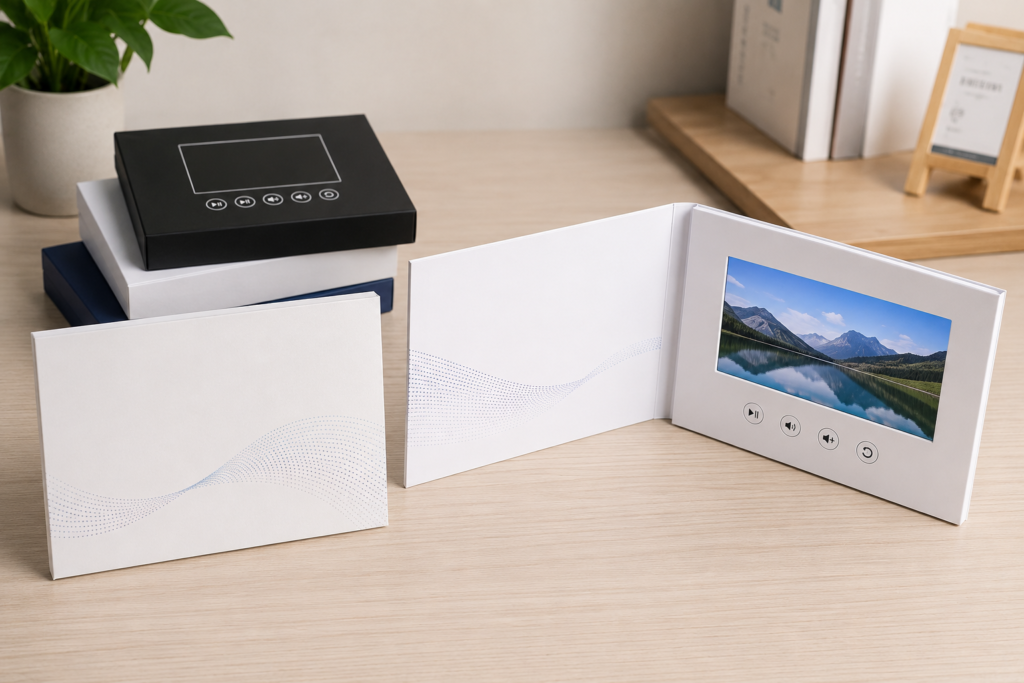
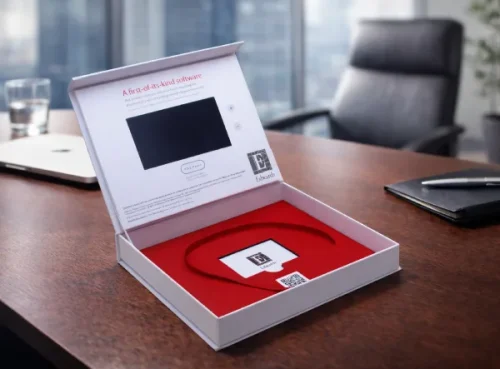
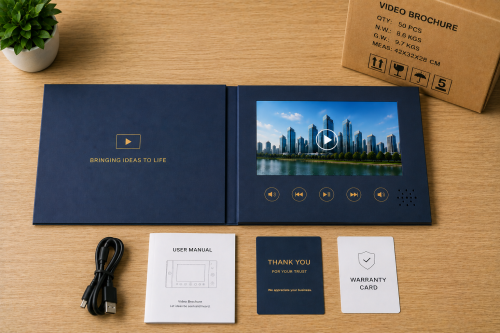
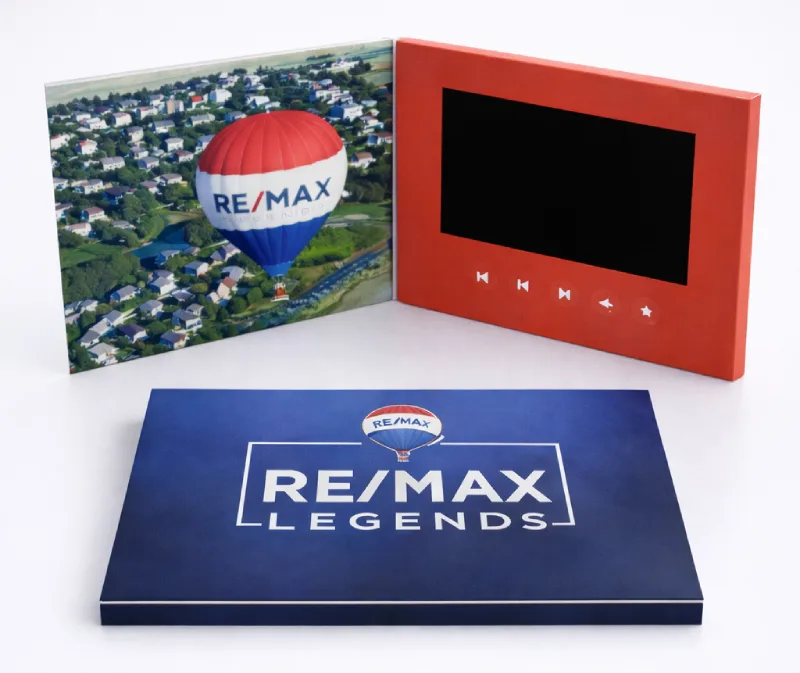
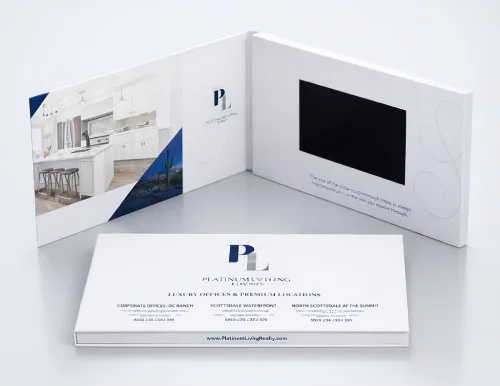
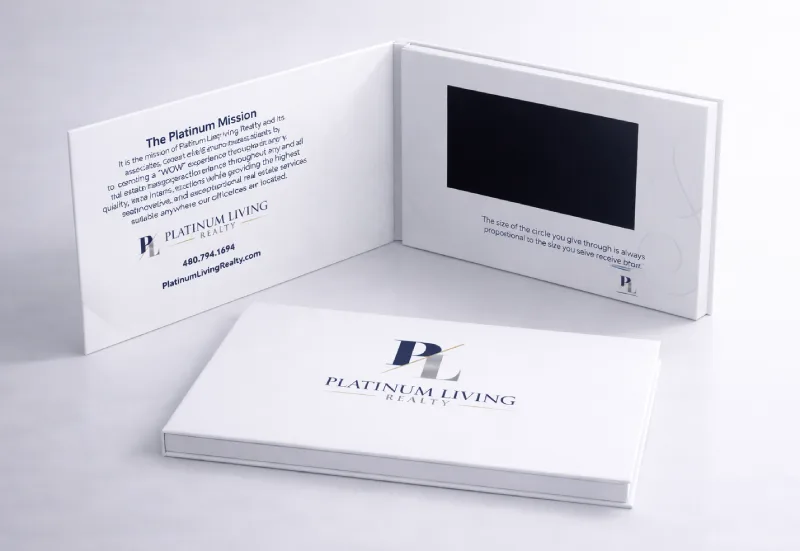
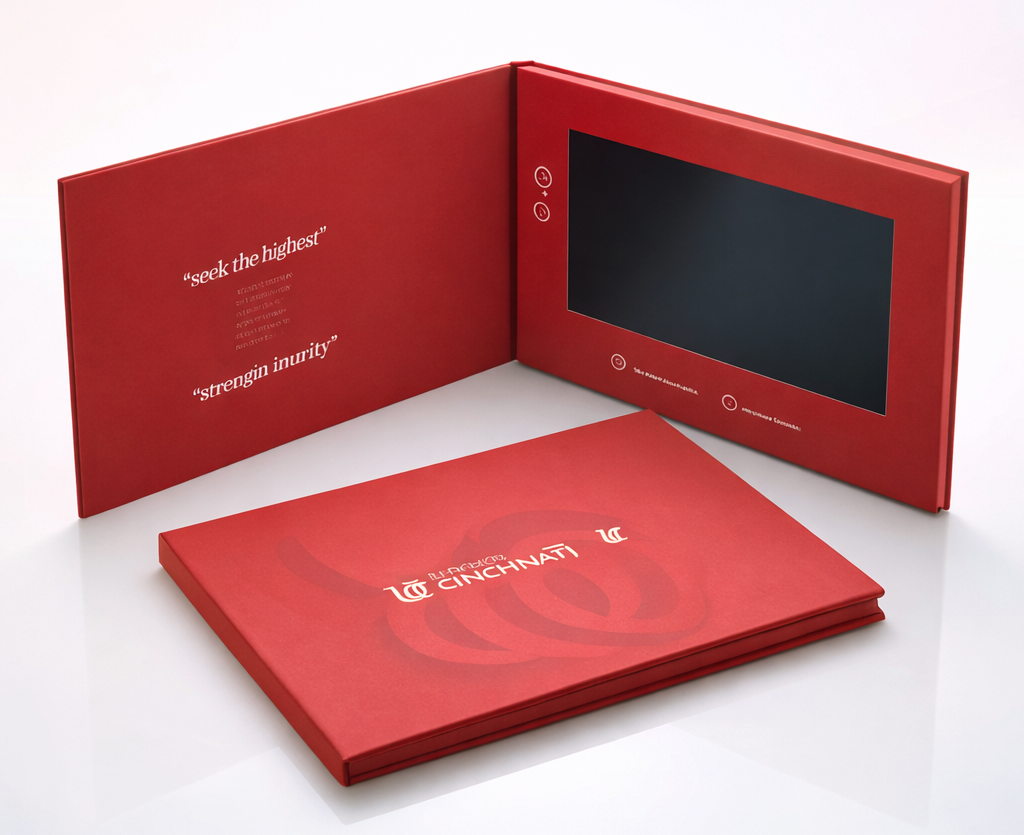
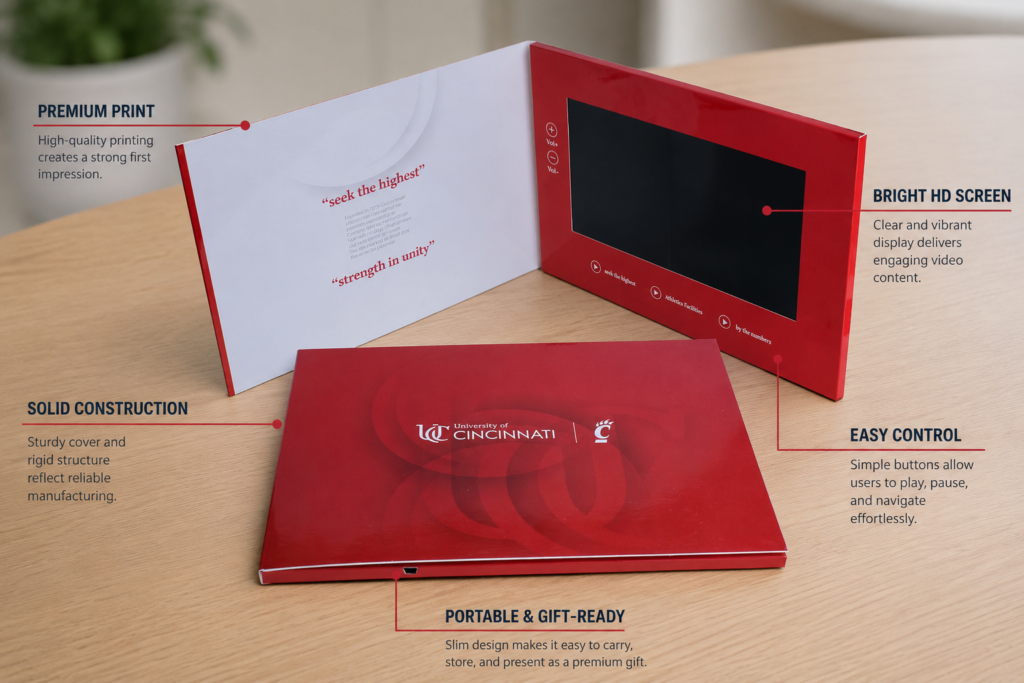
A video brochure is a printed presentation piece with a built-in LCD screen, rechargeable battery, speaker, and internal memory.
When the brochure is opened, the video automatically starts playing.
Most video brochures support:
- HD video playback
- multiple buttons
- volume control
- USB video upload
- custom printed packaging
- touch screen functions
They are commonly used for:
- luxury real estate presentations
- product launches
- direct mail campaigns
- healthcare marketing
- investor presentations
- premium gifting
- trade shows
- sales presentations
Compared with traditional brochures, video brochures are designed to create stronger engagement and a more memorable first impression.
Why Most Video Brochures Are Manufactured in China
China has become the main manufacturing center for LCD video brochures because the entire supply chain already exists there.
That includes:
LCD screen suppliers
Battery manufacturers
PCB assembly factories
Printing facilities
Packaging production
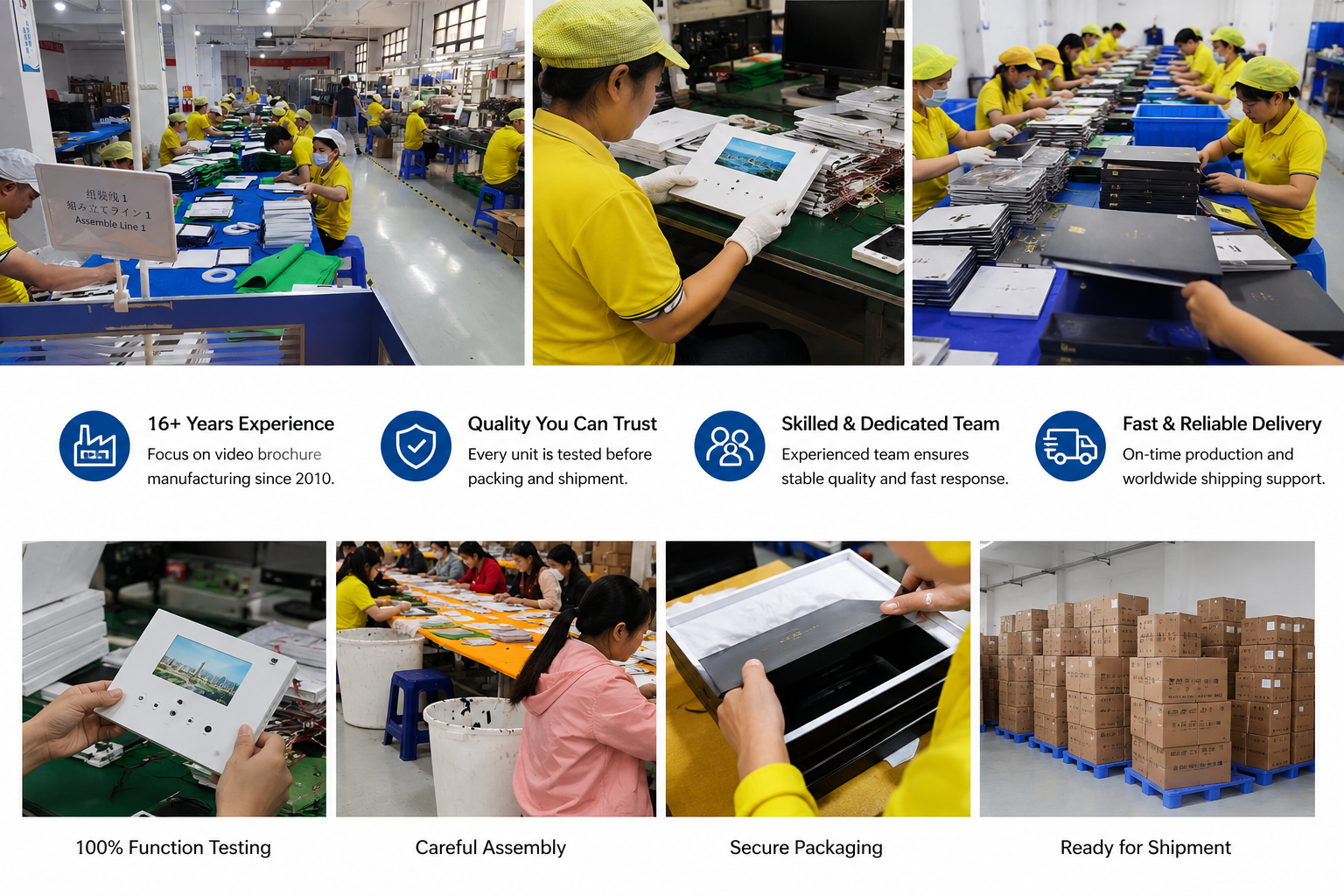
Final assembly workshops
Because everything is connected within the same ecosystem, Chinese manufacturers can usually offer:
Lower pricing
Faster customization
Better scalability
More flexible MOQ options
For buyers, this means you can create highly customized marketing products without the extremely high costs often seen in local sourcing.
Some factories focus heavily on low pricing, while others focus more on:
- quality control
- testing standards
- packaging protection
- communication
- long-term project support
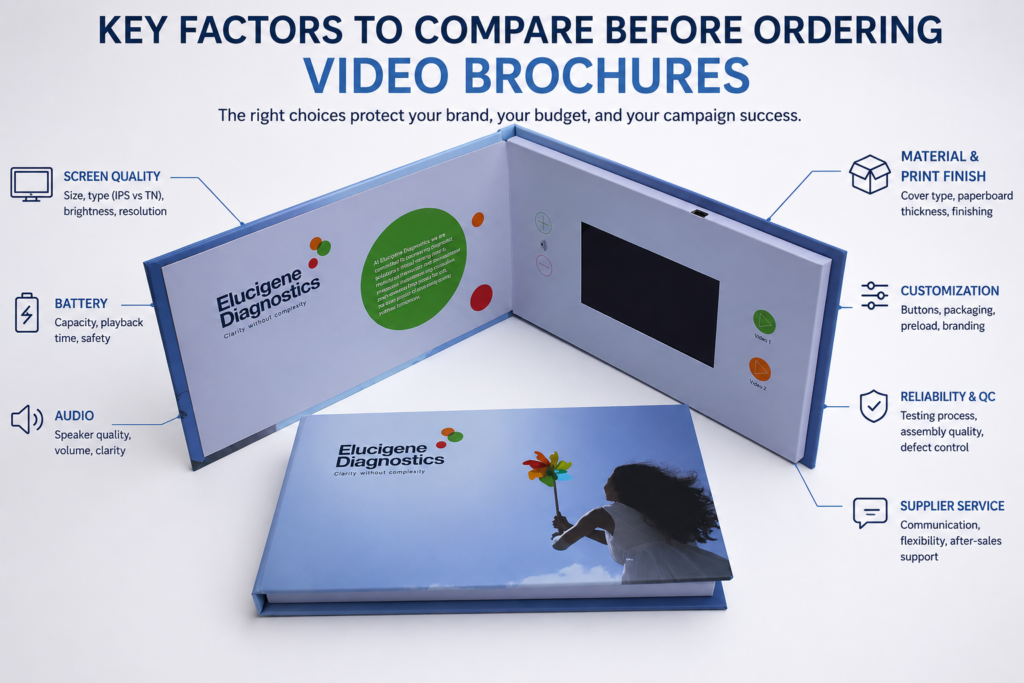
That is why buyers should compare much more than unit pricing alone.
If you are currently comparing factories, it’s also worth reviewing what should actually be compared before placing an order, especially when multiple quotations appear similar on paper.
Related Reading:
How the Video Brochure Import Process Works
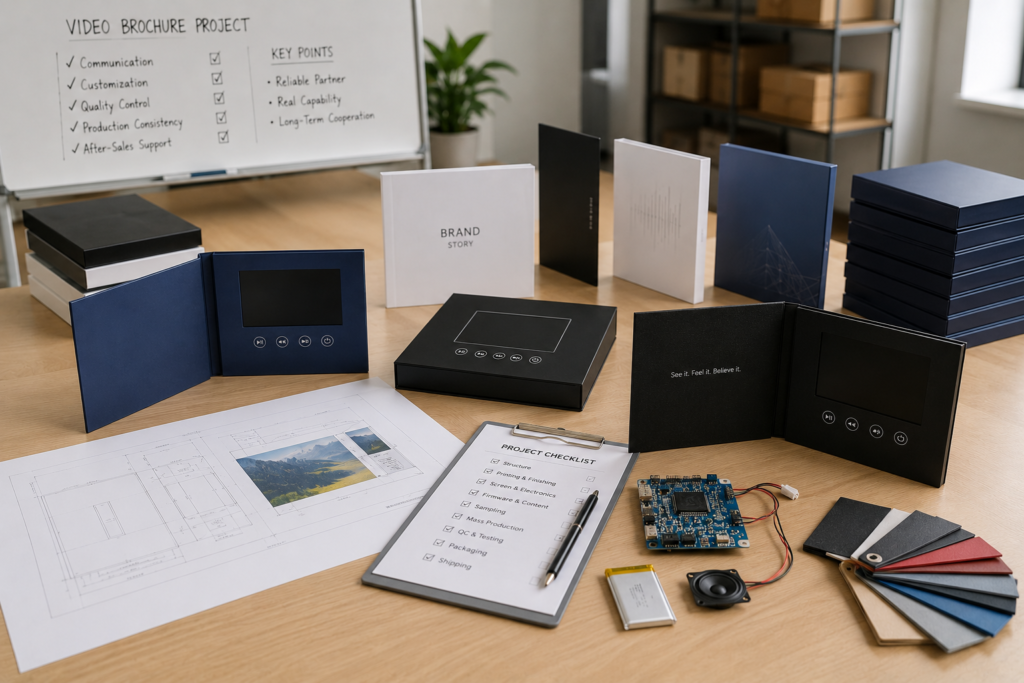
Most custom video brochure projects follow a similar production structure. Understanding this process early can help buyers avoid unnecessary delays later.
Step 1: Inquiry & Requirement Discussion
The first stage is requirement confirmation.
Buyers usually provide:
- screen size
- quantity
- memory requirement
- packaging style
- shipping country
- video length
- artwork ideas
One common issue we often see is that buyers request quotations before their specifications are fully confirmed.
Later, changes such as:
- upgrading from TFT to IPS
- increasing battery size
- adding buttons
- changing packaging structure
- upgrading finishes
Can significantly affect pricing and timelines.
If this is your first order, it helps to understand [how to import video brochures from China step by step] before production begins.
Related Reading:
Step 2: Quotation & Pricing Confirmation
Video brochure pricing depends on many factors, including:
- screen size
- screen type
- memory capacity
- battery size
- packaging structure
- printing finishes
- quantity
- shipping method
Many first-time buyers focus mainly on unit pricing.
But after years in this industry, we’ve found that freight cost, communication, and production planning usually create more problems than the product itself.
For smaller quantities especially, shipping cost can become a surprisingly large part of the total project budget.
This is also one reason [MOQ affects pricing so much in custom video brochure manufacturing].
Related Reading:
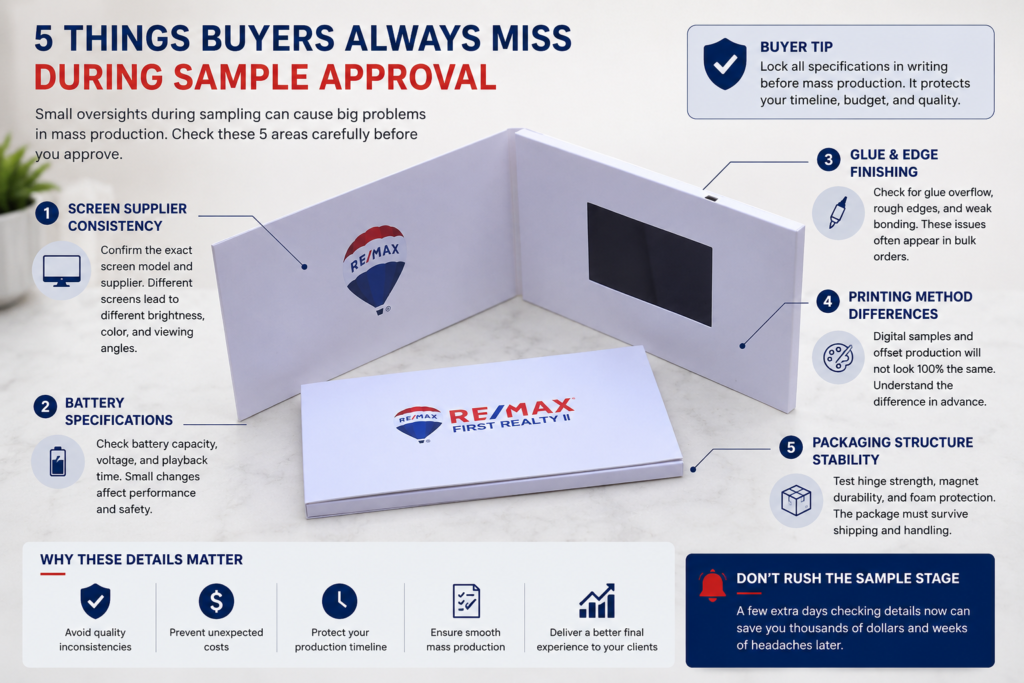
Step 3: Sample Production
Most buyers begin with a sample before bulk production.
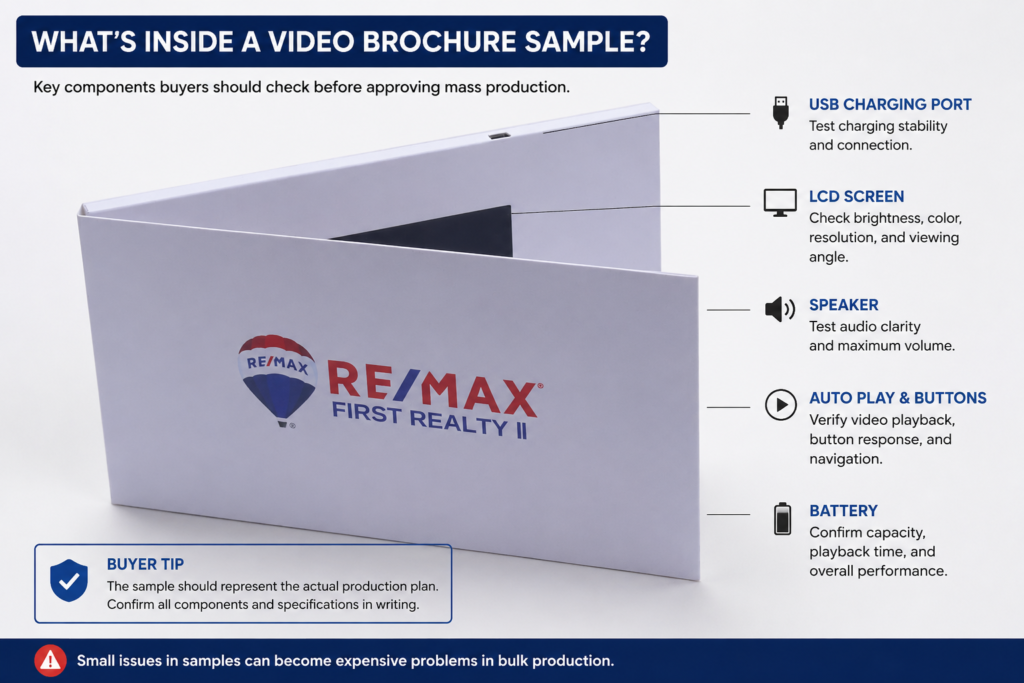
This stage helps confirm:
- playback quality
- packaging structure
- print quality
- button functions
- overall presentation effect
In many projects, hidden issues first appear during sampling.
For example:
- incorrect video resolution
- weak speaker volume
- artwork alignment problems
- unrealistic expectations about finishes
- packaging structure concerns
Skipping or rushing the sample stage often creates much larger problems later.
If you are currently evaluating whether a sample is necessary, it helps to understand the [common mistakes buyers miss during sample production].
Related Reading:
Step 4: Artwork Approval
Once the structure is confirmed, buyers submit final artwork files for production.
This stage usually includes:
- die-line setup
- logo positioning
- CMYK printing files
- foil stamping areas
- spot UV setup
- button icon alignment
Many buyers underestimate how much time artwork revisions can consume.
In reality, repeated artwork updates are often one of the biggest reasons production schedules become unstable.
Especially when:
- multiple departments are involved
- marketing teams continue updating versions
- approvals arrive later than expected
If your artwork has already been approved, the next production stages usually move much faster.
Related Reading:
Step 5: Mass Production
However, buyers working with tight deadlines should understand that rush schedules almost always increase pressure on:
- quality control
- testing
- communication
- shipping coordination
In many custom projects, delays are caused more by late artwork changes and compressed schedules than by actual factory production.
If you are planning a time-sensitive campaign, it’s worth understanding [why rushing your video brochure order costs more] and how to [avoid delays during production].
Related Reading:
After artwork approval, factories begin:
- printing
- electronics assembly
- battery installation
- testing
- packaging assembly
Production time depends on:
- quantity
- complexity
- material availability
- holiday schedules
- shipping deadlines
Most projects take around 10–15 working days after final artwork approval.
Common Problems Buyers Face When Importing Video Brochures
Many online articles make importing sound simple.
Real projects are usually more complicated.
Below are some of the most common problems buyers face during production and shipping.
Production Delays
Delays are one of the most common issues in custom video brochure projects.
Interestingly, delays are not always caused by factories alone.
In many projects, the biggest causes are:
- artwork revisions
- incomplete specifications
- rush schedules
- waiting for internal approvals
- last-minute changes
Understanding these risks early can help buyers build more realistic production timelines.
Related Reading:
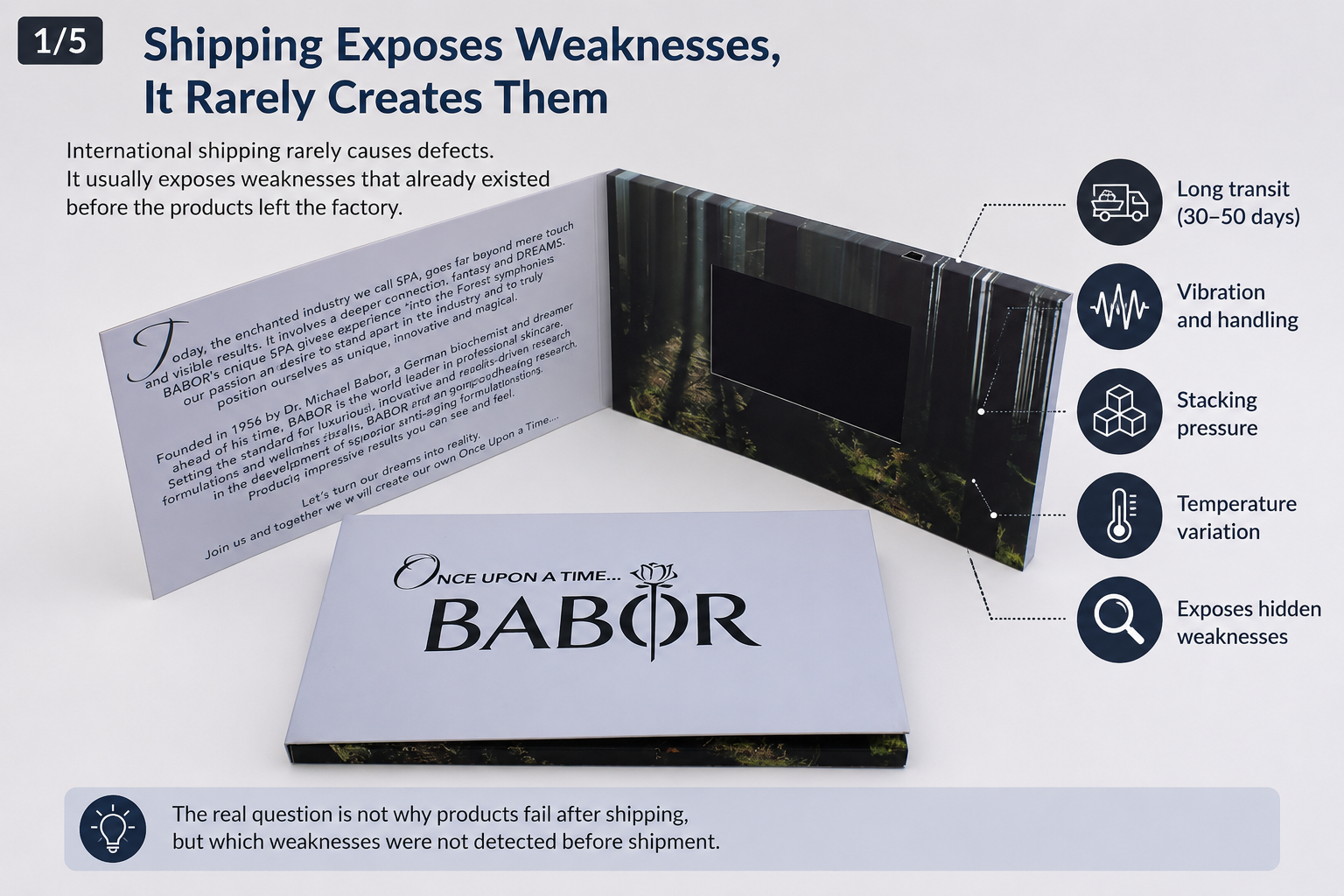
Shipping Damage
Because video brochures contain screens and batteries, shipping protection matters much more than ordinary printed materials.
Proper packaging protection usually includes:
foam inserts
reinforced cartons
screen protection layers
drop resistance considerations
Many buyers only focus on the product itself, but international transportation protection is equally important.
Related Reading:
[How Video Brochures Are Protected During International Shipping]
Playback Problems
Some buyers experience:
- lagging videos
- unsupported formats
- oversized files
- low audio quality
In many cases, the issue is not the screen itself.
The problem is often incorrect video optimization.
Resolution, bitrate, frame rate, and export settings all affect playback smoothness.
This is also one reason factory testing alone is not always enough if video files are not properly optimized before loading.
Related Reading:
Quality Differences Between Suppliers
Two factories may appear to offer similar products while using completely different:
- LCD panels
- batteries
- hinges
- speakers
- testing standards
That is why comparing only price can sometimes become expensive later.
Choosing a reliable manufacturer usually matters far more than saving a small amount upfront.
Related Reading:
Shipping Methods Explained
Because video brochures contain lithium batteries, shipping methods matter.
Different shipping solutions are suitable for different project types.
| Shipping Method | Speed | Cost | Best For |
|---|---|---|---|
| Express Shipping | Fast | Higher | Samples & small orders |
| Air Freight | Medium | Lower | Bulk production |
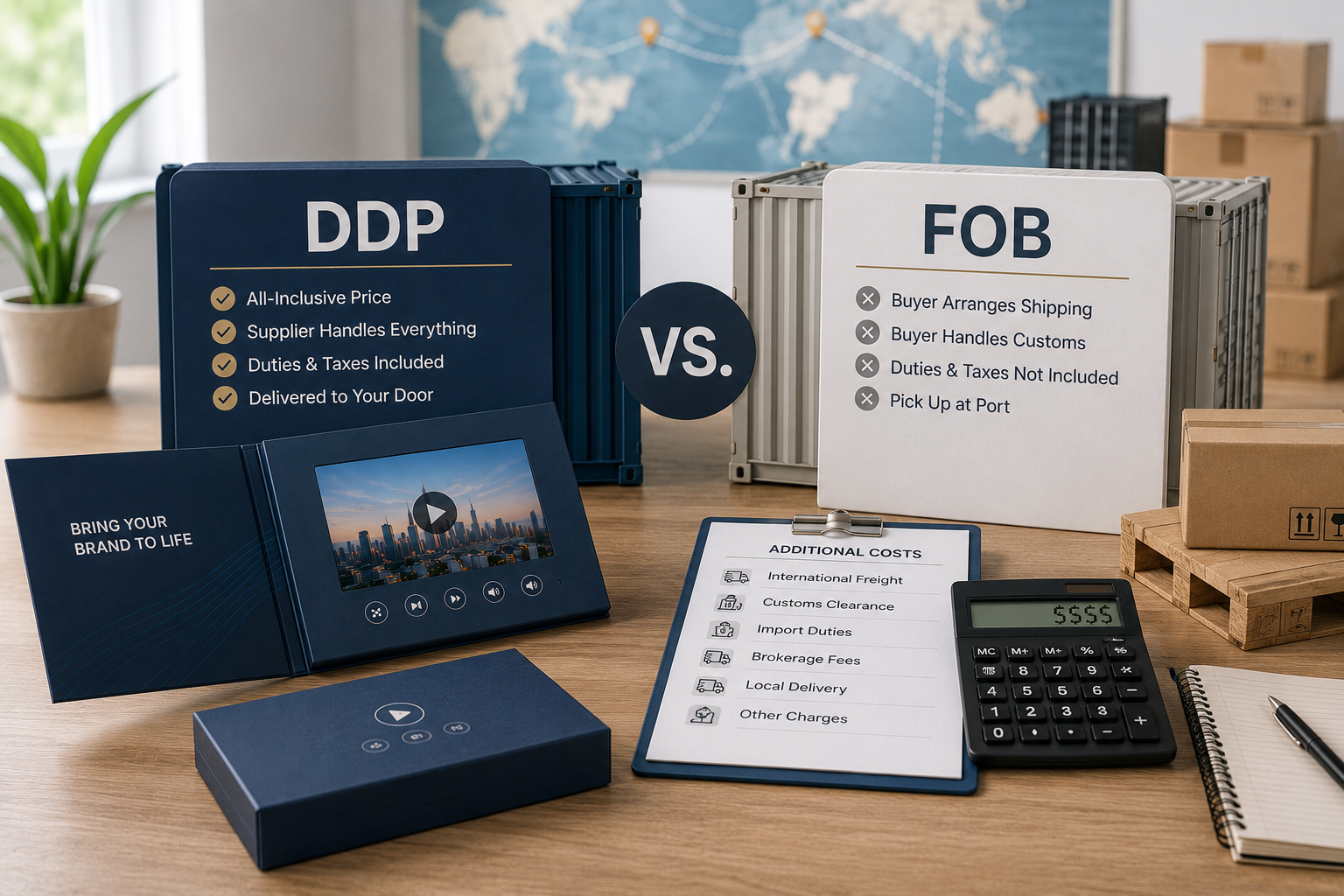
| DDP Shipping | Stable | Medium | Many US buyers |
Express Shipping
Express shipping is usually the fastest option for:
samples
urgent projects
smaller quantities
Common carriers include:
DHL
FedEx
UPS
For many buyers, express shipping is the simplest option during the sample stage.
Related Reading:
[Air Freight vs Express Shipping for Video Brochures From China: Which Is Better?]
DDP Shipping
Many US buyers now prefer DDP shipping because:
- customs clearance is simplified
- import duties are handled in advance
- delivery becomes more predictable
Although DDP shipping may appear slightly more expensive upfront, many buyers find it easier because it reduces customs coordination and unexpected clearance issues after arrival.
For most small and medium-sized video brochure projects, DDP shipping is often the simplest solution.
If you are unfamiliar with international shipping terms, it’s worth understanding [why many US buyers prefer DDP shipping].
Related Reading:
How to Choose a Reliable Video Brochure Manufacturer
Choosing the right supplier is often more important than finding the cheapest quotation.
A reliable manufacturer should provide:
- stable communication
- realistic production timelines
- testing procedures
- artwork support
- international shipping experience
- consistent quality control
Many buyers only realize the importance of communication after production problems appear.
In custom projects, communication quality often affects the final result as much as manufacturing itself.
If you are comparing multiple factories right now, it helps to evaluate not only pricing, but also responsiveness, technical understanding, and production transparency.
Related Reading:
What Buyers Should Prepare Before Requesting a Quote
Before contacting suppliers, it helps to prepare:
Quantity
Preferred screen size
Video length
Packaging ideas
Shipping country
Delivery deadline
Logo files
Button requirements
This can significantly improve quotation accuracy and reduce unnecessary revisions later.
Related Reading:
Frequently Asked Questions
Can I order only 1 sample?
Yes. Most manufacturers support sample production before bulk orders.
What screen sizes are most popular?
4.3”, 5”, and 7” are currently the most common commercial sizes.
Can I upload videos myself later?
Yes. Most video brochures support USB video replacement.
How long does production usually take?
Most projects require around 10–15 working days after artwork approval.
Are batteries included?
Yes. Video brochures normally include rechargeable lithium batteries.
What video format works best?
MP4 is usually the most compatible format.
Can video brochures pass customs?
Yes.
Because video brochures contain lithium batteries, battery shipping regulations must be handled correctly during international transportation.
However, buyers normally do not need to prepare any special documents themselves. Your freight forwarder or shipping provider will usually handle the necessary battery shipping procedures and documentation.
Ready to Start Your Project?
Getting the specifications right before production begins is the single most effective way to avoid delays, reduce revisions, and keep your project on schedule.
Final Thoughts
Importing video brochures from China is not simply about finding the lowest price.
The projects that go smoothly are usually the ones where buyers come prepared — with clear specifications, realistic timelines, and a supplier who communicates well throughout the process.
When those conditions are in place, a well-made video brochure does more than deliver a message. It becomes part of the experience your client remembers.
Contact CheerTrend to Start Your Business