

Many buyers assume that video brochure failures after shipping are mainly caused by rough transportation.
In our experience, that is usually not the real problem.
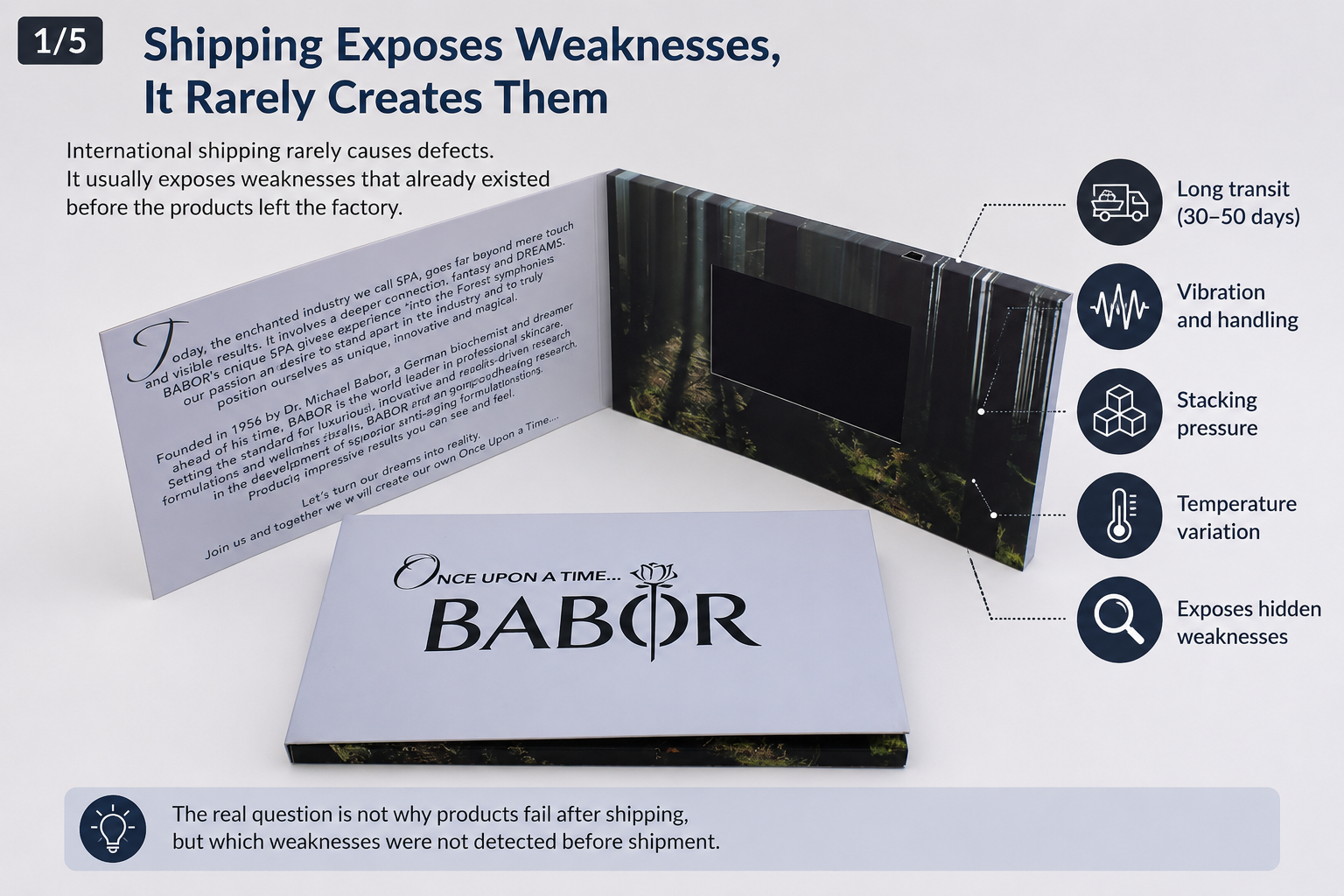
Shipping does not often create defects by itself. More commonly, it exposes weaknesses that already existed inside the product before shipment.
This distinction matters because the root cause determines whether failures are occasional accidents — or signs of deeper manufacturing problems.
Alt text: Export cartons containing video brochures inside a logistics warehouse before international shipment.
We have seen video brochures survive long ocean shipments with no issues at all. We have also seen products fail after relatively normal transit conditions.
In most cases, the difference was not shipping distance. It was assembly quality, component consistency, testing depth, and packaging design.1
Why Products Sometimes Pass Factory Testing But Still Fail Later
One of the biggest misunderstandings in this industry is the meaning of “tested.”
Some factories consider a brief power-on check to be testing.
But products that pass a 10-second inspection can still contain:
- unstable batteries
- weak solder joints
- overheating PCB boards
- intermittent charging problems
- loose internal connections
These problems may not appear immediately.
They often appear later:
- during vibration
- after deep battery discharge
- after repeated charging cycles
- or after products remain sealed in cartons for several weeks
This is why some failures only become visible after shipping.
In many cases, shipping was not the cause. It was simply the moment hidden weaknesses became visible.
Alt text: Factory technician testing internal PCB connections and wiring of a video brochure.
1. Weak Internal Assembly
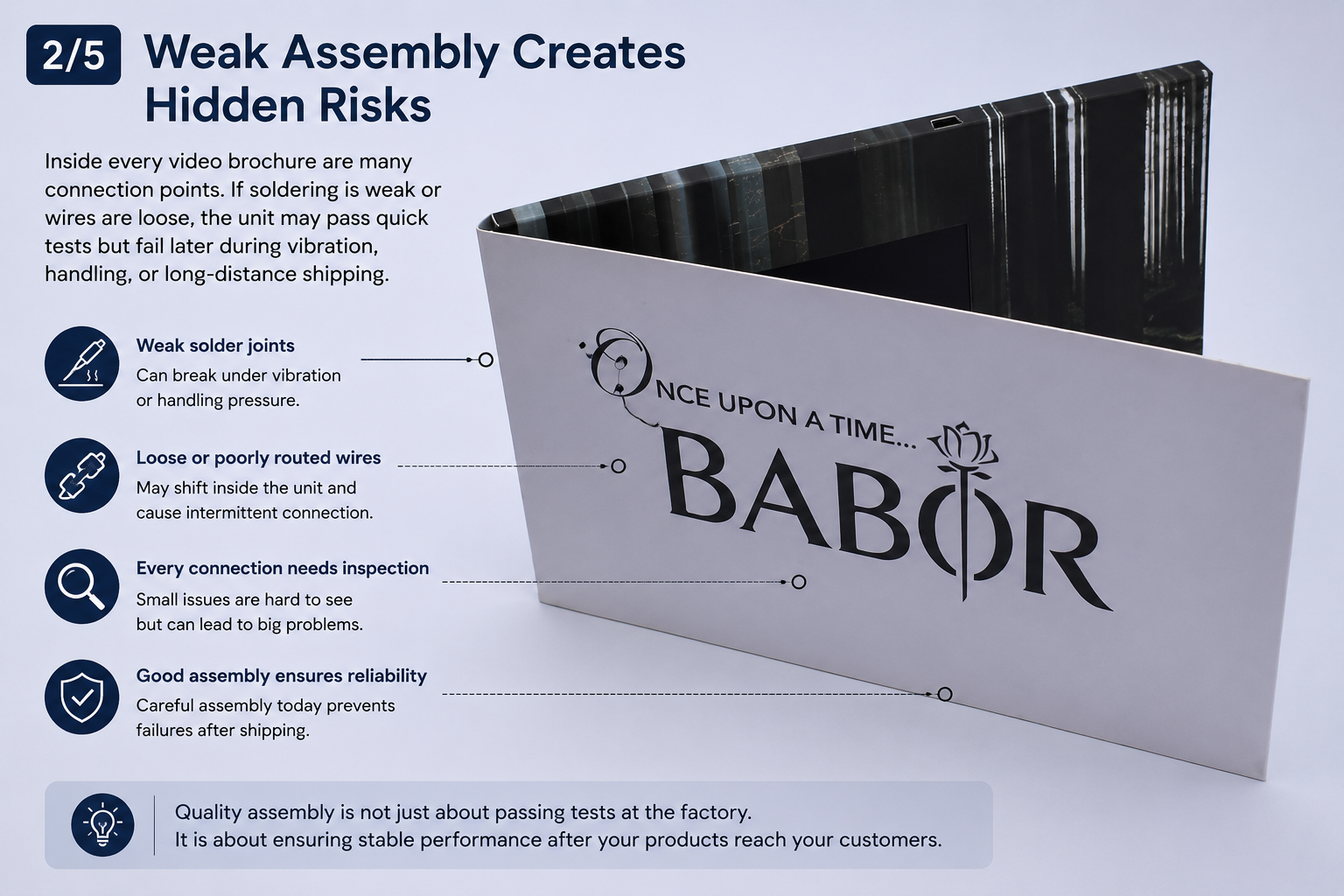
Inside every video brochure are multiple connection points between the battery, PCB, LCD screen, speaker, and buttons.
A weak solder joint can survive initial testing but fail later under vibration or handling pressure.
This is especially common in factories focused heavily on assembly speed and labor cost reduction.
In our experience, assembly consistency is one of the least visible — but most important — parts of long-term reliability.2
2. Battery Cell Quality
Battery complaints are extremely common in low-cost electronic products.
However, battery problems are often sourcing problems rather than battery design problems.
Factories using inconsistent or lower-grade lithium cells may still pass short-term charging tests before shipment.
But after 30–50 days of ocean transit and storage, unstable cells can experience:
- voltage drop
- charging failure
- shortened lifespan
- complete inactivity
For buyers, this usually creates far larger costs later through replacements, customer complaints, and project delays.
Alt text: Close-up of lithium battery cells undergoing charging and voltage testing.
3. Inadequate Aging Tests
This is probably one of the biggest differences between factories.
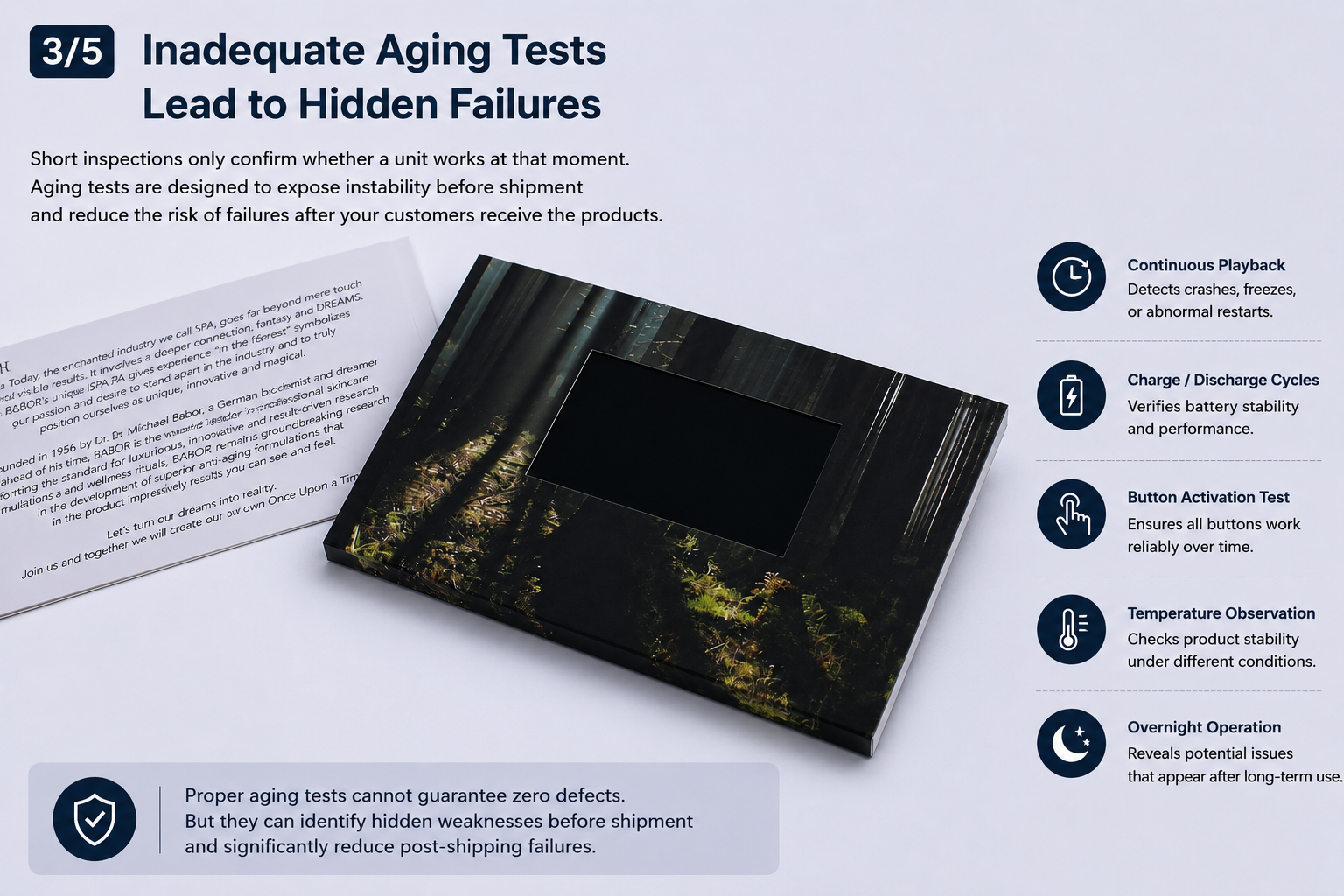
Short inspections only confirm whether a unit works at that moment.
Aging tests are designed to expose instability before shipment.
A proper aging procedure may include:
- continuous playback testing
- repeated charging/discharging cycles
- overnight operation
- repeated button activation
- temperature stability observation
These tests do not guarantee zero defects.
But they significantly reduce the likelihood of hidden failures reaching customers.3
In our experience, many post-shipping failures could have been identified earlier through more rigorous aging procedures.
Alt text: Multiple video brochures connected for continuous playback aging tests inside a factory.
4. Packaging Designed Mainly Around Cost
Packaging is often underestimated.
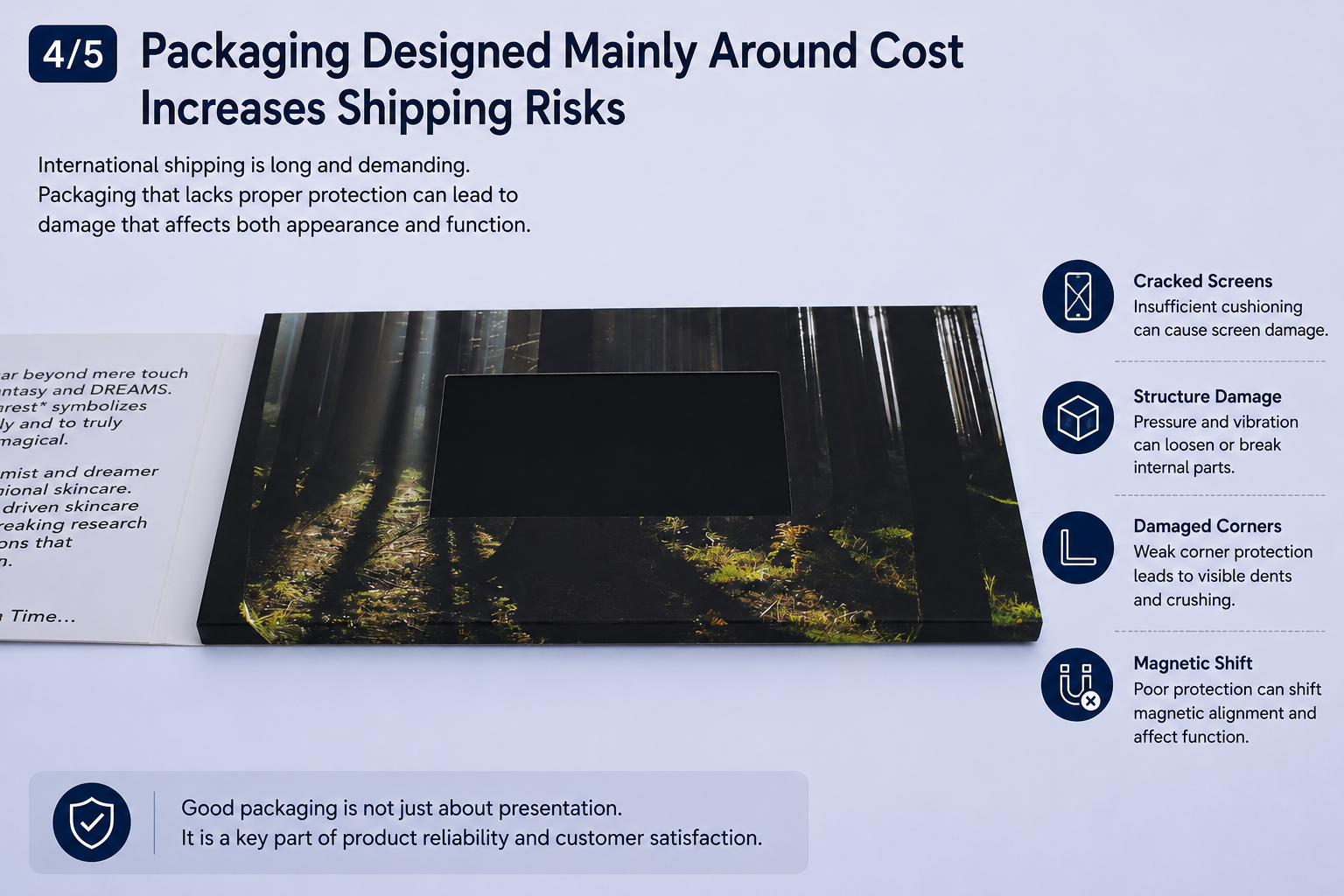
International shipping subjects products to:
- vibration
- stacking pressure
- repeated handling
- long storage periods
Weak internal protection increases the risk of:
- cracked screens
- loosened structures
- damaged corners
- shifted magnetic components
Well-designed packaging is not only about presentation. It is part of product reliability.
Alt text: Reinforced export packaging with foam protection designed for video brochure shipping.
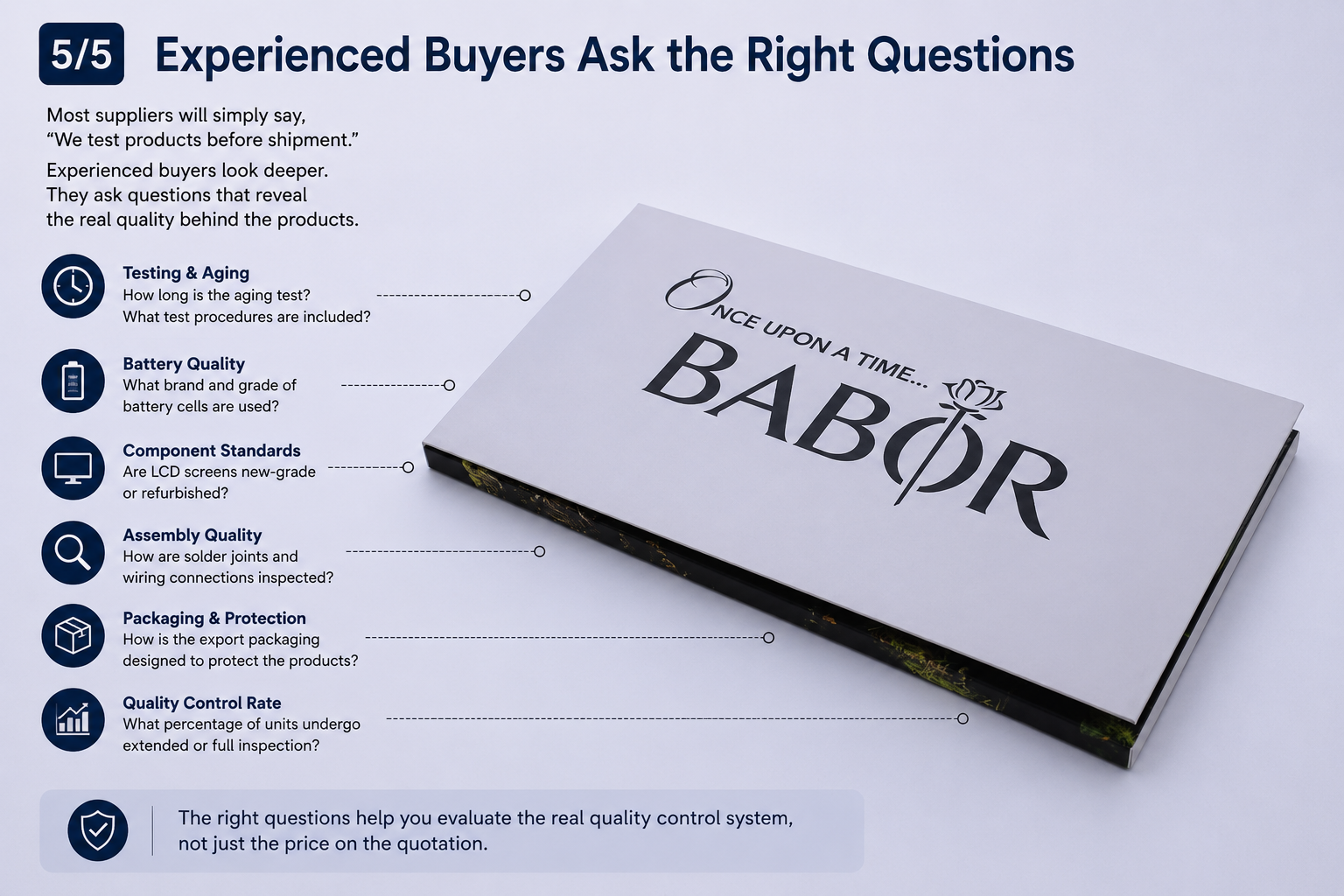
The Questions Experienced Buyers Usually Ask
Most suppliers will simply say:
“We test products before shipment.”
Experienced buyers usually ask more specific questions:
- How long is the aging test?
- What battery cells are being used?
- Are LCD screens new-grade or refurbished?
- How are solder joints inspected?
- How is export packaging designed?
- What percentage of units undergo extended testing?
These questions often reveal more about a factory’s real quality control system than the quotation itself.4
Final Thoughts
No factory can realistically promise a zero-failure rate in international shipping.
The more important question is whether the factory has systems designed to identify weaknesses before products leave production.
In our experience, most post-shipping failures are preventable.
Shipping rarely creates defects on its own.
More often, it reveals defects that were already there.
Footnotes
-
Shipping vibration often exposes hidden assembly weaknesses that are not detected during short functional testing. ↩
-
Weak solder joints are one of the most common causes of intermittent electronic failures during transit. ↩
-
Aging tests are widely used in electronics manufacturing to identify early-life component instability before shipment. ↩
-
Experienced buyers usually evaluate factory process controls rather than relying only on unit pricing.