

Many buyers ask the same question after production finishes:
“Will the video brochures arrive safely?”
That concern is completely reasonable. Video brochures are not ordinary printed products. They contain LCD screens, lithium batteries, magnets, speakers, and electronic components. International shipping puts all of those parts under pressure during loading, stacking, customs handling, and long-distance transport.
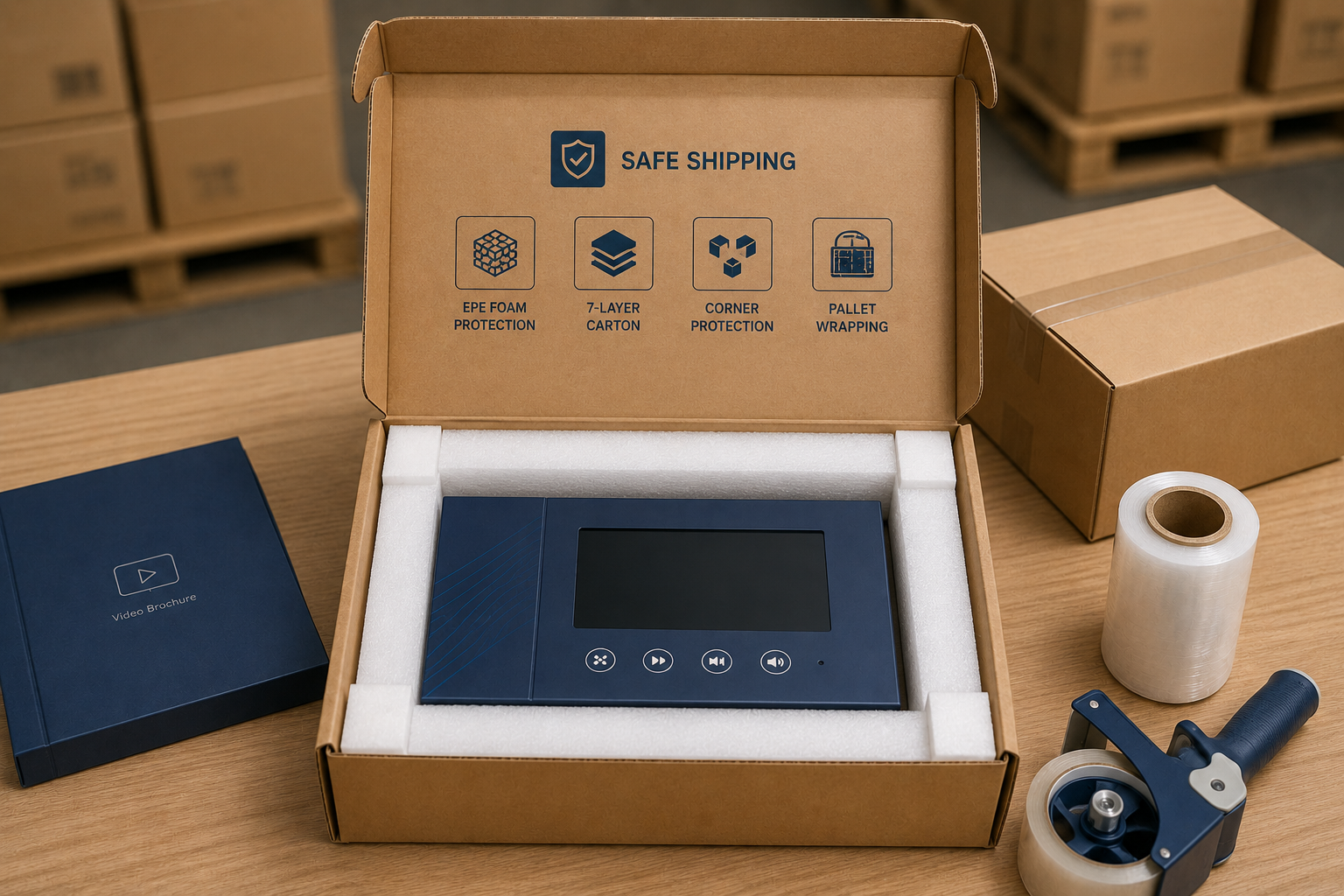
Video brochures are usually protected using 7-layer export cartons, EPE foam protection, corner padding, pallet reinforcement, and individual wrapping designed to reduce screen damage and crushed packaging during international freight.1
Good packaging is not just about appearance. It is about surviving real shipping conditions.
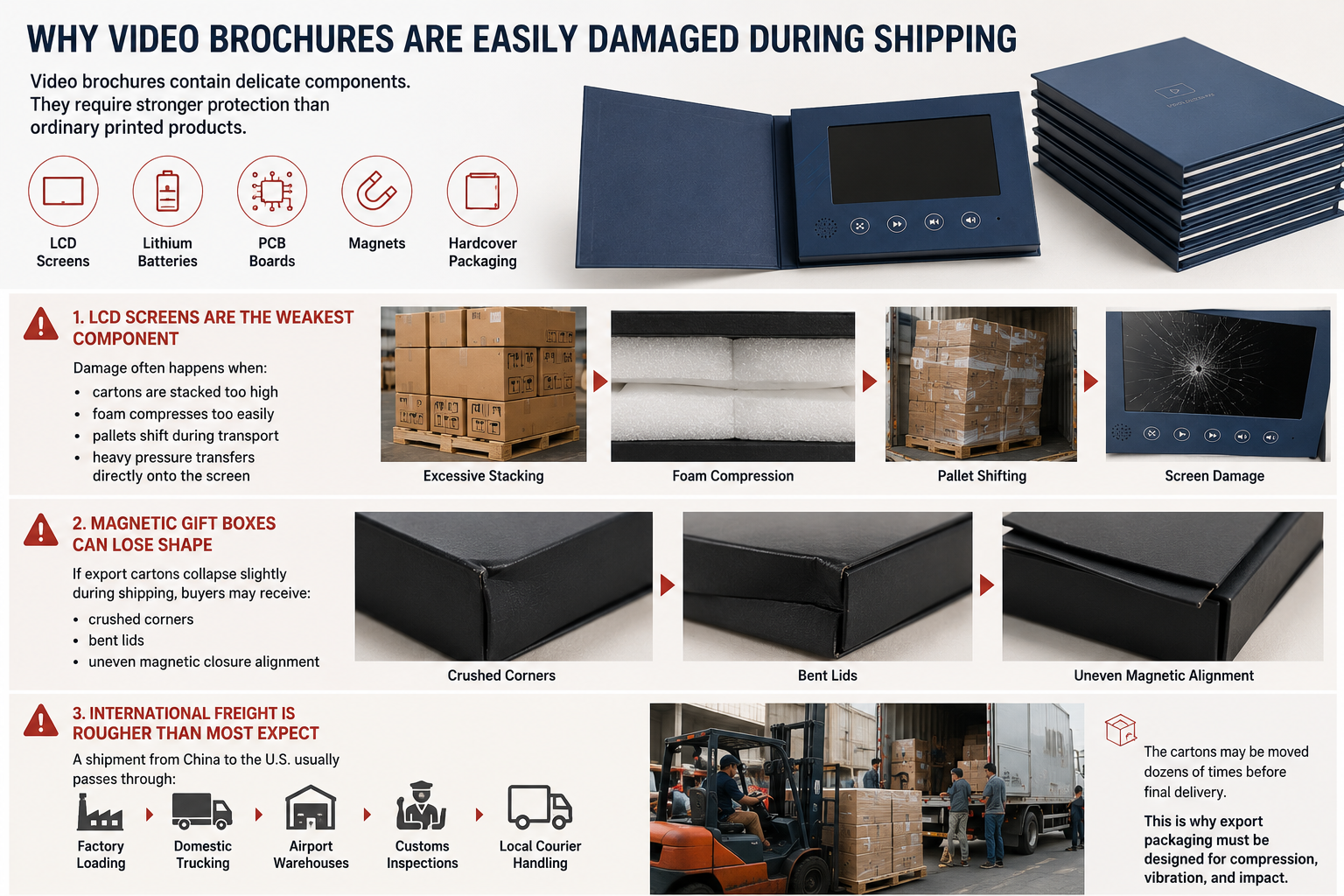
Why Video Brochures Are Easily Damaged During Shipping
Many first-time buyers assume video brochures ship like hardcover books.
That is not true.

Video brochures combine:
- LCD screens
- lithium batteries
- PCB boards
- magnets
- hardcover packaging
Each component reacts differently under shipping pressure.
LCD Screens Are the Weakest Component
The screen is usually the most fragile part of the product.
Damage often happens when:
- cartons are stacked too high
- foam compresses too easily
- pallets shift during transport
- heavy pressure transfers directly onto the screen
Larger screens increase the risk significantly.
In my experience, 10-inch video boxes require much stronger export protection than smaller 4.3-inch brochures because the larger screen surface distributes pressure unevenly during stacking.
Magnetic Gift Boxes Can Lose Shape
Premium magnetic rigid boxes look impressive during presentations, but they are vulnerable during freight handling.
If export cartons collapse slightly during shipping, buyers may receive:
- crushed corners
- bent lids
- uneven magnetic closure alignment
Even if the electronics still work perfectly, damaged packaging immediately affects customer perception.
International Freight Is Rougher Than Most Buyers Expect
A shipment from China to the United States usually passes through:
- factory loading
- domestic trucking
- airport warehouses
- customs inspections
- local courier handling
The cartons may be moved dozens of times before final delivery.
This is why export packaging must be designed for compression, vibration, and impact — not just warehouse storage.
Why We Use EPE Foam Instead of Standard Foam
Many suppliers simply mention “foam protection” during quotations.
But the foam structure matters more than the wording.
EPE Foam Protects All Sides of the Product
EPE pearl cotton foam helps absorb shock and reduce movement during transport.
We normally use:
- bottom cushioning layers
- side protection strips
- top protective layers
This creates six-direction protection around the video brochure.
The goal is to prevent the product from shifting inside the carton.
Cheap Foam Often Fails Under Pressure
Some factories use low-density foam because it costs less.
The problem is that soft foam compresses too easily during pallet stacking.
I have seen shipments where the outer carton looked fine, but the LCD screens cracked internally because the foam lost its cushioning strength during long-distance freight.
Many buyers blame the courier company for damage. In reality, weak packaging design is often the real problem.
Bubble Bags Protect Surface Finishes
Before carton packing, each unit is usually placed inside an individual protective bag.
This helps prevent:
- scratches
- dust
- surface rubbing
- lamination damage
Soft-touch lamination scratches very easily during bulk shipping if units rub against each other.
Why 7-Layer Export Cartons Matter
This is one of the biggest differences between cheap packaging and professional export packaging.
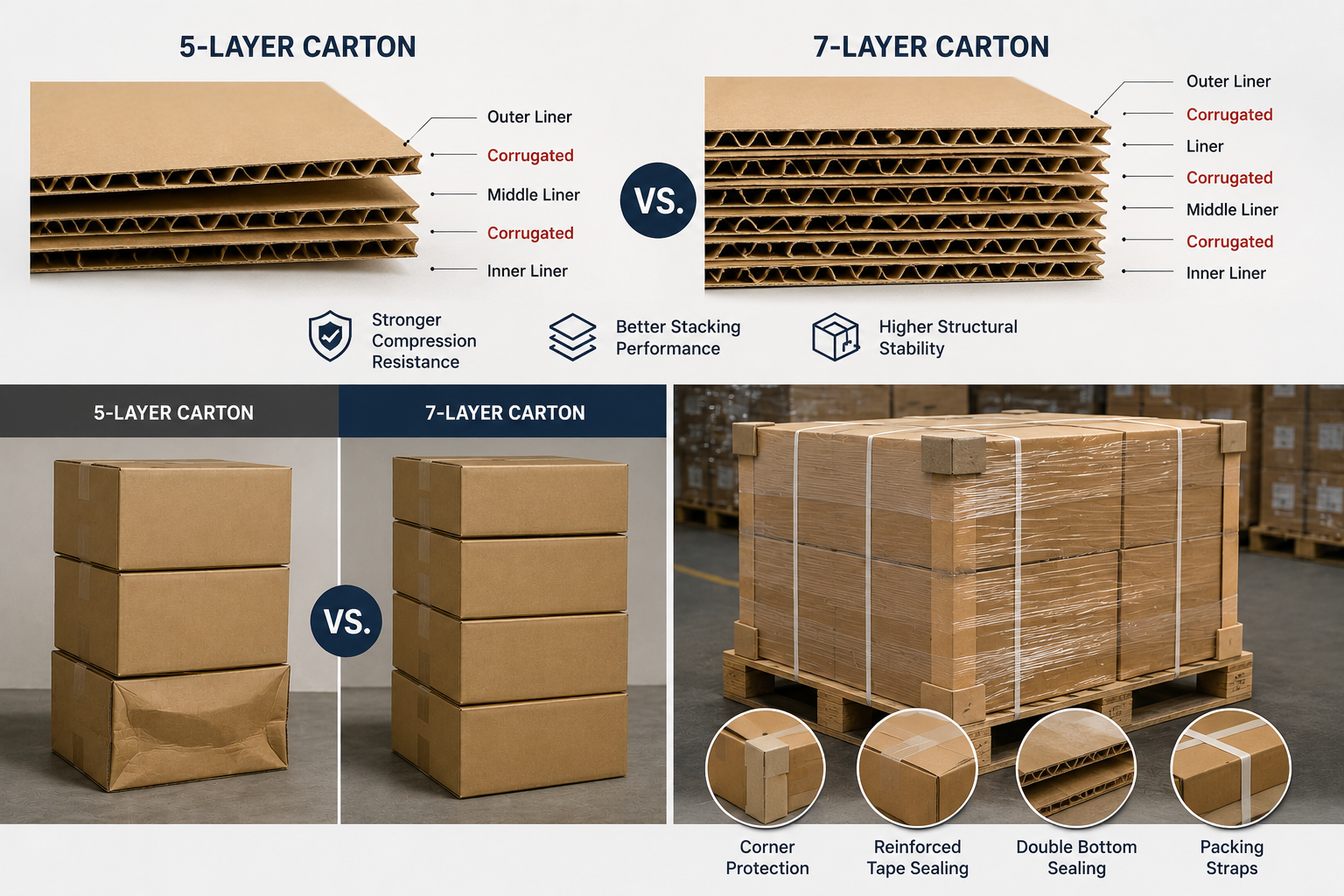
Many low-cost suppliers still use standard 5-layer cartons for heavy video brochure shipments.
That creates problems during pallet stacking.
What Makes 7-Layer Cartons Stronger?
Compared with standard cartons, 7-layer export cartons include additional corrugated and support layers.
This increases:
- compression strength
- stacking resistance
- structural stability
For heavy magnetic rigid boxes, this matters significantly.
| Carton Type | Typical Performance |
|---|---|
| Standard 5-layer carton | Suitable for lighter shipments |
| 7-layer export carton | Better for stacking and long-distance freight |
Pallet Pressure Is the Real Problem
Most shipping damage happens because of vertical pressure.
Bulk cartons are stacked during:
- warehouse storage
- airport handling
- truck transport
- container loading
If the bottom cartons collapse slightly, pressure transfers directly onto the products inside.
This is why stronger export cartons matter.
The carton should absorb the pressure — not the video brochure itself.
Reinforced Sealing Also Matters
For export shipments, cartons should normally include:
- reinforced tape sealing
- double bottom sealing
- packing straps for heavier shipments
Weak carton sealing increases failure risk during international handling.
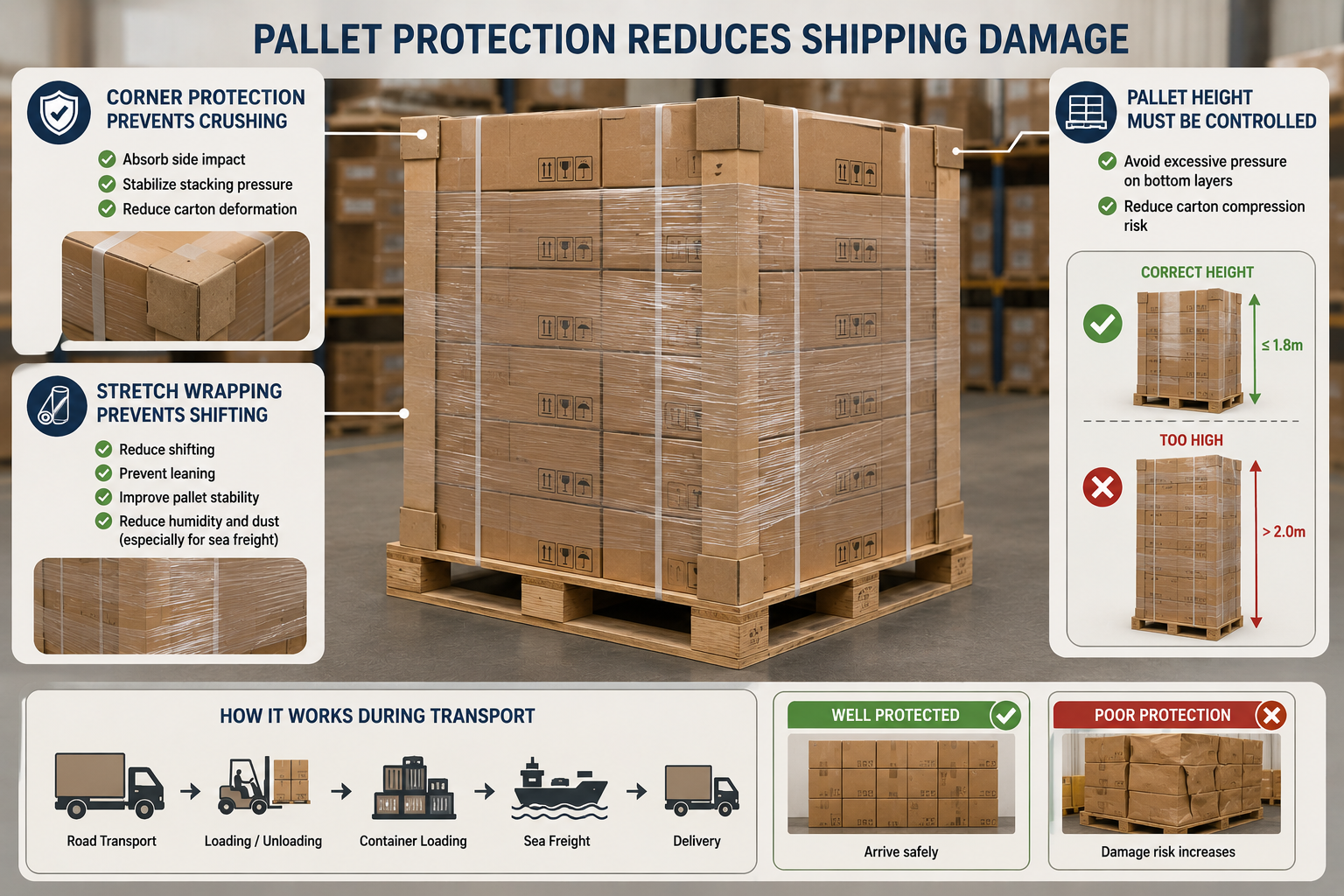
How Pallet Protection Reduces Shipping Damage
Single cartons are only part of the protection system.
Bulk shipping introduces another layer of risk.
Corner Protection Prevents Crushing
Corners usually receive the first impact during freight handling.
This is especially dangerous for luxury magnetic packaging.
Protective corner pads help:
- absorb side impact
- stabilize stacking pressure
- reduce carton deformation
A damaged corner can make an expensive brochure look cheap immediately.
Stretch Wrapping Prevents Shifting
Pallet wrapping helps hold cartons in position during transport.
This reduces:
- shifting
- leaning
- pallet instability
For sea freight, wrapping also helps reduce exposure to humidity and dust.2
Pallet Height Must Be Controlled
Some factories overload pallets to reduce shipping costs.
That creates excessive pressure on the bottom layers.
Experienced export factories usually limit pallet height to reduce carton compression risk.
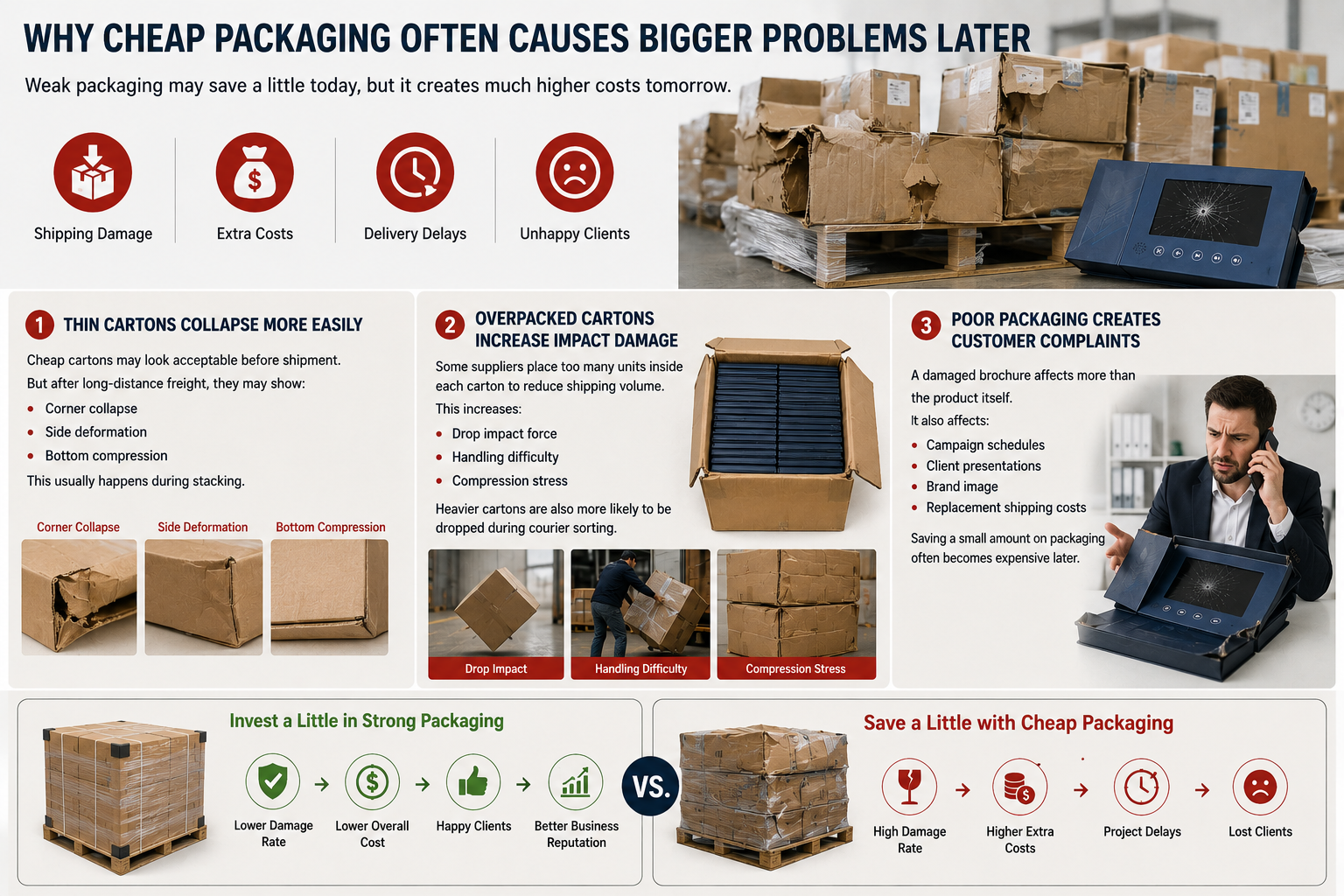
Why Cheap Packaging Often Causes Bigger Problems Later
Many buyers compare only unit pricing.
But weak packaging often creates much larger costs later.
Thin Cartons Collapse More Easily
Cheap cartons may look acceptable before shipment.
But after long-distance freight, they may show:
- corner collapse
- side deformation
- bottom compression
This usually happens during stacking.
Overpacked Cartons Increase Impact Damage
Some suppliers place too many units inside each carton to reduce shipping volume.
This increases:
- drop impact force
- handling difficulty
- compression stress
Heavier cartons are also more likely to be dropped during courier sorting.
Poor Packaging Creates Customer Complaints
A damaged brochure affects more than the product itself.
It also affects:
- campaign schedules
- client presentations
- brand image
- replacement shipping costs
Saving a small amount on packaging often becomes expensive later.
Does Air Freight Need Different Packaging Than Sea Freight?
Yes. The risks are different.
Good export factories adjust packaging depending on the shipping method.3
Air Freight Creates More Handling Impact
Air shipments experience:
- conveyor sorting
- airport transfers
- faster movement cycles
This increases drop and impact risk.
Air freight packaging focuses heavily on internal shock protection.
Sea Freight Creates Long-Term Pressure and Moisture Risk
Sea freight usually involves:
- longer stacking periods
- humidity exposure
- temperature fluctuations
Container condensation can become a serious issue during long transit periods.4
For sea shipments, stronger pallet reinforcement and moisture protection become more important.
How Buyers Can Reduce Shipping Damage Risk
Shipping protection should be discussed before production begins.
Not after damage happens.
Ask Suppliers About Packaging Structure
Buyers should confirm:
- carton layer strength
- foam type
- corner protection
- pallet wrapping
- carton quantity per pallet
These details reveal how experienced the supplier really is.
Leave Buffer Time for Replacements
Even strong packaging cannot eliminate all freight risk.
For important events or launches, buyers should leave additional time in case replacement units are needed.
Choose Factories With Export Experience
Video brochure shipping is not ordinary packaging work.
Factories also need experience with:
- electronics protection
- export pallet loading
- freight handling
- battery compliance
- international courier requirements
Experienced factories usually understand where shipping failures actually happen.
Conclusion
Video brochures require much stronger export packaging than ordinary printed products because they combine electronics, screens, batteries, and premium presentation packaging. Proper protection using EPE foam, 7-layer cartons, corner reinforcement, and pallet wrapping helps reduce shipping damage during international freight.
-
Video brochures usually contain LCD screens and lithium batteries, which require stronger protection than ordinary printed materials during export shipping. ↩
-
Stretch wrapping helps stabilize pallets during transport and provides limited protection against moisture, dust, and shifting during freight movement. ↩
-
Air freight usually creates more handling impact, while sea freight creates longer compression pressure and humidity exposure. ↩
-
Temperature changes inside shipping containers can create condensation during sea freight, increasing moisture risk for packaging materials and printed surfaces. ↩