
Video Box Dimensions & Sizes Guide
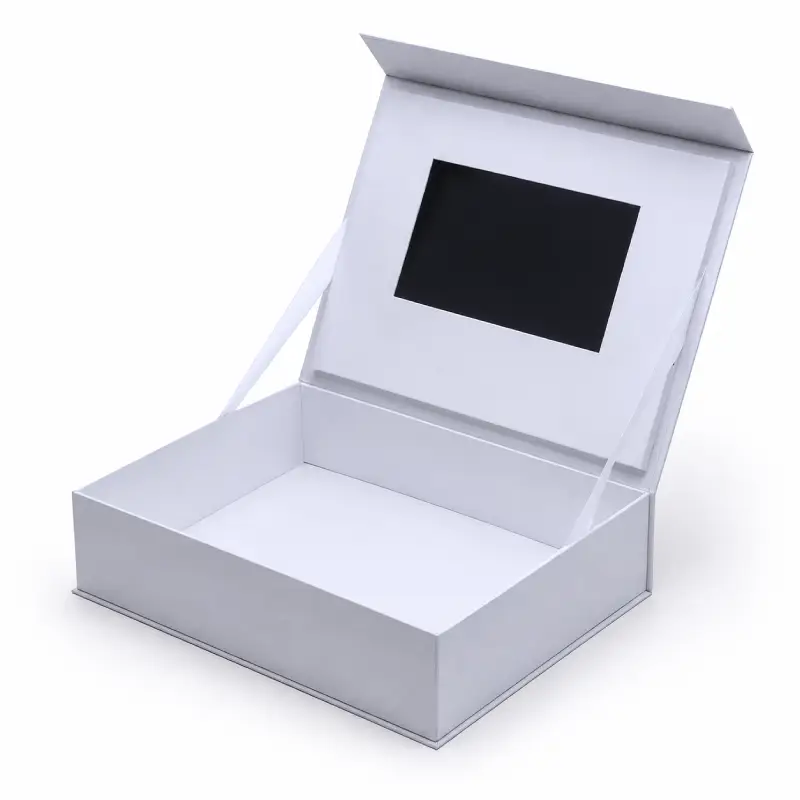
Video box dimensions depend on more than the LCD screen size. The right box size also needs to provide enough internal space for the product, insert, accessories and electronic components.
At CheerTrend, two commonly used base box sizes are 270 × 200 × 45 mm (10.6 × 7.9 × 1.8 in) and 270 × 200 × 100 mm (10.6 × 7.9 × 3.9 in). Custom dimensions are also available when a project requires a different size, depth or internal layout.
Common LCD screen options include 4.3″, 5″, 7″ and 10.1″.
This guide explains how screen size, product dimensions, inserts and box depth work together so you can determine the right video box dimensions before preparing artwork or requesting a quote.
Get a Free Quote + Artwork Template
Common Video Box Dimensions
Video boxes can use one of our common base formats or be customized around the products placed inside.
| Base Box Size | Inches (Approx.) | Compatible Screen | Best For |
|---|---|---|---|
| 270 × 200 × 45 mm | 10.6 × 7.9 × 1.8 in | 4.3″, 5″, 7″ | Slim presentation boxes, printed materials, cards and smaller products |
| 270 × 200 × 100 mm | 10.6 × 7.9 × 3.9 in | 4.3″, 5″, 7″ | Gift sets, product samples, accessories and items requiring deeper compartments |
| Custom dimensions | Made to specification | Any screen | Products requiring a specific internal layout, insert or presentation format |
These are commonly used base sizes rather than fixed requirements.
The final dimensions can be adjusted according to the LCD screen, product dimensions, insert structure and required internal depth.
For custom projects, it is usually better to determine the product and compartment dimensions first, then design the box around the required internal space.
How Screen Size Affects Video Box Dimensions
The LCD screen affects the minimum space required in the lid, but screen size does not determine the complete box dimensions.
Common screen options for custom video boxes include:
- 4.3″
- 5″
- 7″
- 10.1″
For example, a 7″ screen can be used with both a 270 × 200 × 45 mm slim video box and a 270 × 200 × 100 mm deeper gift box structure.
The main difference is often what needs to be placed inside the box.
A box designed mainly for printed materials or flat items may only require a shallow compartment. A box containing a product, device, bottle, gift set or accessories may require substantially more depth.
For this reason, screen size and box dimensions should be considered together based on:
- product dimensions
- required internal depth
- insert structure
- accessories
- presentation style
- shipping considerations
If the common base formats are not suitable, the box dimensions can be customized around the project.
Sample orders typically ship within 2 business days.
Outer Dimensions vs Internal Dimensions
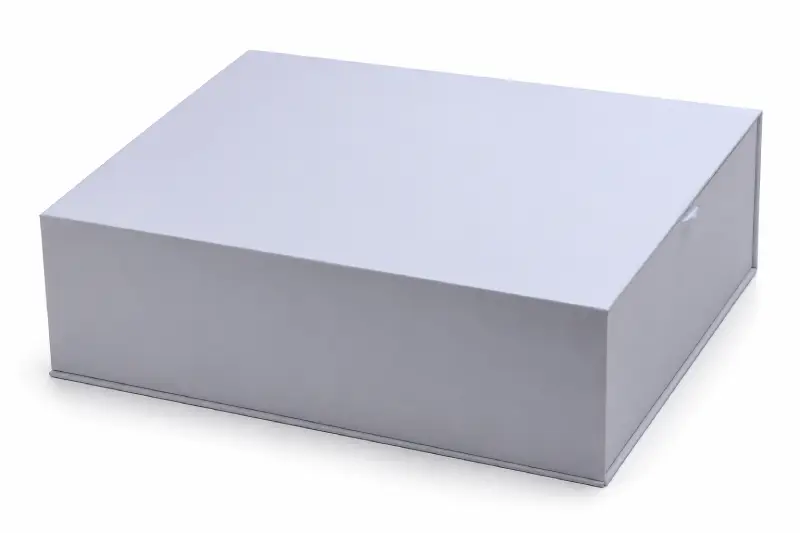
Outer dimensions define the total shipping and shelf footprint of a closed video box, while internal dimensions represent the actual usable space once wall thickness (typically 3 mm), the electronic module and insert padding are accounted for.
A box measuring 270 × 200 × 100 mm externally does not provide the full 270 × 200 × 100 mm as usable product space.
Some internal space is required for:
- rigid board and box walls (typically ~3 mm per wall)
- LCD screen and electronic module
- insert material
- foam surrounding the product
- compartment dividers
- protective clearance
For example, if your product measures:
200 × 120 × 35 mm
the internal compartment normally needs to be larger than the product itself.
Additional space may be required for the insert, finger cutouts, accessories or protective clearance.
For custom projects, we recommend designing the internal structure around the actual product dimensions instead of selecting an outer box size first and trying to fit the product inside afterward.
How to Determine the Internal Space You Need
Before determining the final video box dimensions, measure everything that needs to go inside the box.
For each main product, provide: Length × Width × Height
For example: 180 × 120 × 30 mm
Then consider any additional items that need their own space, such as:
- USB cables
- printed brochures
- instruction cards
- business cards
- product samples
- accessories
- gift items
A practical sizing process is:
Product dimensions → Protective clearance → Insert thickness → Required internal compartment → Final outer box dimensions
For a box containing several items, the arrangement of those items should be planned before the final dimensions are confirmed.
This helps avoid unnecessary empty space while keeping the presentation organized and secure.
How Inserts and Compartments Affect Video Box Dimensions
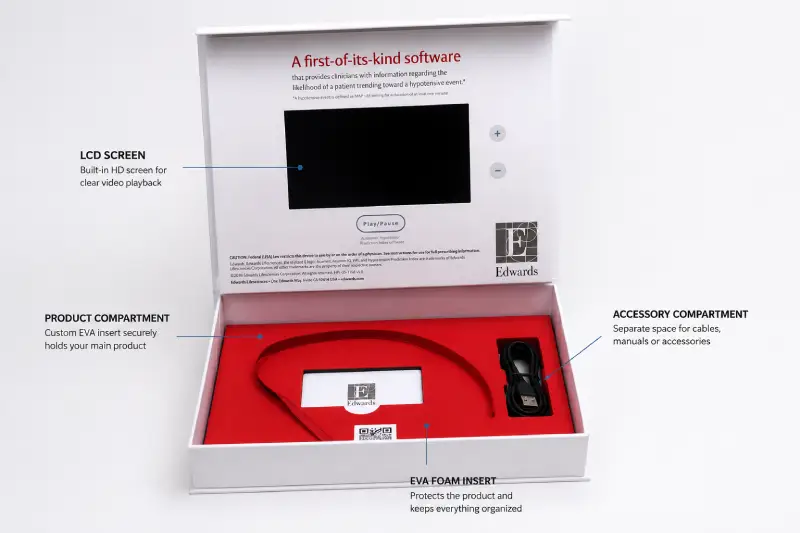
The insert is one of the biggest factors affecting the internal dimensions and depth of a custom video box.
Common options include:
- EVA foam
- PE foam
- cardboard inserts
- paperboard trays
- die-cut inserts
- custom compartments
The right insert depends on the product, desired presentation and level of protection required.
Foam Inserts
Foam inserts are often used when a product requires additional protection or a precise fit.
They can be suitable for:
- electronics
- bottles
- premium gifts
- product samples
- devices
- fragile items
Because the foam surrounds and supports the product, enough material thickness needs to be allowed around the item.
This increases the required internal space.
Cardboard Inserts
Cardboard or paperboard inserts can be used when a lighter structure or printed interior presentation is preferred.
They can be die-cut to hold products and accessories while keeping the packaging relatively lightweight.
Multiple Compartments
Some video boxes need separate spaces for several items.
For example, a product launch kit might contain:
Main product + accessory + cable + printed card
Each item needs to be positioned before the internal layout and box dimensions can be finalized.
This is why two video boxes using the same LCD screen can have completely different dimensions.
How Deep Should a Video Box Be?
Box depth is particularly important for video gift boxes and presentation boxes because the packaging often needs to hold physical products.
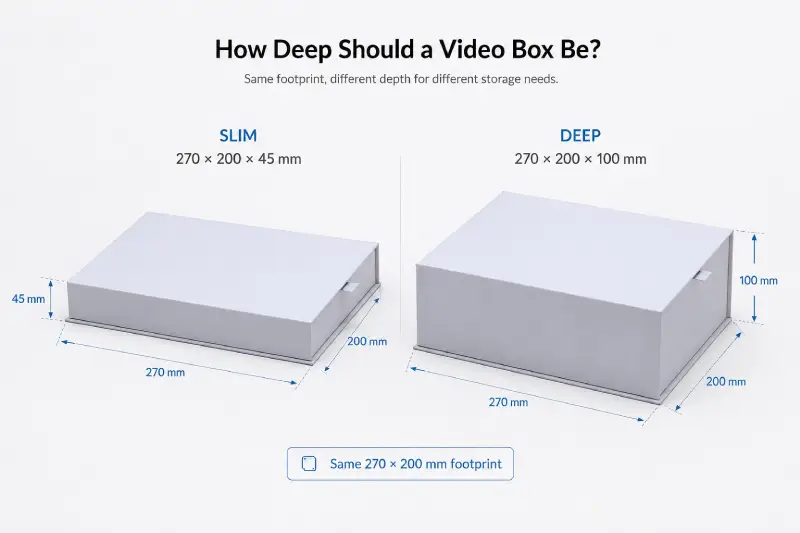
Our two common base formats illustrate the difference.
270 × 200 × 45 mm
The 45 mm (1.8 in) deep format is a relatively slim option.
It is better suited to projects containing:
- printed materials
- cards
- smaller samples
- relatively thin products
- presentation materials
270 × 200 × 100 mm
The 100 mm (3.9 in) deep format provides considerably more internal space.
It can be more suitable for:
- corporate gifts
- product samples
- accessories
- gift sets
- thicker products
- deeper insert structures
These depths are not limitations. Custom depths can be produced according to the product and project.
When determining the required depth, consider:
- product height
- insert thickness underneath the product
- protective clearance above the product
- accessories
- internal dividers
- lid structure
The product should fit securely without pressing against the inside of the lid when the box is closed.
Real Video Box Sizing Examples
Actual project requirements show why there is no single standard video box dimension.
Different customers may use the same screen size while requiring very different box dimensions because the contents and presentation format are different.
7″ Video Box — 270 × 200 × 45 mm
270 × 200 × 45 mm (10.6 × 7.9 × 1.8 in) is one of CheerTrend’s commonly used 7″ video box formats.
This size has been offered in actual customer projects where a relatively slim video box structure was required.
It provides a useful starting point when the box does not need a deep product compartment.
7″ Video Gift Box — 270 × 200 × 100 mm
For projects requiring substantially more internal depth, 270 × 200 × 100 mm (10.6 × 7.9 × 3.9 in) is another commonly used format.
This size has been specified in customer inquiries for 7″ LCD gift boxes, including projects requiring space for products or accessories.
The comparison between the 45 mm and 100 mm versions illustrates an important point:
The LCD screen can remain the same while the box depth changes according to what needs to go inside.
Custom 5″ Video Box — 9 × 12 × 2 in
For a U.S. real estate presentation project, the requested configuration was a 5″ LCD video box measuring 9 × 12 × 2 in (approximately 229 × 305 × 51 mm).
This project required a different proportion from our common 270 × 200 mm base formats.
It demonstrates why custom dimensions can be useful when the presentation format has already been defined by the customer — a pattern also common in real estate marketing projects, where box format often needs to match an existing listing presentation kit.
Deep Custom 7″ Video Box — Approx. 300 × 300 × 120 mm
In another project inquiry, the customer required a 7″ LCD box approximately 300 × 300 mm with a depth of 120 mm.
This is considerably larger and deeper than a standard presentation box and shows how product or gift requirements can change the overall structure.
The practical rule is:
Choose the box around the product and presentation requirements—not around a fixed size chart.
Standard Size or Custom Video Box Dimensions?
A common base size can be a good starting point when your product fits comfortably within the available internal space.
Custom dimensions are more suitable when:
- the product has an unusual size or shape
- several products need separate compartments
- a specific insert layout is required
- the box needs to match an existing product package
- the presentation requires a particular proportion
- the common box depth is too shallow or unnecessarily deep
For example, if your project fits comfortably within a 270 × 200 × 45 mm structure, there may be no reason to make the box significantly larger.
If you need to package a larger gift set with several accessories, a 270 × 200 × 100 mm format or a completely custom size may be more appropriate.
The objective is not simply to make the box larger.
The goal is to create enough space for the screen, product and insert while keeping the package practical and visually balanced.
How Video Box Dimensions Affect Shipping Cost
Video box dimensions can also affect international shipping costs.
Courier and air freight charges may be calculated using volumetric weight as well as actual weight.
A larger video box can result in:
- larger individual packaging
- larger export cartons
- higher volumetric weight
- fewer units per shipping carton
- higher shipping cost per unit
This becomes particularly important for larger B2B orders.
For example, increasing box depth from 45 mm to 100 mm provides significantly more internal space, but it also increases the shipping volume of each unit.
If two different structures can safely hold the same product, the more compact option may help reduce total shipping volume.
For a broader explanation of product, customization and quantity factors that influence pricing, see our Video Box Cost Guide.
How to Choose the Right Video Box Size
Instead of choosing a box size based only on appearance, we recommend working through the project in the following order.
1. Measure the Product
Start with the exact dimensions of the item or items that will be placed inside.
Record:
Length × Width × Height
2. Choose the LCD Screen Size
Consider whether a 4.3″, 5″, 7″ or 10.1″ screen is appropriate for the overall presentation.
The screen should be large enough to present the video effectively while remaining visually balanced with the box.
3. Plan the Product Layout
Decide where the main product, accessories and printed materials will be positioned.
- larger individual packaging
- larger export cartons
- higher volumetric weight
- fewer units per shipping carton
- higher shipping cost per unit
4. Choose the Insert Structure
Determine whether the project needs EVA foam, another foam material, cardboard or another type of insert.
5. Calculate the Required Internal Space
Allow enough room for the product, insert, accessories and protective clearance.
6. Determine the Outer Dimensions
Once the internal structure is clear, the final outer box dimensions can be determined.
7. Consider Shipping
Avoid unnecessary size and depth when a more compact structure can provide the same presentation and protection.
This approach usually produces a better result than selecting an arbitrary outer box size first.
What Information Should You Provide for a Custom Video Box?
You do not need to determine every technical detail before contacting a manufacturer.
To recommend a suitable video box size, the most useful information is:
Preferred Screen Size
For example:
4.3″, 5″, 7″ or 10.1″
If you are unsure, the screen size can be recommended according to the overall box and application.
Product Dimensions
Provide:
Length × Width × Height
in millimeters or inches.
Number of Items
Let us know whether the box needs to hold one product or several separate items.
Insert Requirements
If you already know whether you need EVA foam, another foam structure or a cardboard insert, include this information.
If not, the insert can be selected according to the product and required presentation.
Accessories
List any additional items that need to fit inside, such as:
- cables
- cards
- brochures
- samples
- accessories
Quantity
Order quantity is useful when evaluating the most practical structure and overall project cost.
A product photo or simple layout drawing is also helpful when planning the internal arrangement.
Video Box Size, Cost and Configuration Work Together
Video box dimensions should not be selected independently from the rest of the project.
A larger LCD screen requires more lid space.
A thicker product requires more internal depth.
A protective foam insert requires additional space around the product.
A larger outer box can increase material usage and shipping volume.
For this reason, the most efficient video box is usually not the largest one. It is the box that provides the right balance between:
screen size + product space + protection + presentation + shipping efficiency
Before finalizing your project, you may also want to explore:
Video Box Cost Guide Learn how screen size, quantity, box structure and customization affect pricing.
Video Box Examples See different video box formats, layouts and applications.
Video Box Guides Hub Explore more guides on choosing the right screen, box structure, insert and other options for your custom video box project.
Frequently Asked Questions
At CheerTrend, two commonly used base box sizes are 270 × 200 × 45 mm (10.6 × 7.9 × 1.8 in) and 270 × 200 × 100 mm (10.6 × 7.9 × 3.9 in). Custom dimensions are also available.
Common LCD screen options include 4.3″, 5″, 7″ and 10.1″. The appropriate screen depends on the overall box dimensions, product layout, presentation requirements and budget.
Yes. The box dimensions can be customized according to the product, screen size, internal insert and required compartment layout.
The screen and box should be considered together. For boxes containing physical products, it is usually best to start with the product dimensions and required internal space, then select a screen that fits the overall presentation.
Outer dimensions describe the overall size of the closed box. Internal dimensions describe the usable space available for the product and insert. The internal space is smaller because the box structure, electronics and insert occupy part of the total volume.
This depends on the insert material, product shape and required protection. Foam inserts generally require additional material around the product, while some cardboard insert structures can use less space.
It can. A deeper box generally uses more material and increases packaging volume. It may also increase international shipping costs because of higher volumetric weight.
Yes. Screen size does not determine box depth. A 7-inch screen can be integrated into different box structures depending on the product, insert and required internal space
Send the product’s length × width × height, preferred screen size, approximate quantity and details of any accessories that need to fit inside. Product photos or a simple layout drawing are also useful.
Need Help Choosing the Right Video Box Dimensions?
If you already know what will go inside the box, send us the product dimensions, preferred screen size and approximate quantity.
CheerTrend can help determine whether one of our common 270 × 200 mm box formats is suitable or whether a custom size would provide a better fit for your product and presentation.