

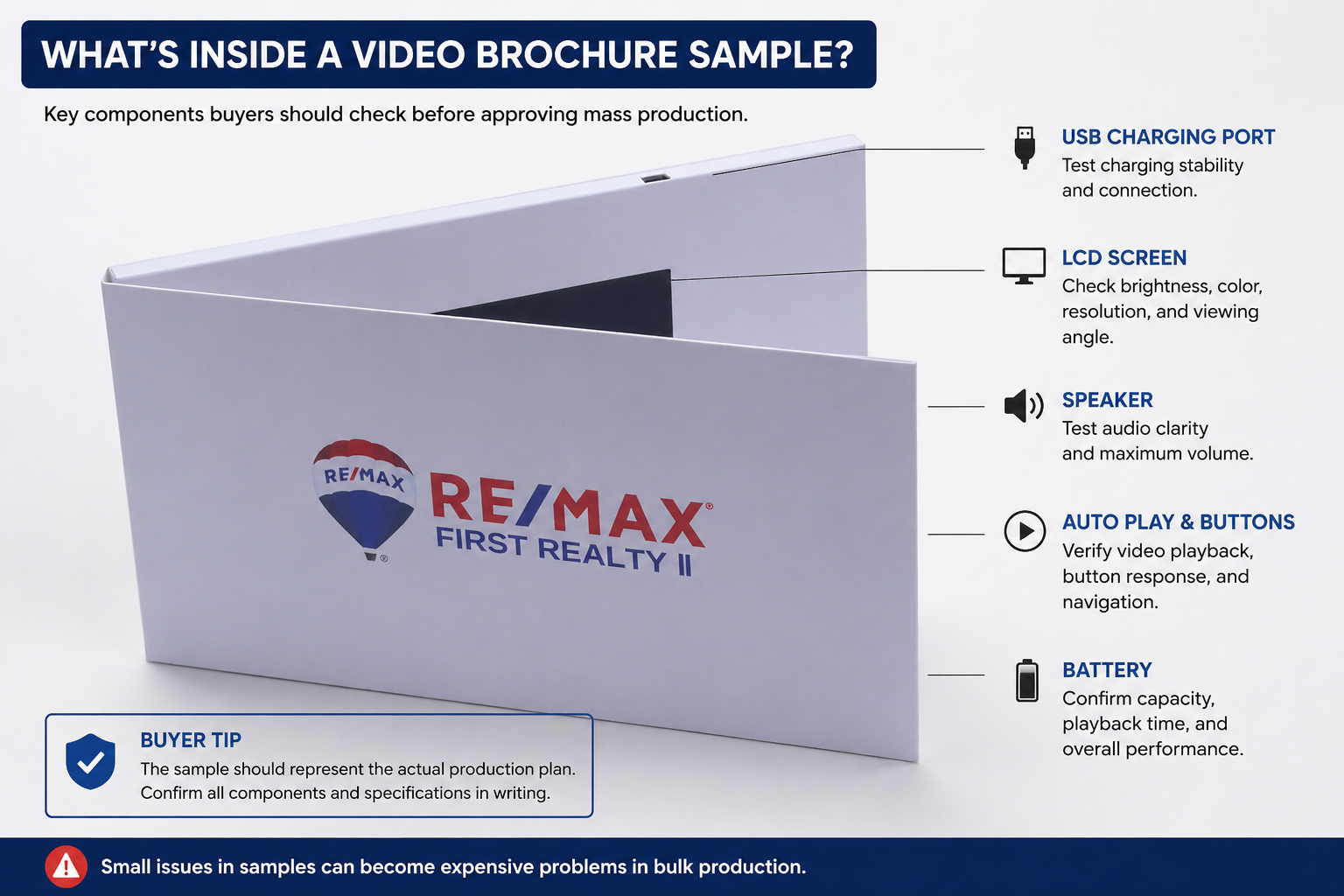
I have seen buyers approve video brochure samples within hours. Then discover screen, color, or packaging problems only after mass production starts.
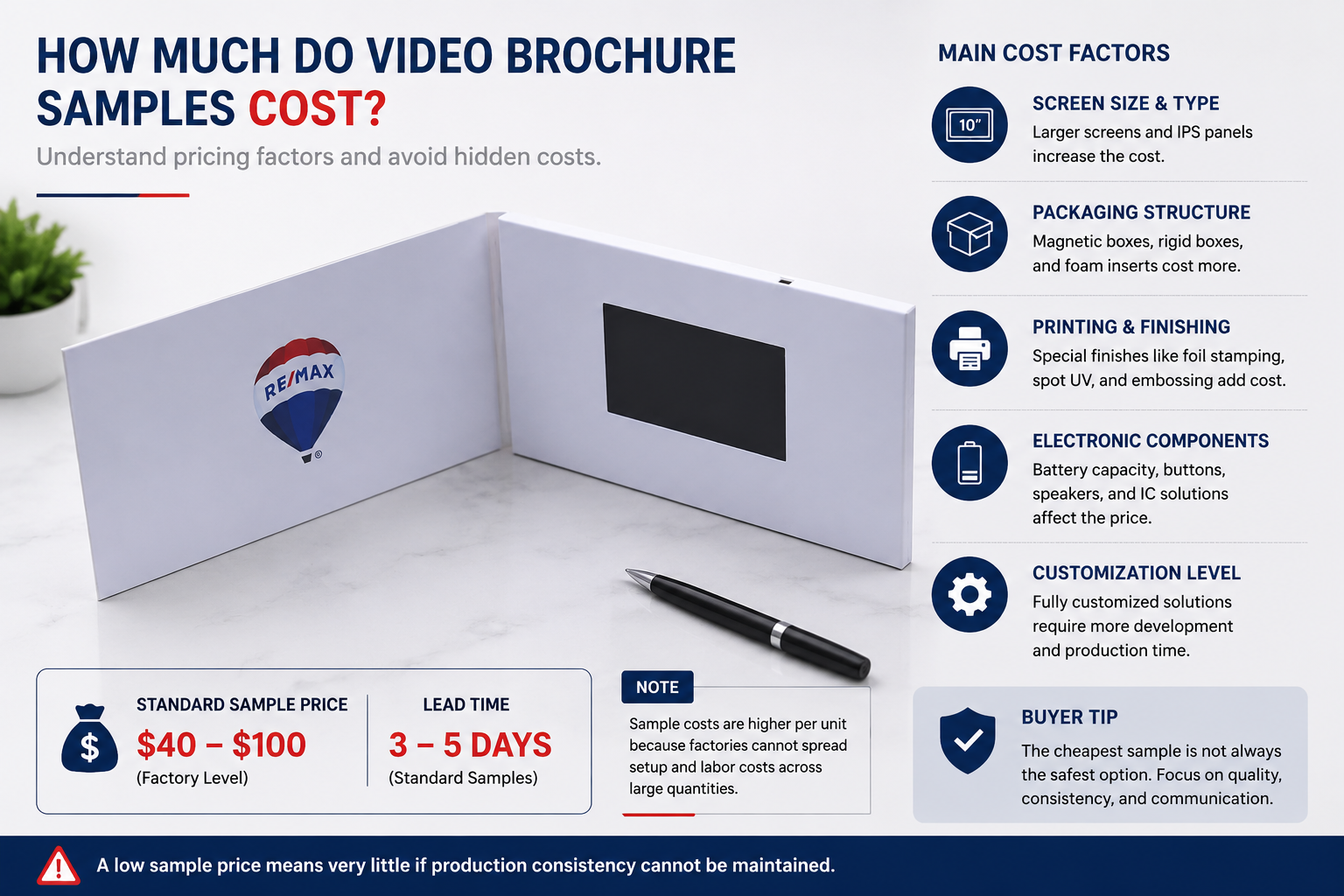
Video brochure samples help buyers verify quality, test suppliers, and lock production specifications before bulk production begins. Most standard samples cost around $40–100 and usually take 3–5 days to produce.1
A proper sample process prevents expensive mistakes later. Most sample problems are easy to fix. Production problems are expensive to fix.
Why Do Buyers Request Video Brochure Samples?
Many overseas buyers rely too heavily on factory photos. But video brochures are physical presentation products. Small quality problems become obvious immediately once the brochure is in someone’s hands.
Buyers request video brochure samples to verify product quality, compare suppliers, confirm specifications, and reduce production risks before placing bulk orders.
Experienced buyers treat samples as a quality control stage, not just a preview.
Samples Reveal Problems Photos Cannot Show
Factory photos hide many details.
The biggest differences usually appear in:
- screen brightness
- viewing angles
- speaker quality
- magnet strength
- hinge durability
- glue finishing
- paper stiffness
- lamination texture
I have seen cheap TFT screens look acceptable online. But once buyers hold them under normal lighting, poor viewing angles become obvious immediately.
That is why serious buyers almost always request physical samples before mass production.
Samples Also Test Supplier Reliability
Many buyers only focus on the product itself. But the sample process also reveals:
- response speed
- communication quality
- revision handling
- problem-solving ability
- timeline management
A simple rule I often notice:
| Sample Speed | What It Usually Means |
|---|---|
| 3 days | Materials ready and efficient workflow |
| 5–7 days | Normal production pace |
| 10+ days without explanation | Potential risk |
The sample stage is usually the easiest part of the project. If communication already feels slow or confusing at this stage, production rarely becomes smoother later.2
What Should Buyers Confirm During The Sample Stage?
Many buyers check samples casually. Then production problems appear later because critical details were never confirmed properly.
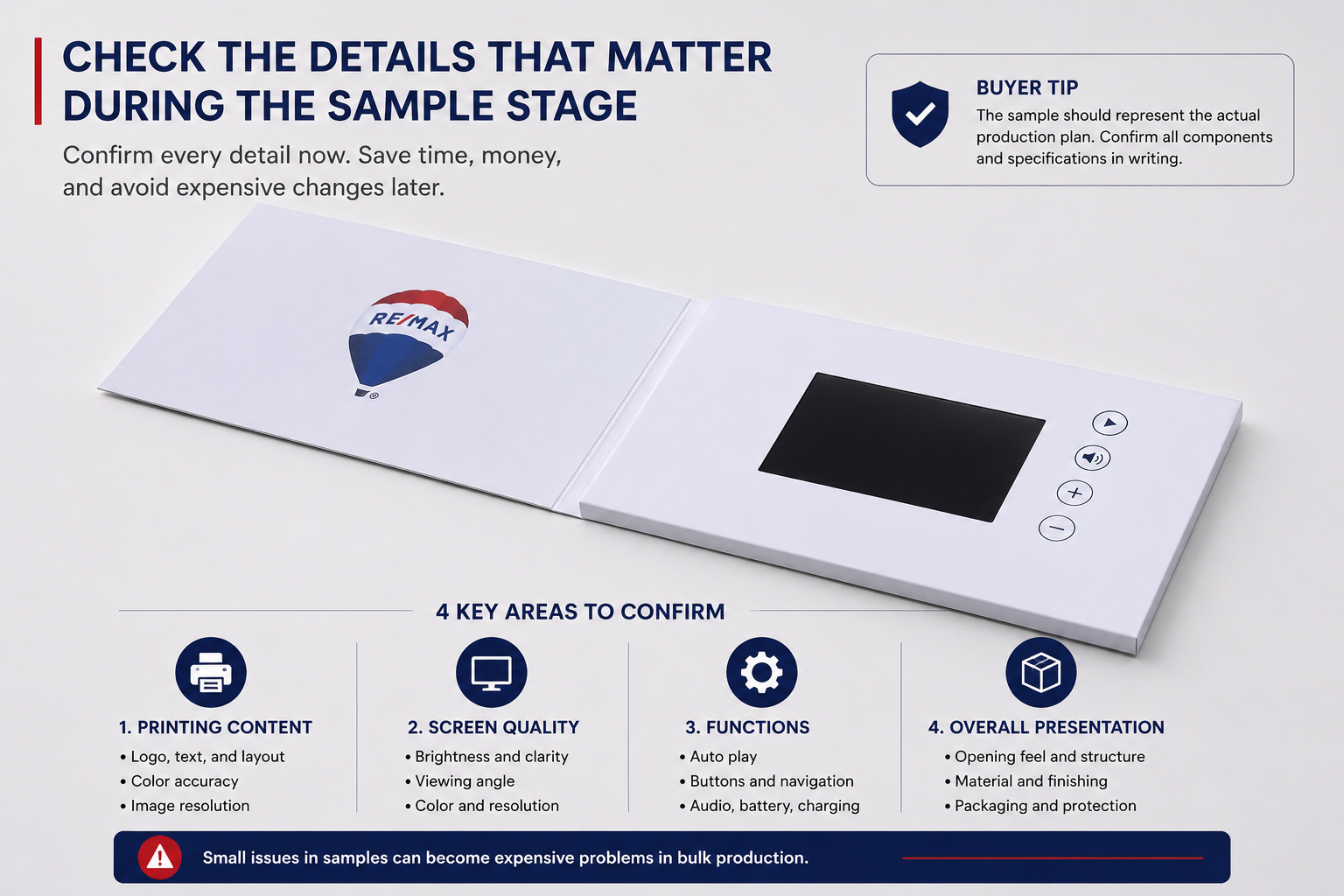
The sample stage should confirm printing accuracy, screen quality, functionality, and final product presentation before production approval.
Most production disputes start because specifications were never clearly locked.
The Four Most Important Areas
| Priority | What To Check | Details |
|---|---|---|
| 1 | Printing content | Logo, text, layout, colors |
| 2 | Screen quality | Brightness, viewing angle, resolution |
| 3 | Functions | Autoplay, buttons, charging, battery |
| 4 | Overall presentation | Opening feel, structure, packaging |
Printing comes first because artwork problems are the easiest and cheapest to fix before production.
Screen quality and functionality matter because electronics problems become expensive once assembly starts.
The final presentation matters because video brochures are marketing tools, not just electronic devices.
The Sample Should Match Planned Production
This part is critical.
The sample should represent the actual production plan.
Buyers should confirm whether mass production will use:
- the same screen supplier
- the same battery type
- the same print materials
- the same packaging structure
Many buyers assume samples and production will automatically match. That assumption causes many problems later.
How Much Do Video Brochure Samples Cost?
Many buyers expect free samples because some suppliers advertise them aggressively online. But customized video brochure samples involve real production costs.
Most standard video brochure samples cost around $40–100 at factory level. Larger screens, premium packaging, and complex customization increase pricing.
Samples cost more per unit because they require manual work.
Main Cost Factors
| Factor | Cost Impact |
|---|---|
| Large screens (7–10 inch) | Higher |
| IPS screens | Higher |
| Magnetic rigid boxes | Higher |
| Foam inserts | Medium |
| Special printing finishes | Higher |
| Standard templates | Lower |
Cheap Samples Can Become Expensive Later
The cheapest sample is not always the safest option.
I have seen suppliers produce beautiful samples, then fail during mass production because their actual factory capability was much weaker.
A low sample price means very little if production consistency cannot be maintained later.3
Why Are Special Printing Effects Usually Missing From Samples?
Many buyers feel confused when sample products do not include foil stamping, spot UV, or embossing. This is actually normal in the packaging industry.
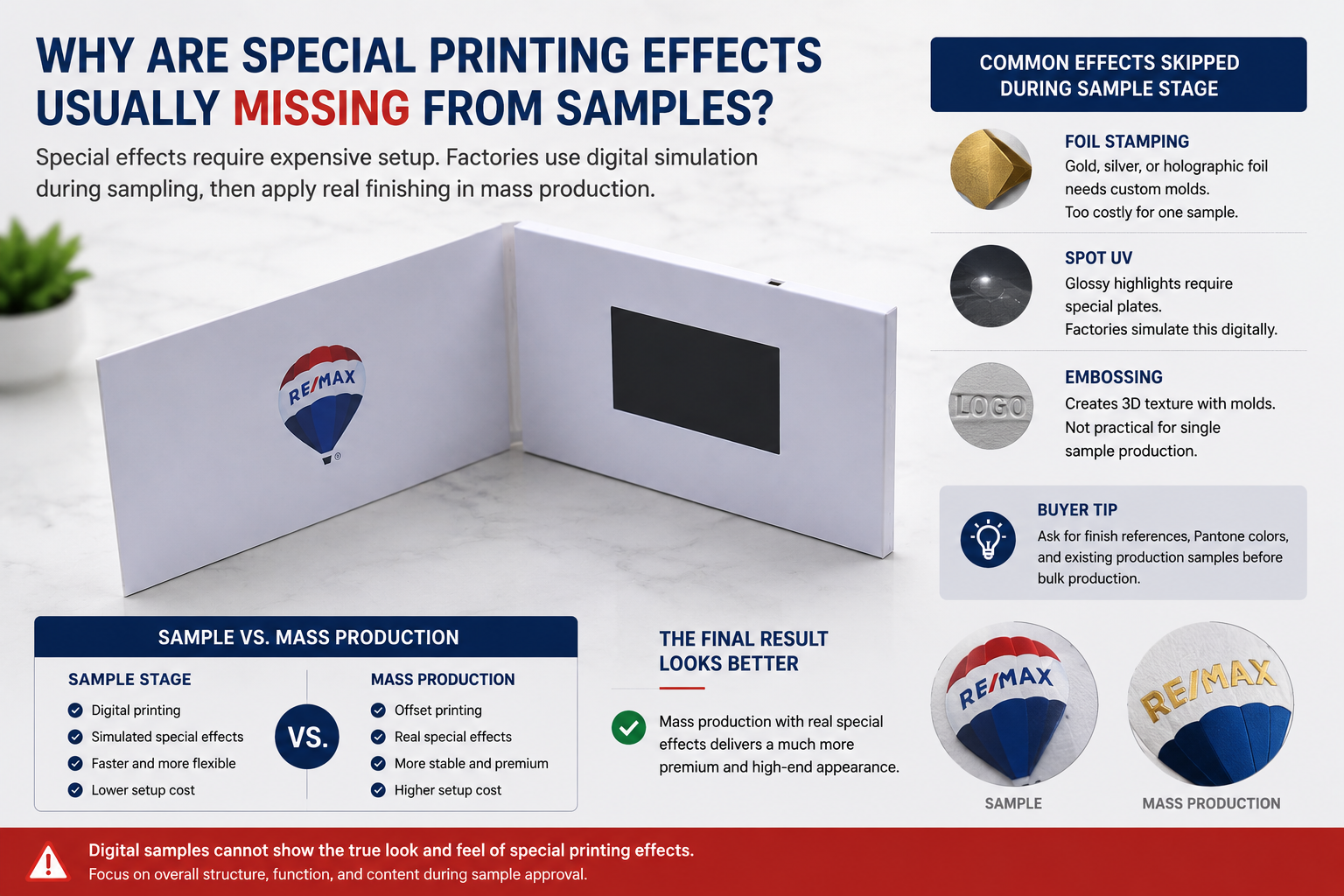
Most video brochure samples do not include special printing effects because setup costs are too high for single-piece production. Factories usually simulate these effects digitally during the sample stage.
Common Effects Usually Skipped During Sampling
| Printing Effect | Sample Stage | Mass Production |
|---|---|---|
| Spot UV | Usually skipped | Available |
| Foil stamping | Usually skipped | Available |
| Embossing | Usually skipped | Available |
Many buyers mistakenly think the factory cannot produce these finishes.
In reality, suppliers usually avoid creating separate molds or printing plates for one sample unit.
Digital Printing And Offset Printing Behave Differently
Video brochure samples usually use digital printing for speed and flexibility, while mass production uses offset printing.
Digital samples often appear brighter and more saturated.
Offset printing usually produces more stable large-scale color consistency, but colors may still shift slightly between production batches.
I once saw a buyer approve a beautiful digital sample, then reject thousands of finished units because they expected offset printing colors to match perfectly.4
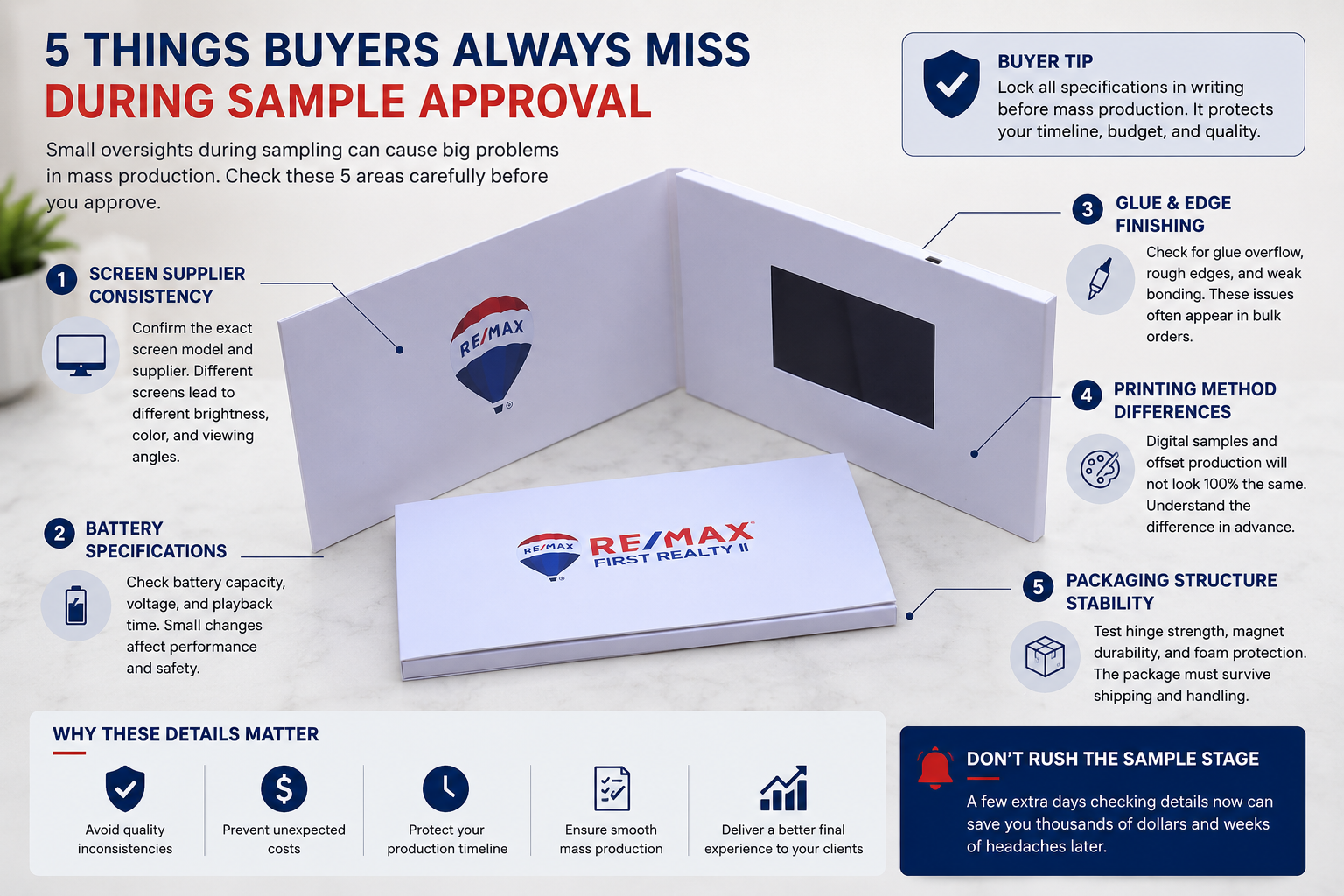
5 Things Buyers Always Miss During Sample Approval
!
Many production problems start because buyers focus only on the screen and ignore everything around it.
1. Screen Supplier Consistency
Some suppliers change screen vendors between sampling and production.
The screen may still be the same size, but brightness, viewing angle, and color quality can change significantly.
2. Battery Specifications
Battery capacity directly affects playback time and long-term stability.
Buyers should confirm battery specifications in writing before production starts.
3. Glue And Edge Finishing
Glue marks and rough edges often appear during mass production if finishing standards were never discussed clearly during sampling.
4. Printing Method Differences
Digital samples and offset production will never look 100% identical.
Buyers who understand this early avoid many production disputes later.
5. Packaging Structure Stability
Luxury packaging may look beautiful in a single sample but behave differently during bulk shipping.
I always recommend checking:
- hinge strength
- foam protection
- magnet durability
- shipping resistance
before production approval.
Conclusion
A video brochure sample is not just a preview product. It is the safest way to verify quality, evaluate suppliers, lock specifications, and reduce production risks before mass production begins.
At CheerTrend, we usually lock all screen, battery, printing, and packaging specifications in writing before mass production begins. That helps buyers avoid unexpected material or quality changes later.
-
Standard sample pricing and lead times vary depending on screen size, packaging complexity, and customization level. ↩
-
Delayed sample communication often becomes a larger issue during mass production and shipment coordination. ↩
-
Some suppliers outsource premium samples separately from actual production factories, causing quality inconsistencies later. ↩
-
Digital printing and offset printing use different production methods, so slight color variation is normal in packaging manufacturing.