

A Buyer’s Guide To What Happens Before Mass Production
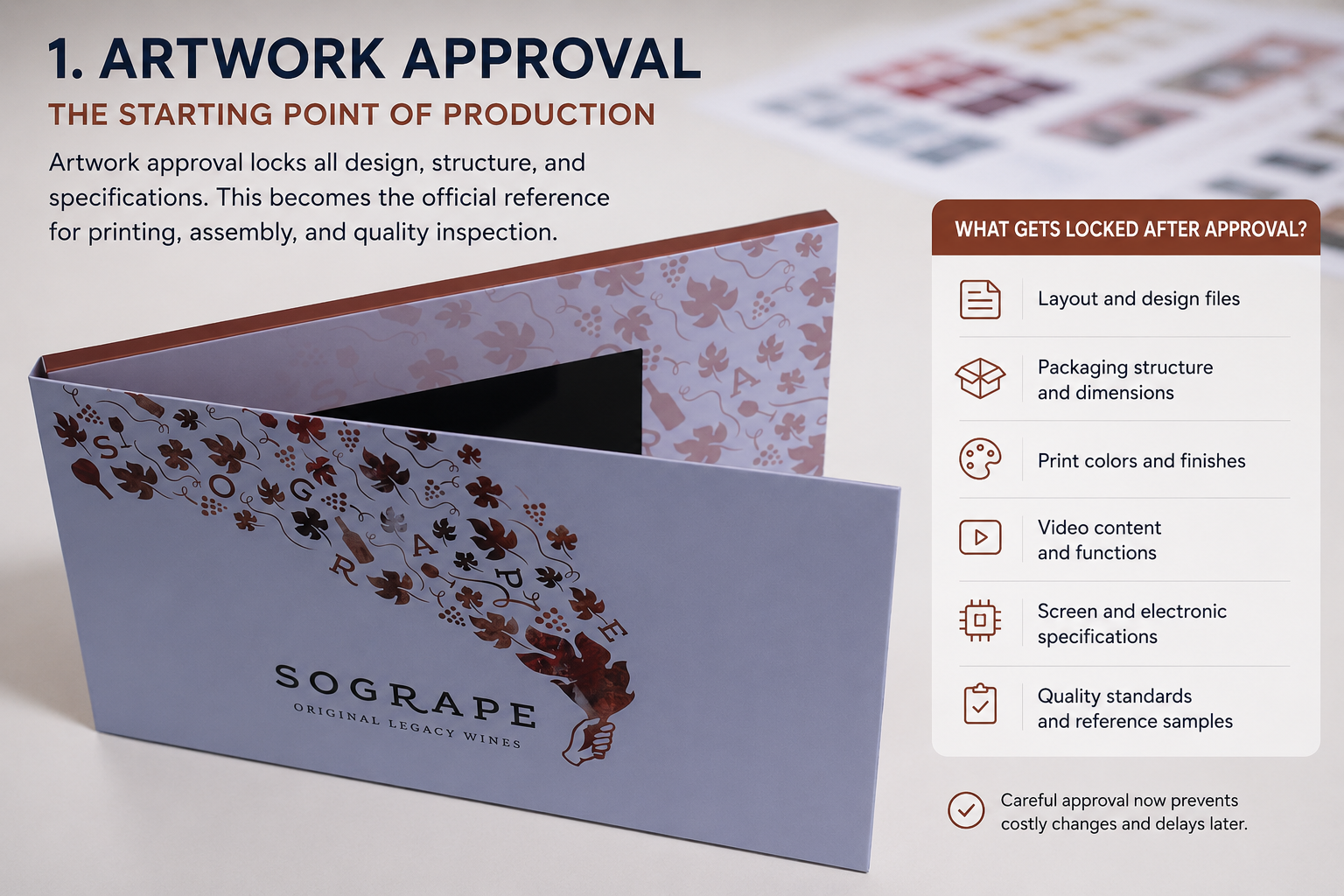
Many buyers think production starts immediately after artwork approval.
In reality, factories usually spend several days preparing materials, scheduling production, checking files, and organizing internal QC before mass production officially begins.
This stage often determines whether production runs smoothly or turns into delays, material shortages, or quality problems.
Why Is Artwork Approval So Important?
Many production problems begin because artwork gets approved too quickly. Small technical mistakes become expensive once printing and assembly start.
Artwork approval locks the production files, layout, print setup, packaging dimensions, and technical specifications before manufacturing begins. Approved files also become the quality reference standard used throughout production.1
Once printing plates or packaging materials are prepared, changes become much more difficult.
Artwork Approval Is More Than Design Approval
Many buyers think artwork approval only means checking logos and text.
Factories actually check much more than that:
- bleed lines
- dielines
- CMYK conversion
- image resolution
- font outlining
- barcode placement
- packaging dimensions
- video compatibility
I have seen buyers approve visually beautiful artwork that later created production problems because the files were not technically production-ready.
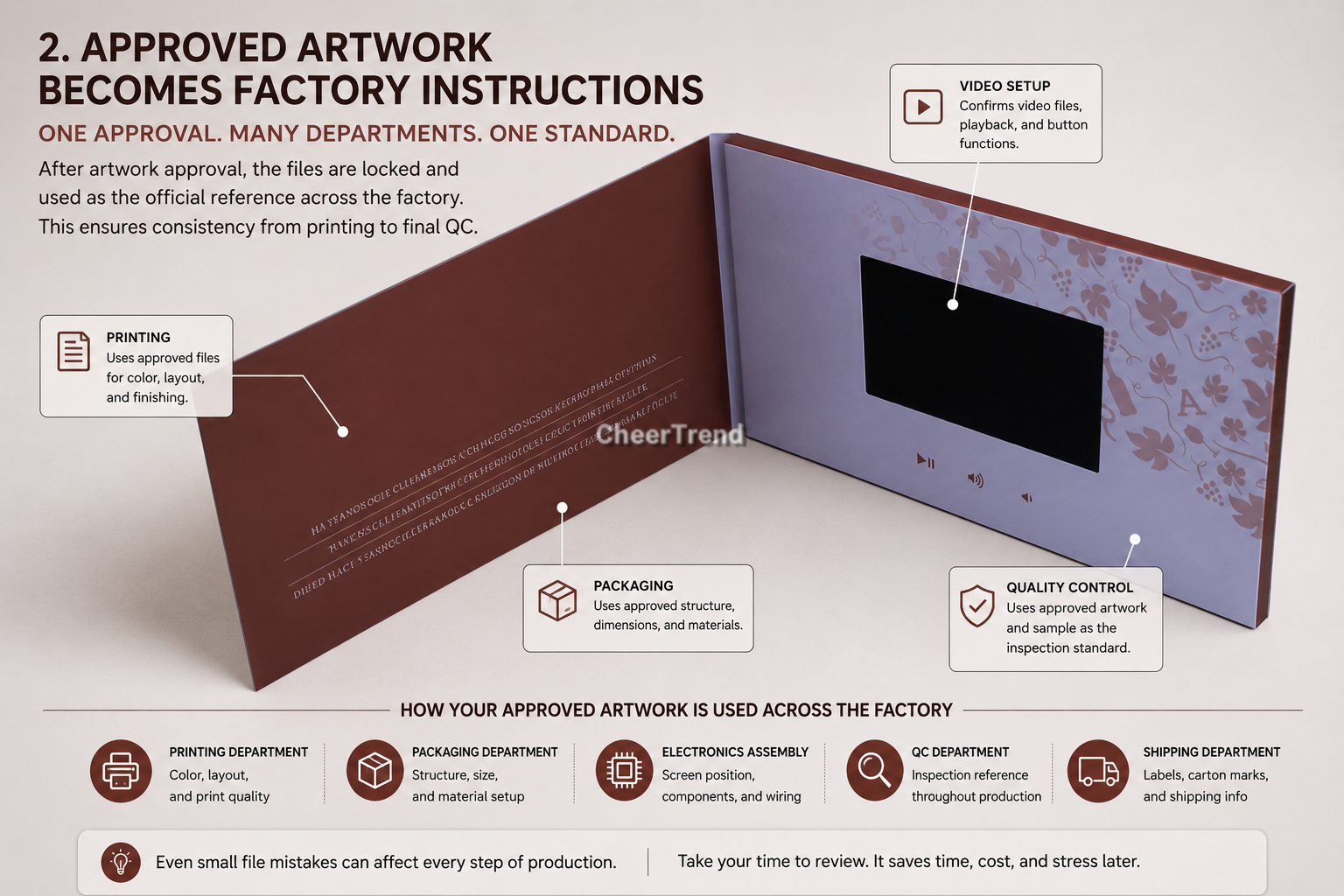
Approved Artwork Becomes Factory Instructions
After approval, the files move across multiple departments.
| Department | How The Artwork Is Used |
|---|---|
| Printing | Color and layout production |
| Packaging | Structure and sizing |
| Electronics assembly | Screen positioning |
| QC team | Inspection reference |
| Shipping | Carton labels and packing marks |
That is why even small file mistakes can affect the entire project later.
What Happens Inside The Factory After Approval?
Many buyers imagine factories simply pressing “start production” after approval. Actual manufacturing is much more organized than that.
After artwork approval, factories usually move through prepress review, production scheduling, material preparation, printing coordination, assembly planning, and QC preparation before mass production begins.2
Most factory work during this stage happens internally, which is why buyers sometimes feel like “nothing is happening” even though production preparation is already underway.
Step 1: Prepress File Review
The prepress team usually checks:
- print dimensions
- bleed areas
- CMYK color setup
- image quality
- font conversion
- print alignment
- cutting lines
This stage catches technical problems before printing starts.
Step 2: Material Preparation
Factories then begin preparing:
- LCD screens
- batteries
- PCB boards
- speakers
- magnetic closures
- foam inserts
- packaging materials
Material shortages are one of the biggest causes of production delays.
I have seen projects delayed simply because certain IPS screen sizes became temporarily unavailable during peak season.
Step 3: Production Queue Scheduling
Factories usually arrange production schedules across multiple departments.
| Production Area | Scheduling Purpose |
|---|---|
| Printing line | Press scheduling |
| Assembly line | Labor allocation |
| QC station | Testing setup |
| Packaging area | Carton preparation |
During busy seasons, factories may reserve production slots before all materials even arrive.
Some factories also schedule printing first, then wait for electronic components before final assembly begins.
How Long After Artwork Approval Does Production Start?
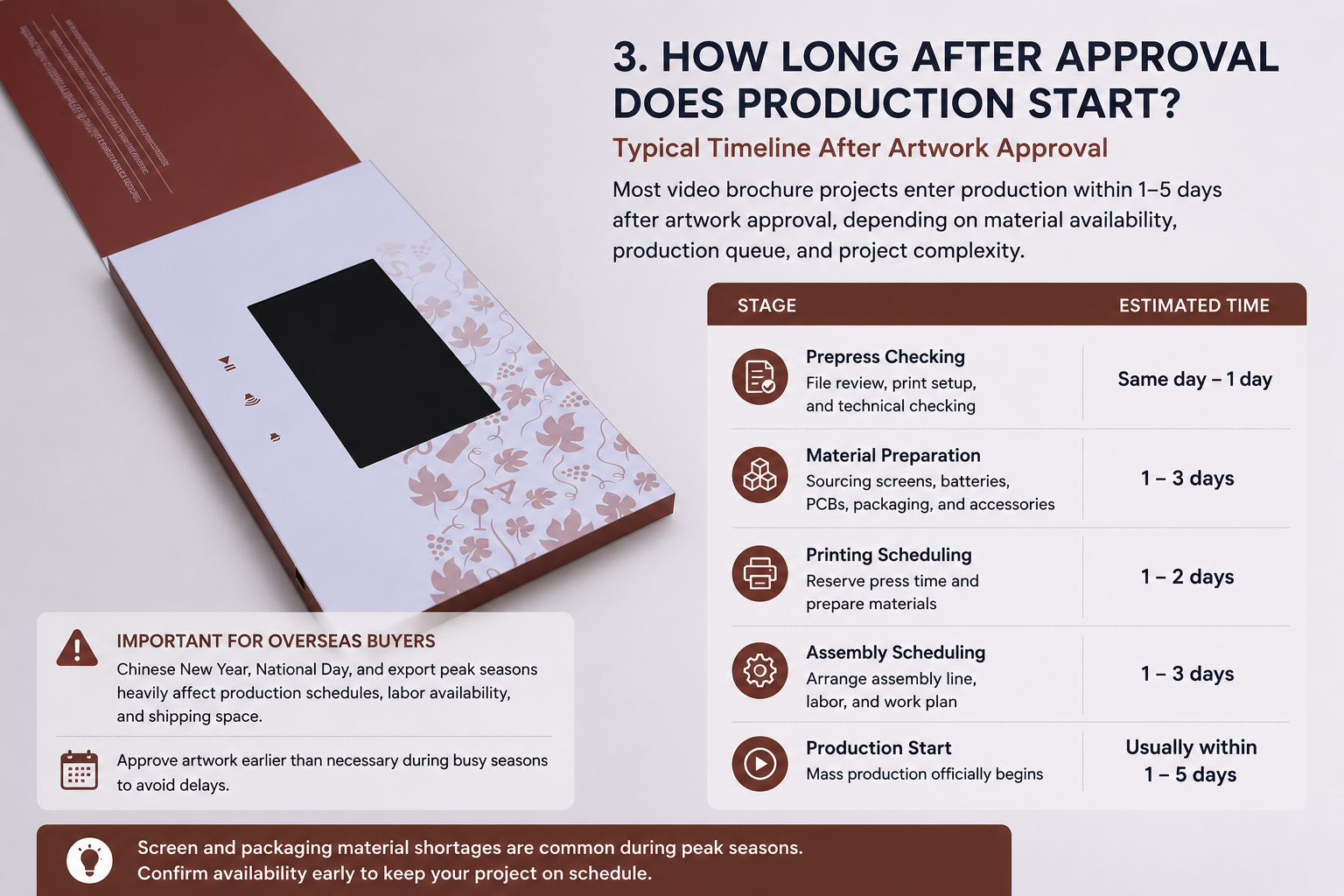
Many buyers expect production to begin immediately after approval. But factories still need preparation time before manufacturing starts.
Most video brochure projects enter production within 1–5 days after artwork approval depending on material availability, production queue status, and project complexity.
Peak season projects may require longer scheduling time.
Typical Timeline After Artwork Approval
| Stage | Estimated Time |
|---|---|
| Prepress checking | Same day–1 day |
| Material preparation | 1–3 days |
| Printing scheduling | 1–2 days |
| Assembly scheduling | 1–3 days |
| Production start | Usually within 1–5 days |
Large luxury packaging projects usually require additional preparation because foam inserts, rigid boxes, and specialty materials often involve separate suppliers.
Important For Overseas Buyers
Chinese New Year, National Day holidays, and export peak seasons heavily affect:
- printing schedules
- labor availability
- material sourcing
- shipping space
- production queues
Many overseas buyers approve artwork too late before major Chinese holidays, then discover factories and logistics companies close for multiple weeks during peak season.
Experienced buyers usually approve artwork earlier than necessary during busy periods.3
Can Buyers Still Make Changes After Artwork Approval?
This is one of the most common buyer questions after approval.
Many buyers assume artwork approval permanently locks the project. That is not always true.
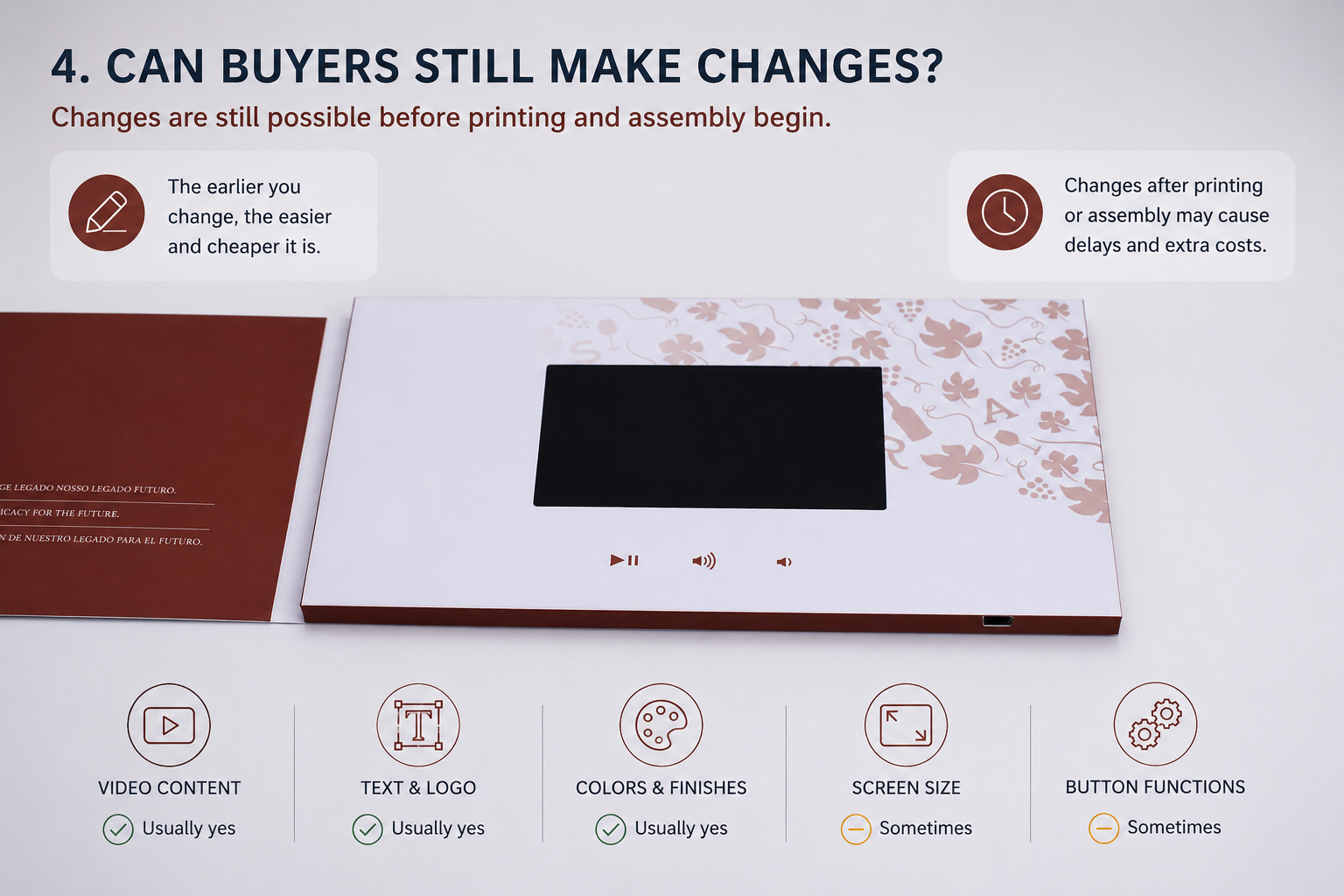
As long as mass production has not started, most project details can still be adjusted. But once printing or assembly begins, changes become much more expensive and may delay shipment.
The earlier changes happen, the easier they are to manage.
Changes Usually Still Possible Before Production
| Item | Usually Still Adjustable? |
|---|---|
| Video content | Usually yes |
| Logo placement | Usually yes |
| Text corrections | Usually yes |
| Packaging colors | Usually yes |
| Screen size | Sometimes |
| Button functions | Sometimes |
| Special finishes | Usually yes |
Changes Become Expensive After Printing Starts
Once factories begin:
- offset printing
- foam cutting
- electronics assembly
- packaging production
changes become much harder.
I once saw a buyer request logo adjustments after printing had already started. Hundreds of printed sheets had to be discarded before production restarted.
Questions Smart Buyers Ask After Approval
Experienced buyers usually ask more questions after artwork approval, not fewer.
The period between artwork approval and production start is where many hidden production problems first appear.
Smart Buyer Questions
| Question | Why It Matters |
|---|---|
| Have all materials been ordered? | Prevents screen or packaging shortages |
| When will prepress be completed? | Helps estimate production timing |
| Has the production slot been reserved? | Avoids peak season delays |
| Will QC follow the approved sample? | Reduces inconsistency risks |
| Will production updates be provided? | Improves project visibility |
| Will a full assembled unit be checked before shipment? | Helps catch final issues early |
Good factories usually answer these questions clearly and confidently.
Vague answers during this stage often create larger problems later.4
Conclusion
Artwork approval is not the end of the process. It is the point where real factory preparation begins.
Buyers usually worry most during the period between artwork approval and production start because most factory work happens internally during this stage.
At CheerTrend, we usually lock all approved artwork, screen specifications, packaging materials, and production details in writing before mass production begins. We also provide production updates during material preparation, printing, assembly, and QC stages so buyers can follow the project before shipment.
Buyers who request production tracking updates early usually avoid more problems later.
Ask for our production tracking checklist when requesting your next quote.
-
Approved artwork files become the production reference standard for printing, packaging, assembly, and quality inspection. ↩
-
Most factories require internal scheduling and material coordination before production officially starts. ↩
-
Chinese holidays and export peak seasons can significantly affect production schedules and shipping timelines. ↩
-
Clear production communication after approval often reduces delays, revisions, and quality misunderstandings later. ↩