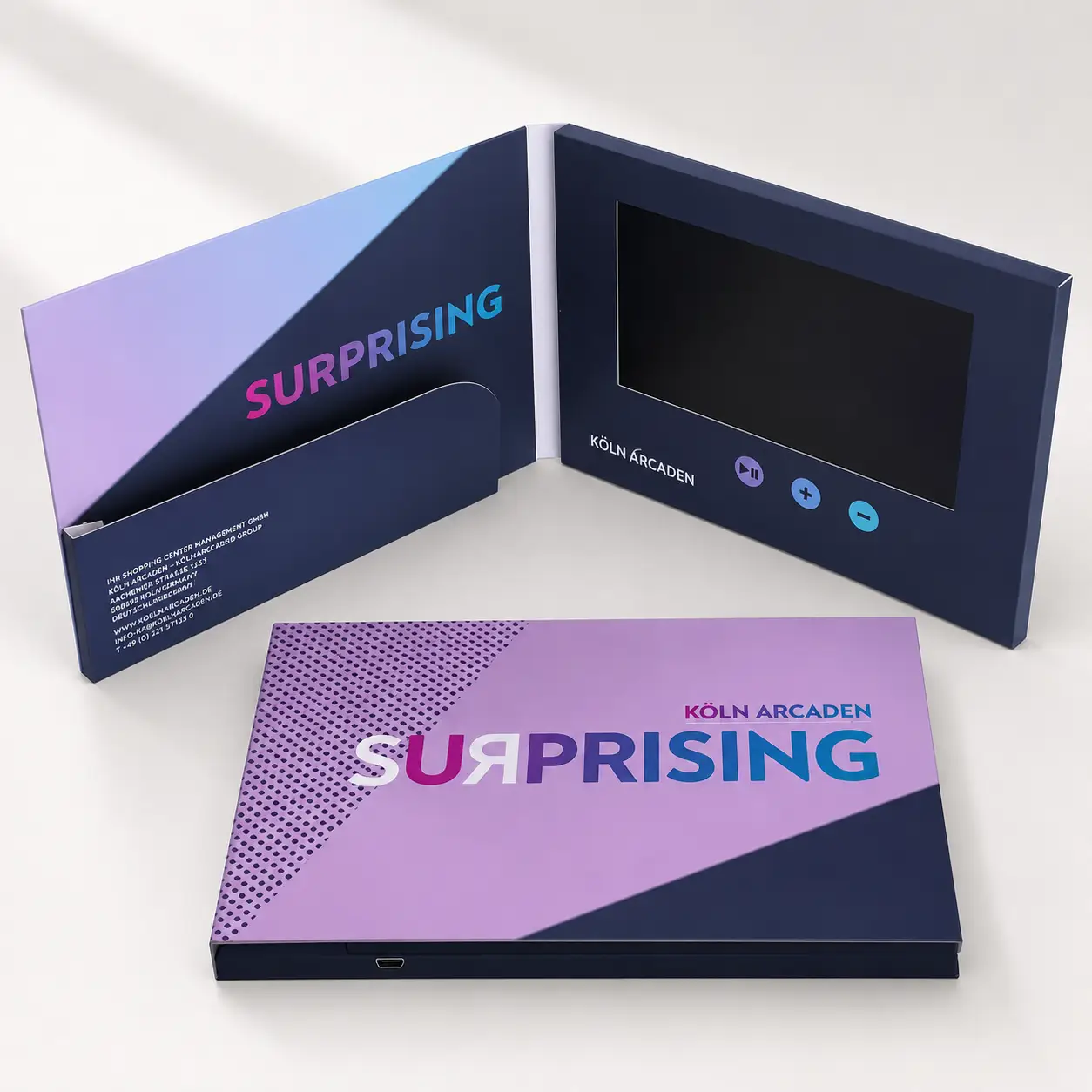
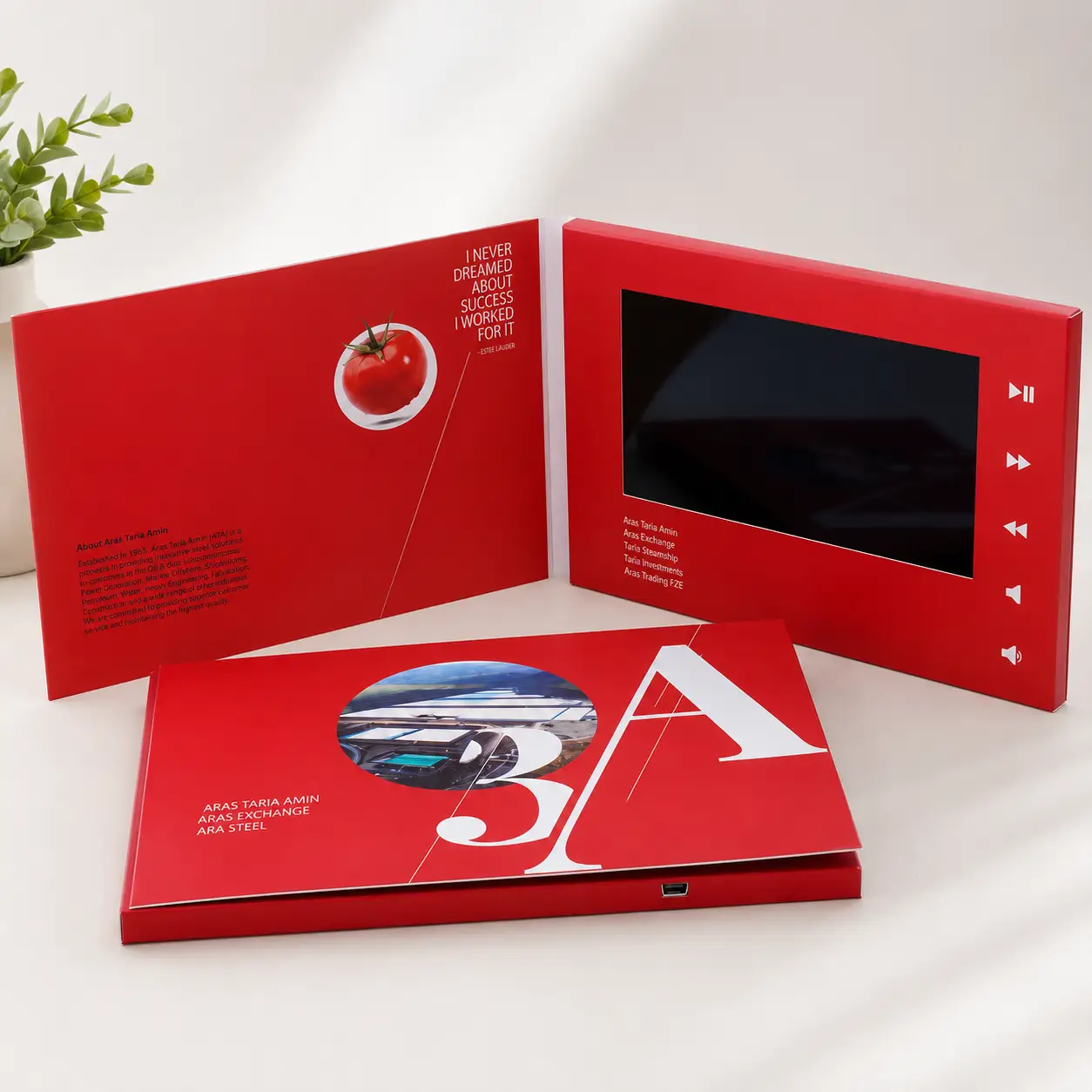
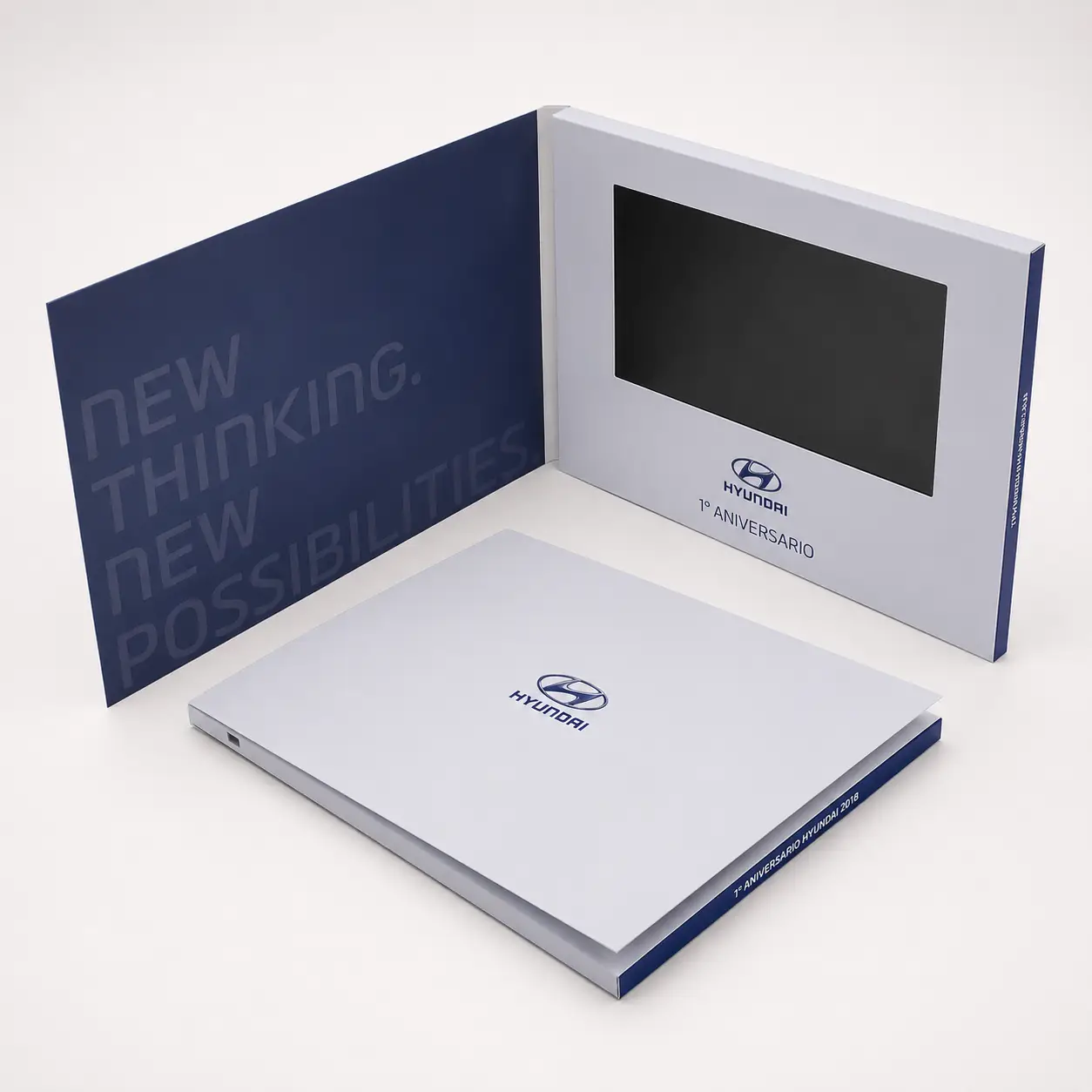
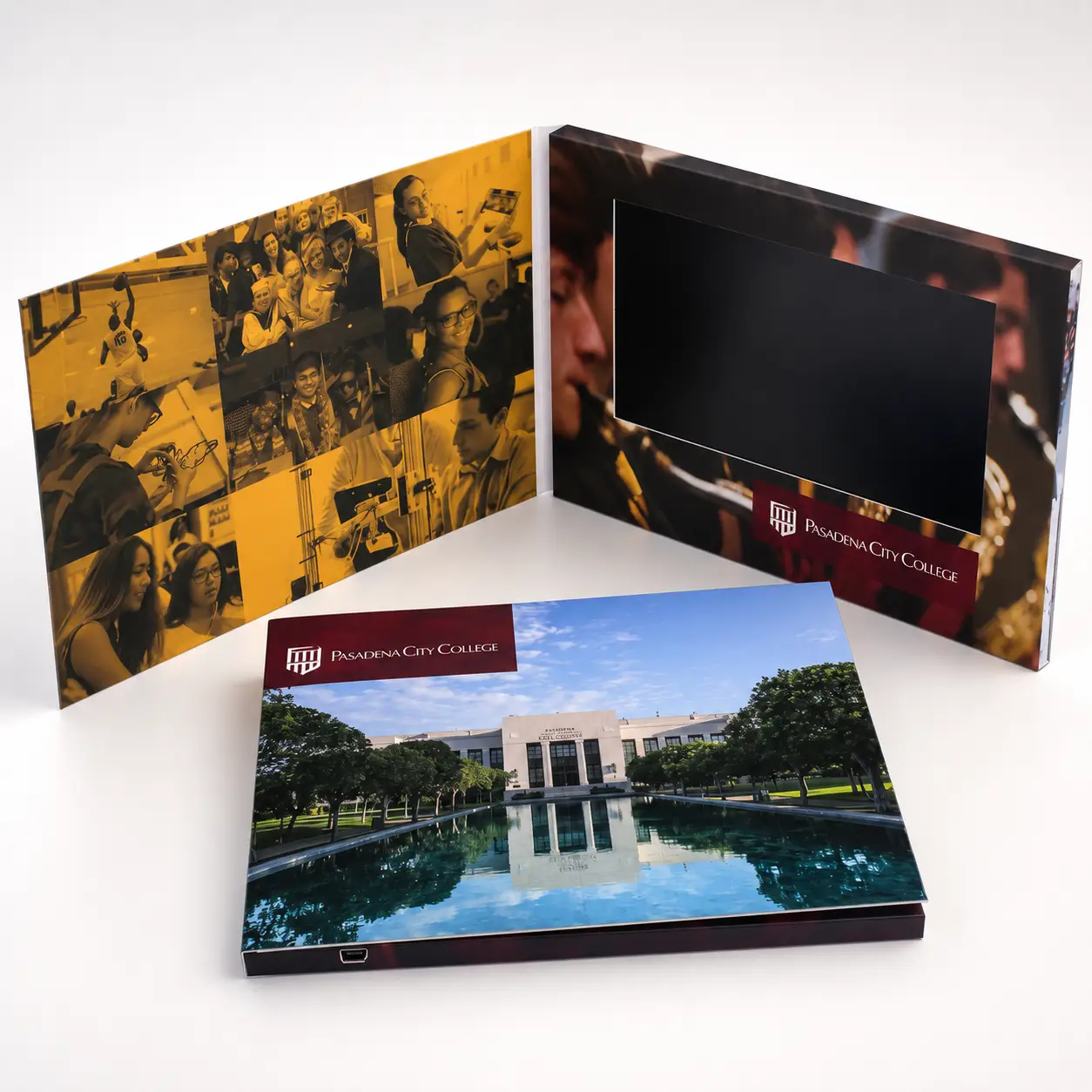
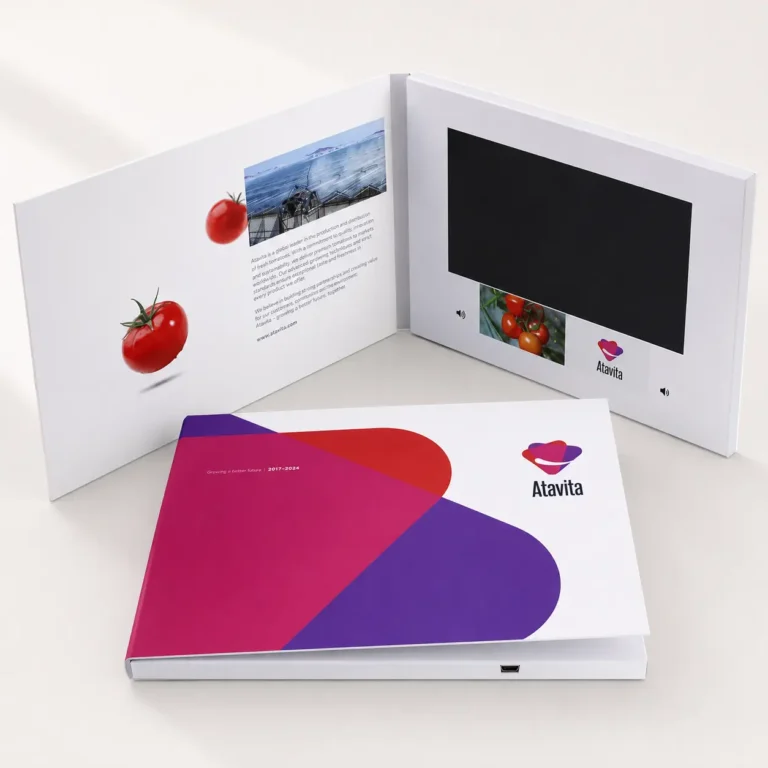
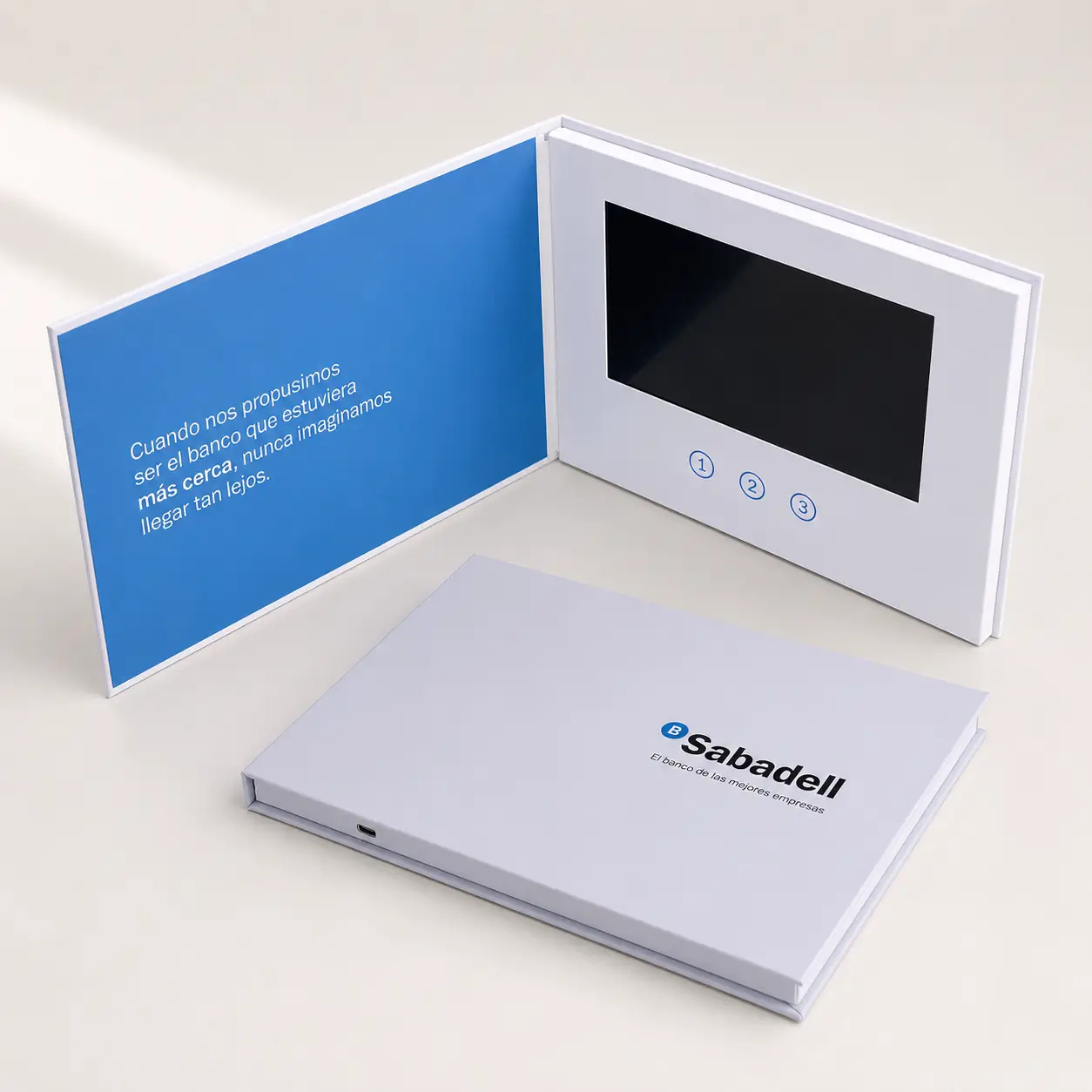
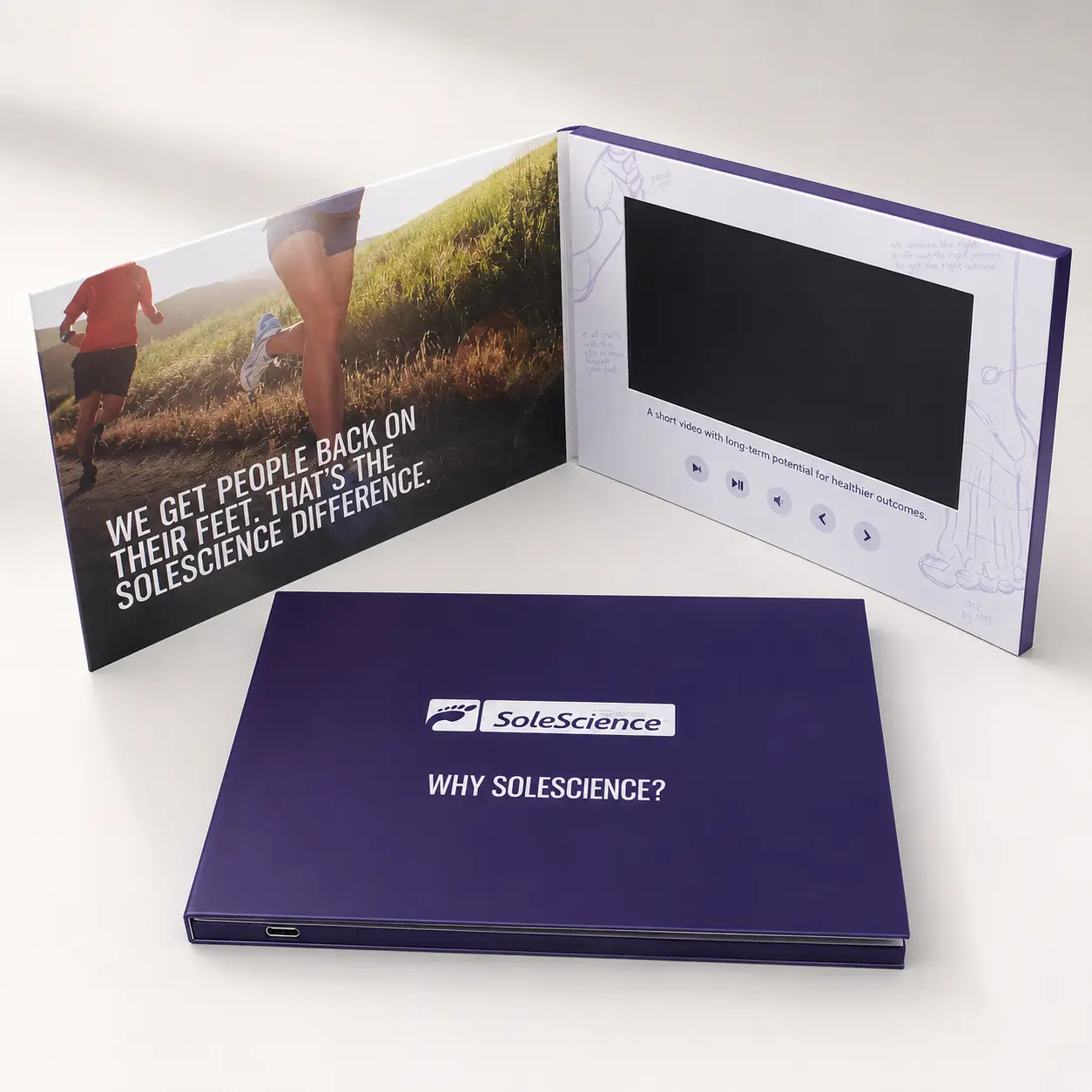
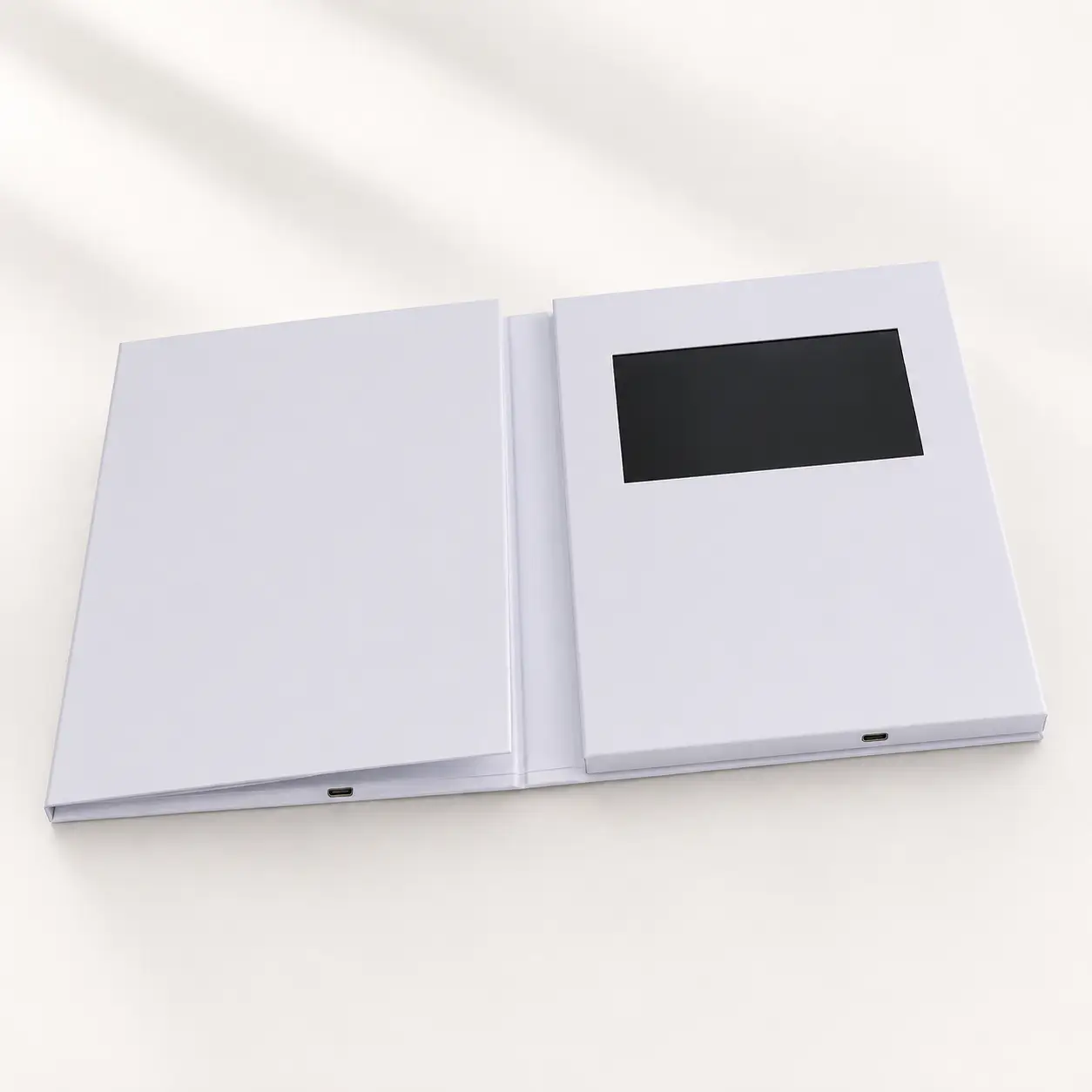
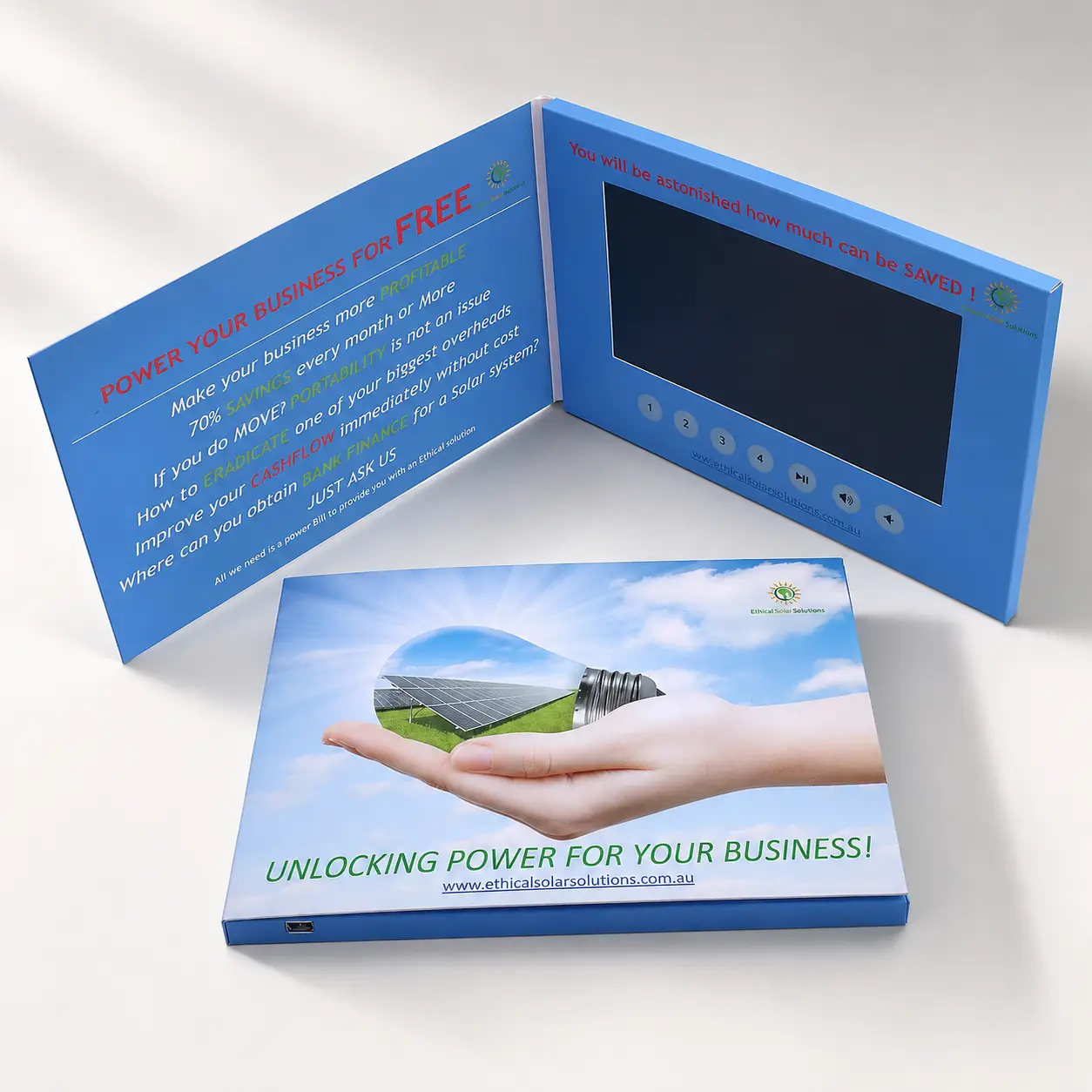
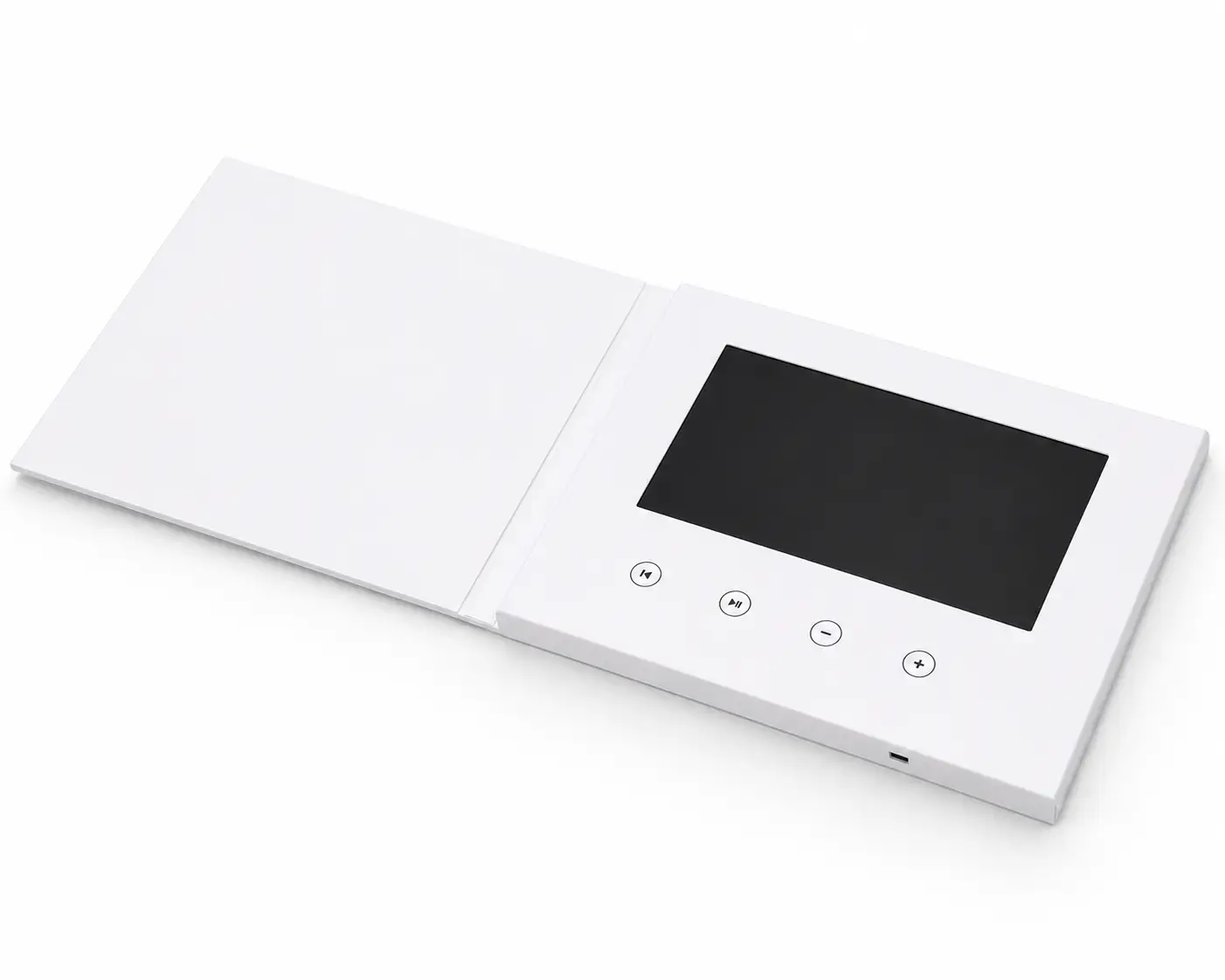
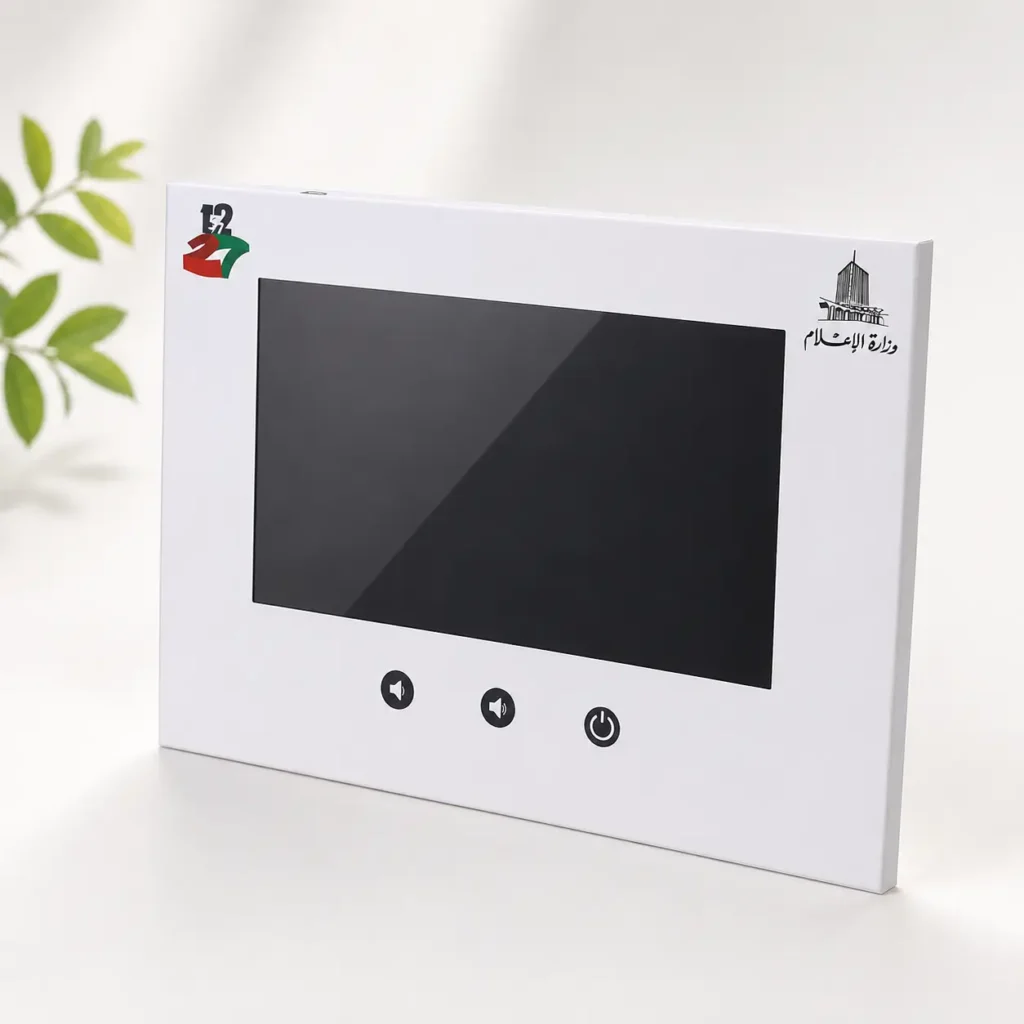
The 7 inch video brochure is our most reordered format. It gives enough screen space for a full sales presentation, product launch reel, or multi-room showcase — without the added cost and shipping weight of a 10 inch build. If you’re weighing the 5 inch against the 10 inch, this is usually where repeat B2B buyers land: enough screen to carry the message, light enough to keep unit cost down.
It’s the size we see reordered — same buyer, same spec, sometimes years apart — more than any other in our catalog. All units are manufactured in-house at our Shenzhen facility. See our factory page.
✓ Factory Direct Since 2010
✓ MOQ from 1 Piece
✓ Custom Printing & OEM
✓ Worldwide DDP Shipping
Get a Free Quote + Artwork Template
| Spec | Detail |
|---|---|
| Screen | 7 inch IPS HD (1024 × 600) |
| Display area | 153 × 85 mm |
| Cover size | A5 (210 × 148 mm) |
| Memory | 128MB – 8GB |
| Battery | 1500mAh rechargeable Li-ion |
| Speaker | Built-in, 8Ω 1W |
| Switch | Magnetic (auto-play on open) or manual on/off |
| MOQ | 1 piece |
| Production time | 7–10 days |
Common uses: sales kits, product launches, trade show handouts, dealer presentations, real estate listing brochures, medical device marketing, training material, video presentation folders.
Sample orders typically ship within 2 business days.
Most buyers make three decisions, in this order:
1. How much memory do I actually need? Base it on video length and file count, not on “more is safer.” Most single-video presentations under 5 minutes fit comfortably in 128MB–256MB. Only go higher if you’re running multiple videos behind buttons or plan to update content with larger files later.
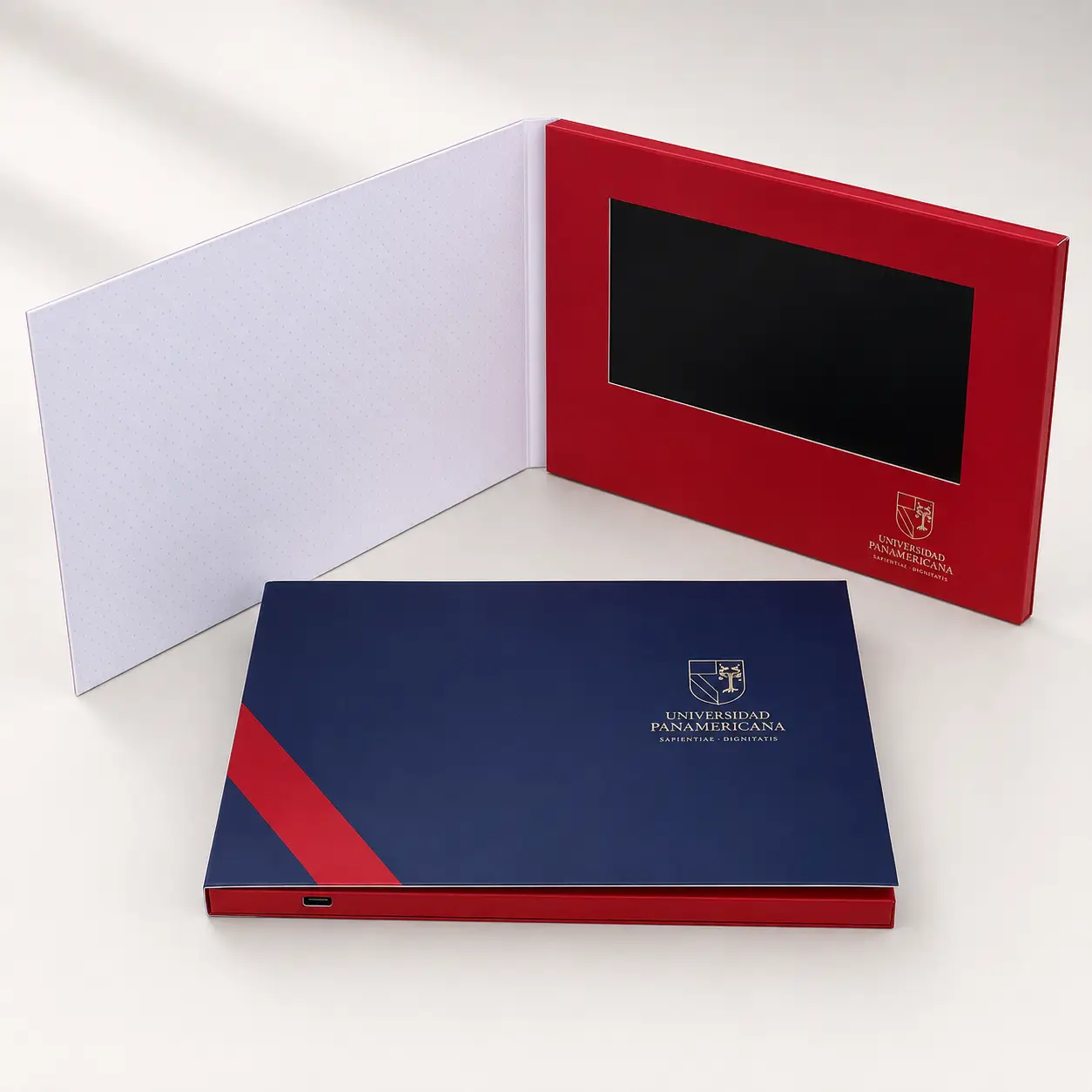
2. Do I need buttons, or should it just auto-play? If there’s one message and one moment of attention — real estate, gifting, a single product reveal — auto-play (0 buttons) removes any chance of the recipient doing it wrong. If you’re presenting several products, rooms, or chapters, buttons are worth it, but the number of buttons must match the number of video files exactly.
3. Is hardcover worth the extra cost? If the piece represents a premium brand, a leasing proposal, or a client-facing pitch that needs to feel substantial in someone’s hands, yes. If it’s a high-volume giveaway or a test batch, soft cover does the job for less.
Once those three are set, everything else — lamination, USB type, finishing — is a smaller decision layered on top.
Memory. 128MB, 256MB, 1GB, or 4GB. Buyers often overestimate how much they need. For one promotional video under about two minutes, 128MB is usually sufficient — it’s a common oversight to pay for 1GB or 4GB “just in case” when the actual video file is under 100MB. Where the upgrade does matter: multiple videos behind separate buttons, 4K source footage, or a brochure you expect to reload with new content over its lifetime. In those cases, 256MB–1GB is the more realistic range, and 4GB is worth it mainly for buyers who reorder the same physical unit repeatedly and want memory headroom built in from the start.
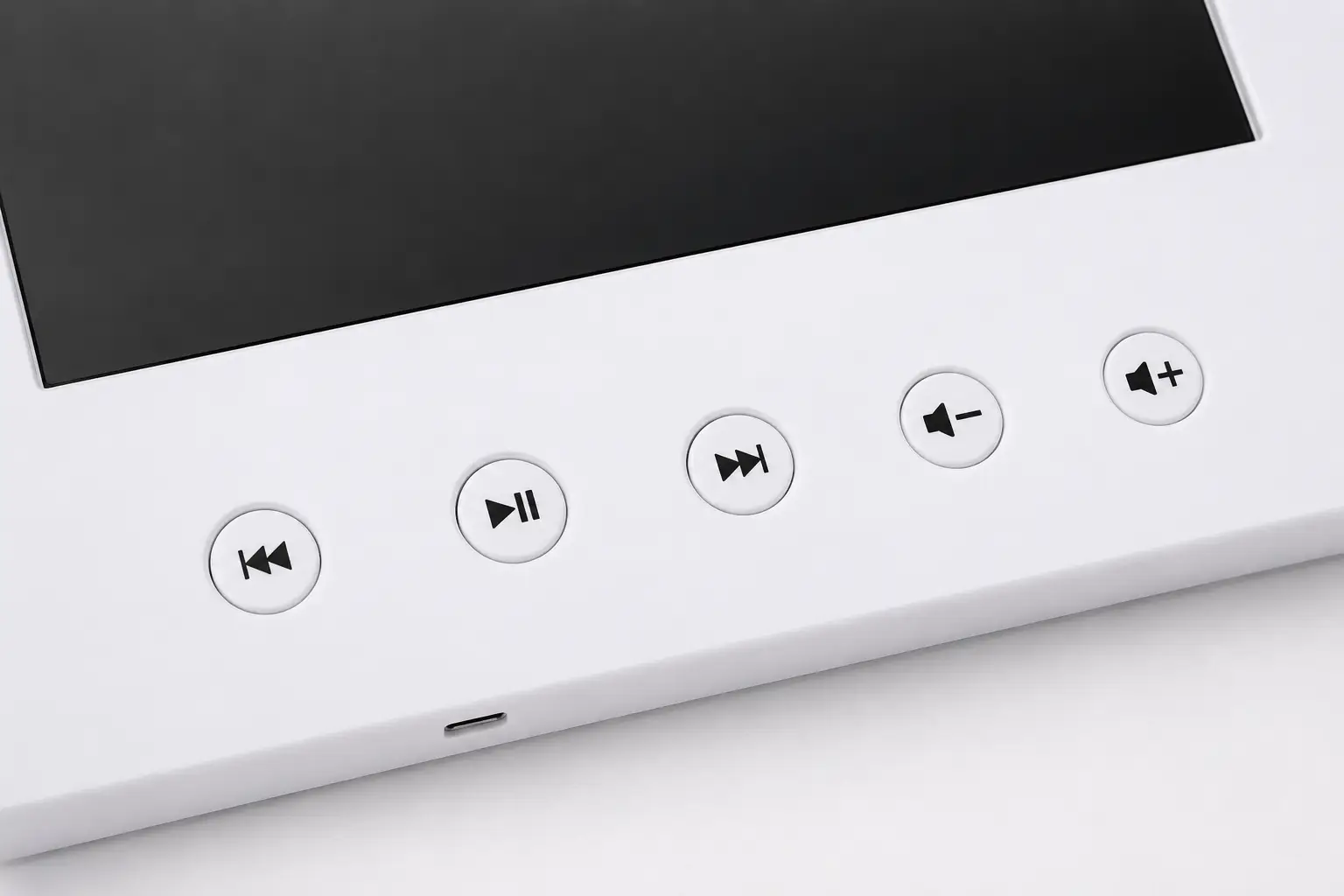
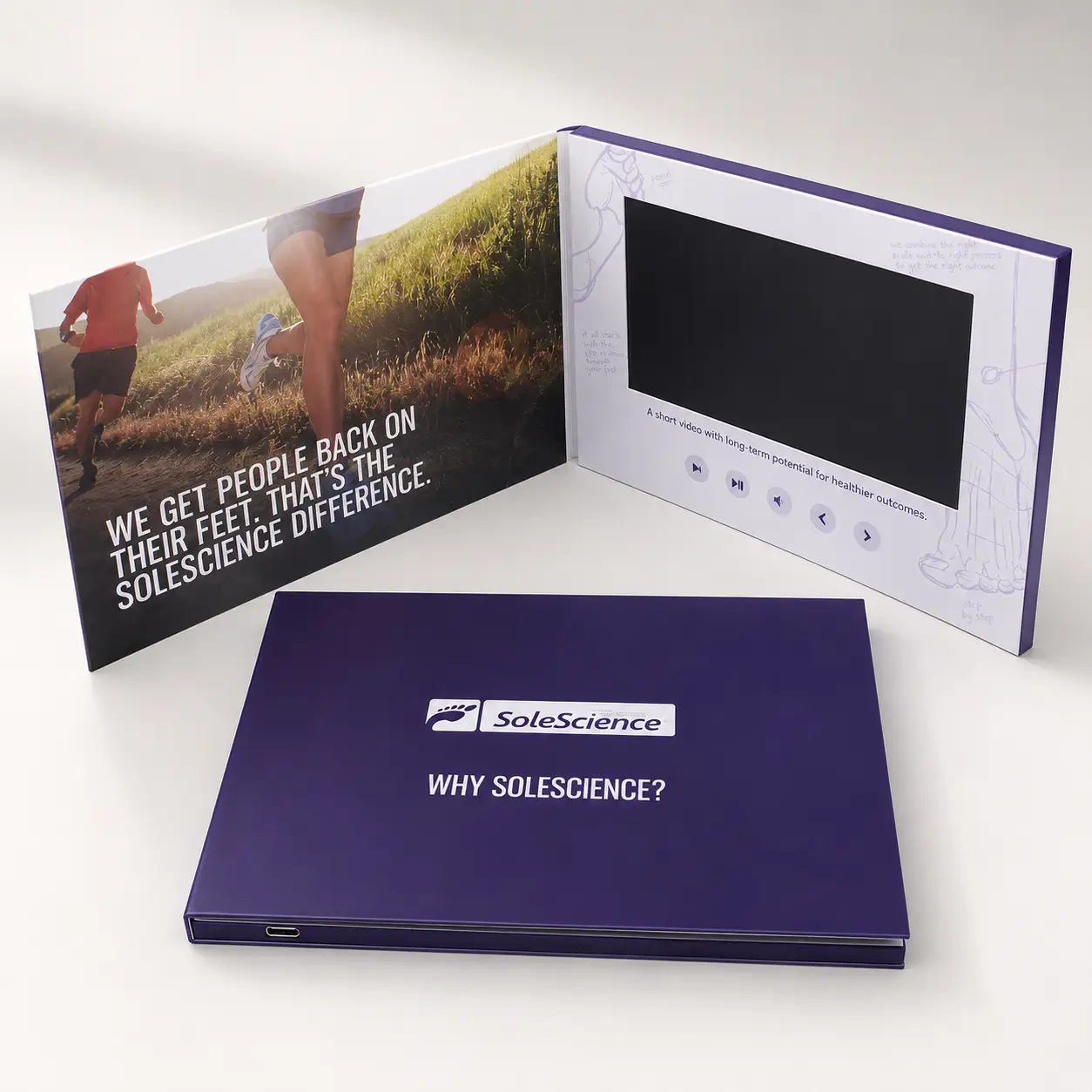
Buttons. Zero buttons means auto-play on open — the default for real estate and gifting, where the goal is zero friction. A 1–3 button setup adds play/pause and volume, suited to a single sales presentation with light navigation. Above that, up to 11 buttons support full multi-video navigation — product catalogs, multi-room interior showcases, training material with separate modules. The one rule that matters more than the button count itself: the number of buttons has to match the number of video files supplied. We check this against the artwork before production starts, because it’s one of the easiest things to get wrong and one of the most expensive to fix after the fact.
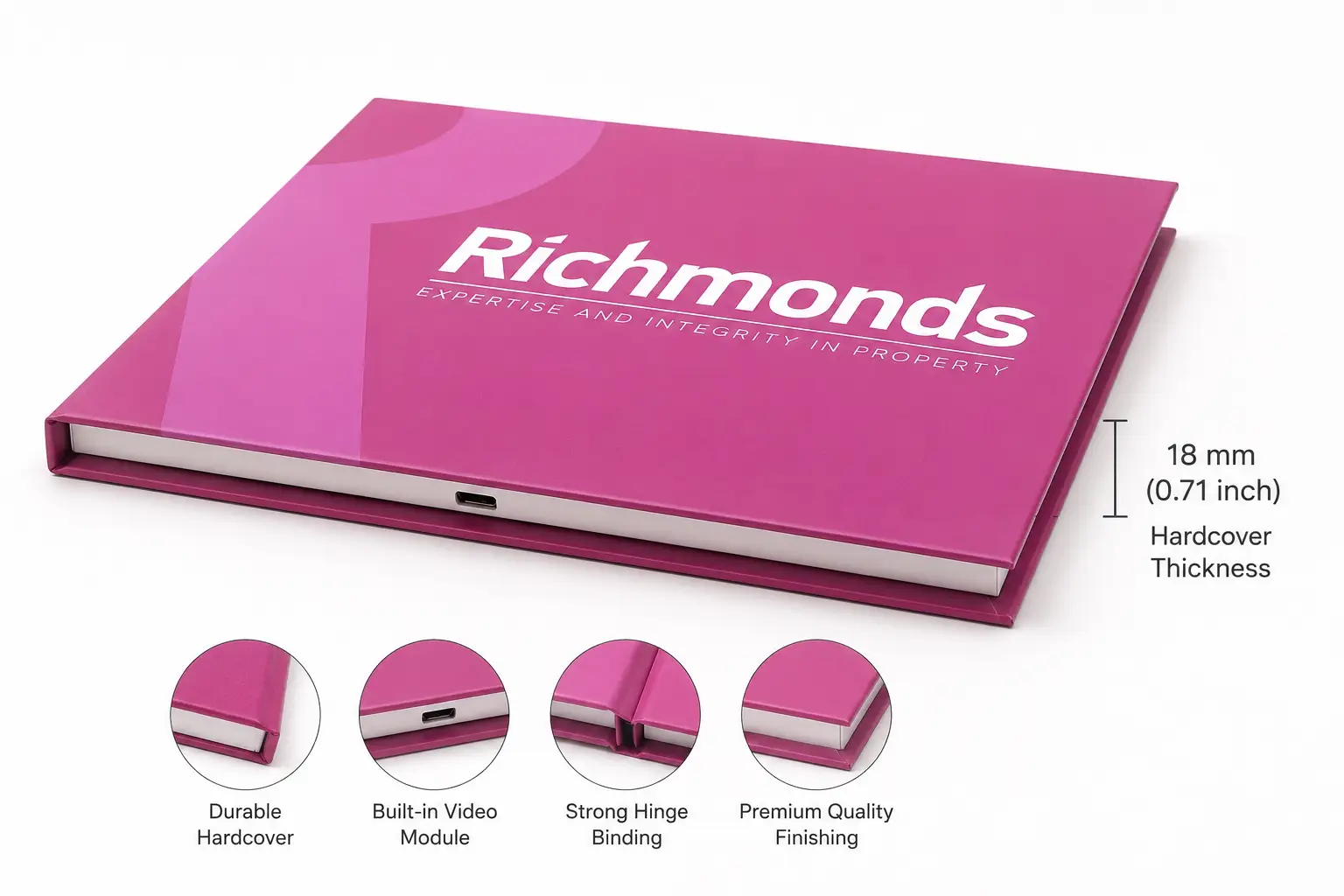
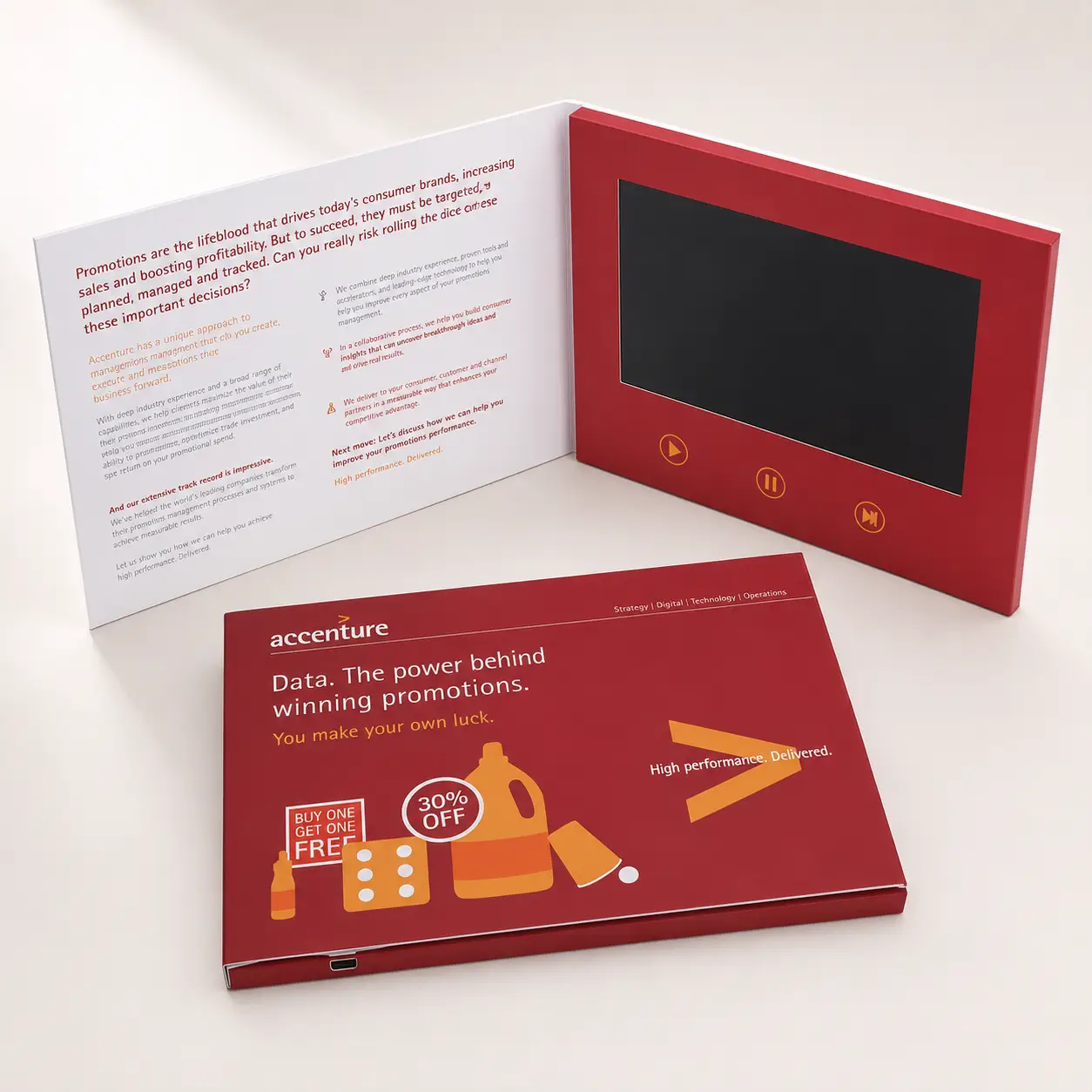
Cover finish. Soft cover laminate or hardcover. Hardcover — available with debossed leather texture or custom surface finishes — is the more common choice at this size, since a 7 inch piece is usually already positioned as a premium deliverable rather than a mass giveaway. Finishing options include matte lamination, gloss lamination, foil stamping, and spot UV.
Covers are printed full-color (CMYK), and we accept artwork in AI, PDF, or CDR format. Free templates are available for both soft and hardcover formats, and our team can handle simple layout work at no charge.
For premium finishing — foil stamping, spot UV, embossing — get a quote with your spec. Costs depend on finish type, cover material, and quantity.
A print reseller based in California has ordered the 7 inch hardcase video brochure for the same end client on a recurring basis since 2024, each time an exact repeat of the original specification. On the most recent reorder, a components shortage meant swapping the planned 4GB memory for 1GB. The buyer’s only condition was that all the video files still fit — production moved ahead the same week. This is what a mature reorder relationship looks like: no renegotiation, no new spec review, just execution.
A Chicago-based leasing company has ordered the 7 inch soft cover video brochure at the same configuration since 2022 — and, notably, close to the same unit price years later. Their most recent reorder moved through pricing confirmation, banking verification, and delivery address confirmation without a single change to the original spec. For a repeat B2B buyer, price stability across years is often more persuasive than the lowest quote on a first order.
An Australian interior design brand ordered a batch of 7 inch hardcover video cards with a 4-button layout to showcase multiple room collections in one piece. Partway through file review, we noticed the supplied videos didn’t match the approved button count — three video files against four buttons — and flagged it before production began. That kind of check is standard on our end, and it’s what prevents a finished piece from playing an empty button on delivery.
The examples above are based on real customer orders. Company names and certain identifying details have been anonymized to protect client confidentiality.
Buyers who need a repeatable product. Print resellers and promotional agencies producing the same video brochure for the same end client, order after order. What they need most isn’t a lower price — it’s a supplier who reproduces the exact spec without drift, year after year.
Companies replacing printed catalogs. Leasing companies, equipment vendors, and B2B service providers moving from static print to video brochures as a sales leave-behind. These orders tend to repeat on a predictable cycle, at a locked configuration, with minimal back-and-forth once the first order is solved.
Brands presenting multiple products or spaces in one piece. Interior design showcases, product line launches, multi-location real estate portfolios — anywhere a single brochure needs to carry more than one video behind more than one button.
Real estate teams upgrading from standard listing materials. Handling higher-value listings, where a larger screen changes how the piece reads in a buyer’s hands — usually configured with zero buttons for simple auto-play.
International buyers sourcing direct. Buyers across Europe, the UK, and the Middle East order the 7 inch more than any other size. We ship DDP to most major markets — duties and customs handled on our end.
Cover files should be supplied in AI, PDF, or CDR format, with a 3mm bleed and 300 DPI minimum resolution. Video files should be MP4 (H.264), sized to your selected memory tier. Templates are available for both soft cover and hardcover formats — contact us to request one, or we’ll include it automatically when you request a quote.
Most video brochure orders pass through four separate hands before they reach the customer: a printer for the cover, a trading company that sources the electronics, an assembler that puts the two together, and a freight forwarder for shipping. Every handoff is a place where a spec gets lost, a deadline slips, or nobody quite owns the mistake.
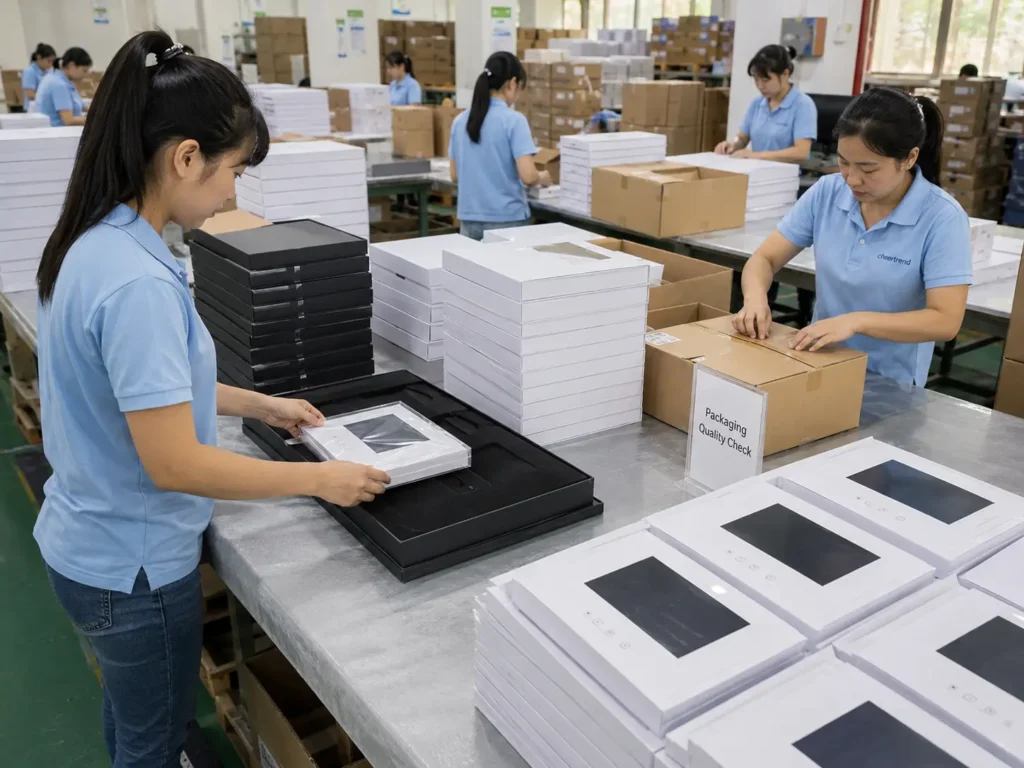
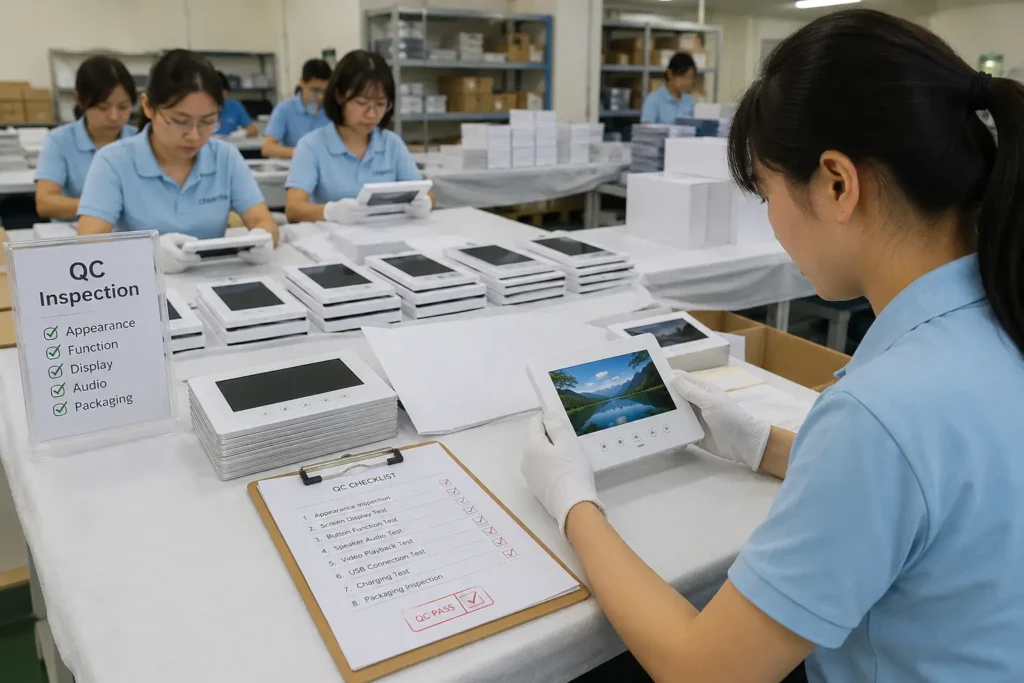
We run artwork, electronics assembly, quality testing, packing, and shipping under one roof and one team. When a memory chip runs short, the same person who quoted your order is the one deciding whether 1GB still works for your files — not a middleman relaying the question three days later. When a button count doesn’t match your video files, we catch it before production, not after your customer opens the box.
That single point of ownership is also why repeat orders stay consistent: the same production notes, the same finishing preferences, and the same contact are still on file whether you’re reordering after three months or three years.
We’ve supplied 7 inch units to print resellers, leasing companies, and design brands across the US, UK, and Australia — several of them on repeat orders spanning multiple years. Small batches get the same production standard as large ones.
The 7 inch is the better fit for anything longer than a quick single-message piece — full sales presentations, multi-product showcases, or anywhere the brochure needs to feel substantial in someone’s hands. The 5 inch works well for simpler, lower-cost, high-volume pieces.
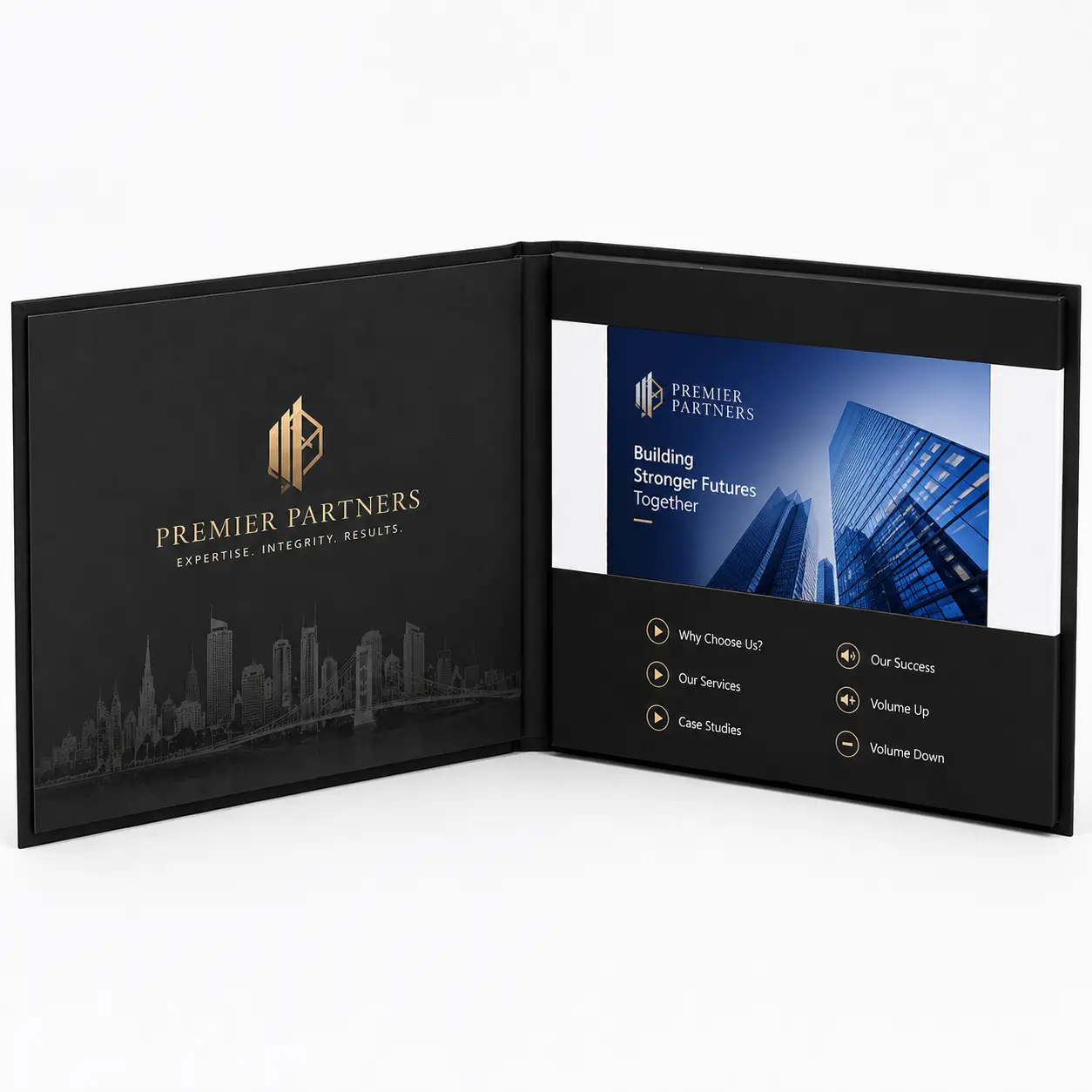
If the brochure represents a premium brand or a client-facing pitch, yes — it reads as a deliberate investment rather than a giveaway. For high-volume distribution or test batches, soft cover is the more cost-effective choice.
For a single video under about 2 minutes, 128MB is usually enough. Multiple videos behind buttons, longer content, or plans to reload with new footage later are the main reasons to go up to 256MB–1GB or 4GB.
Most effective brochures run 1–3 minutes per video. Longer content works better split across multiple buttons than as one continuous file.
We check this before production starts. If the number of files doesn’t match the button layout, we confirm with you which file maps to which button before anything goes into production.
For exact reorders, we hold the previous price wherever possible, flagging in advance if component costs (memory, screens, batteries) have moved.
Yes. We offer DDP shipping to the US, UK, Europe, and most other markets — duties and customs cleared on our end.
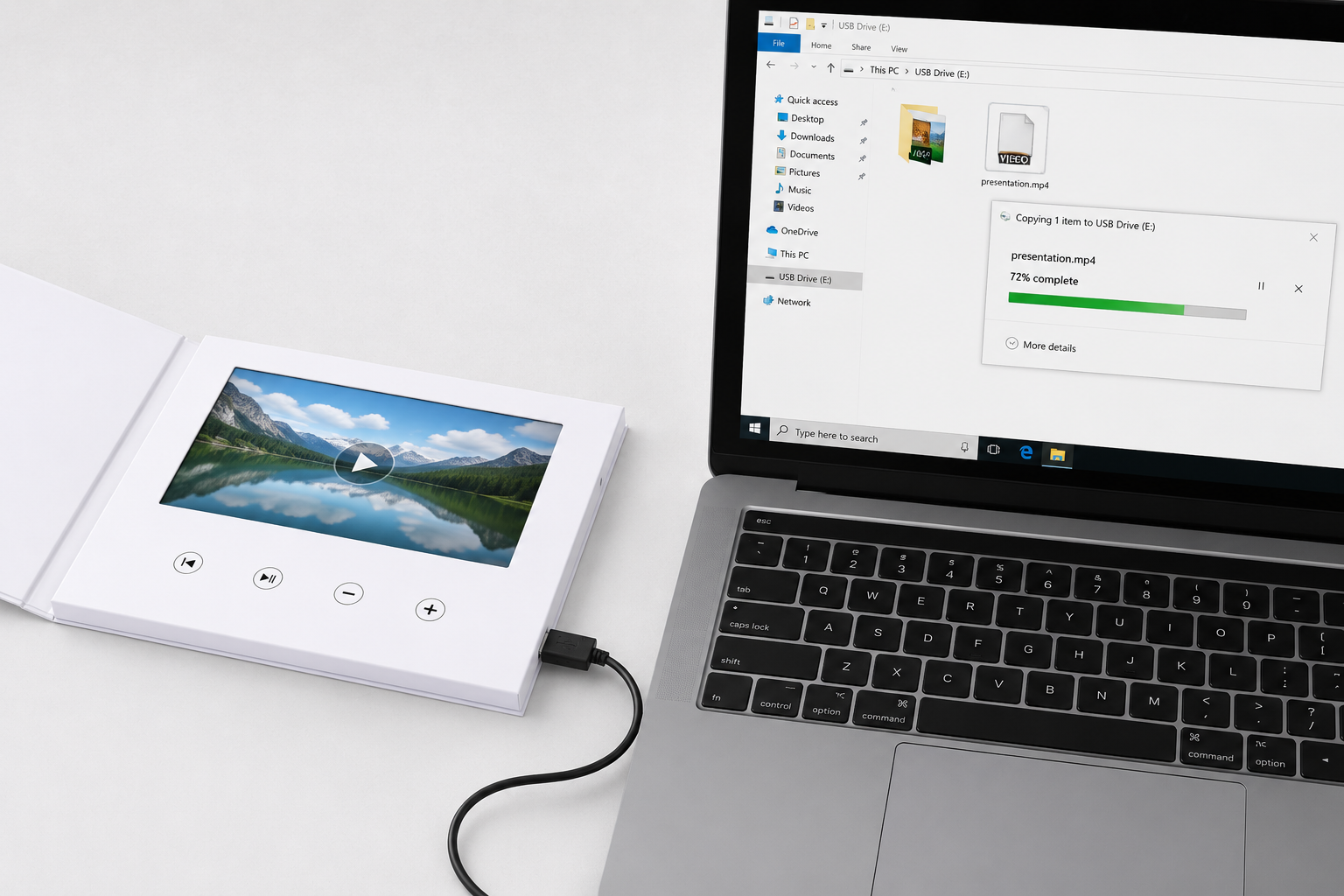
Yes. Connect via USB, delete the old file, copy the new one — about 1 minutes per unit.
Yes. MOQ is 1 piece. Sample orders typically ship within 1–2 business days.
Tell us what you’re planning, and we’ll help you choose the right configuration.
You’ll receive:
Tell us your project details, expected quantity, and delivery country. We’ll reply within one business day with pricing, configuration recommendations, and artwork templates.
We will contact you within 1 working day, please pay attention to the email with the suffix “@cheertrend.com” or “cheertrend@gmail.com”.