

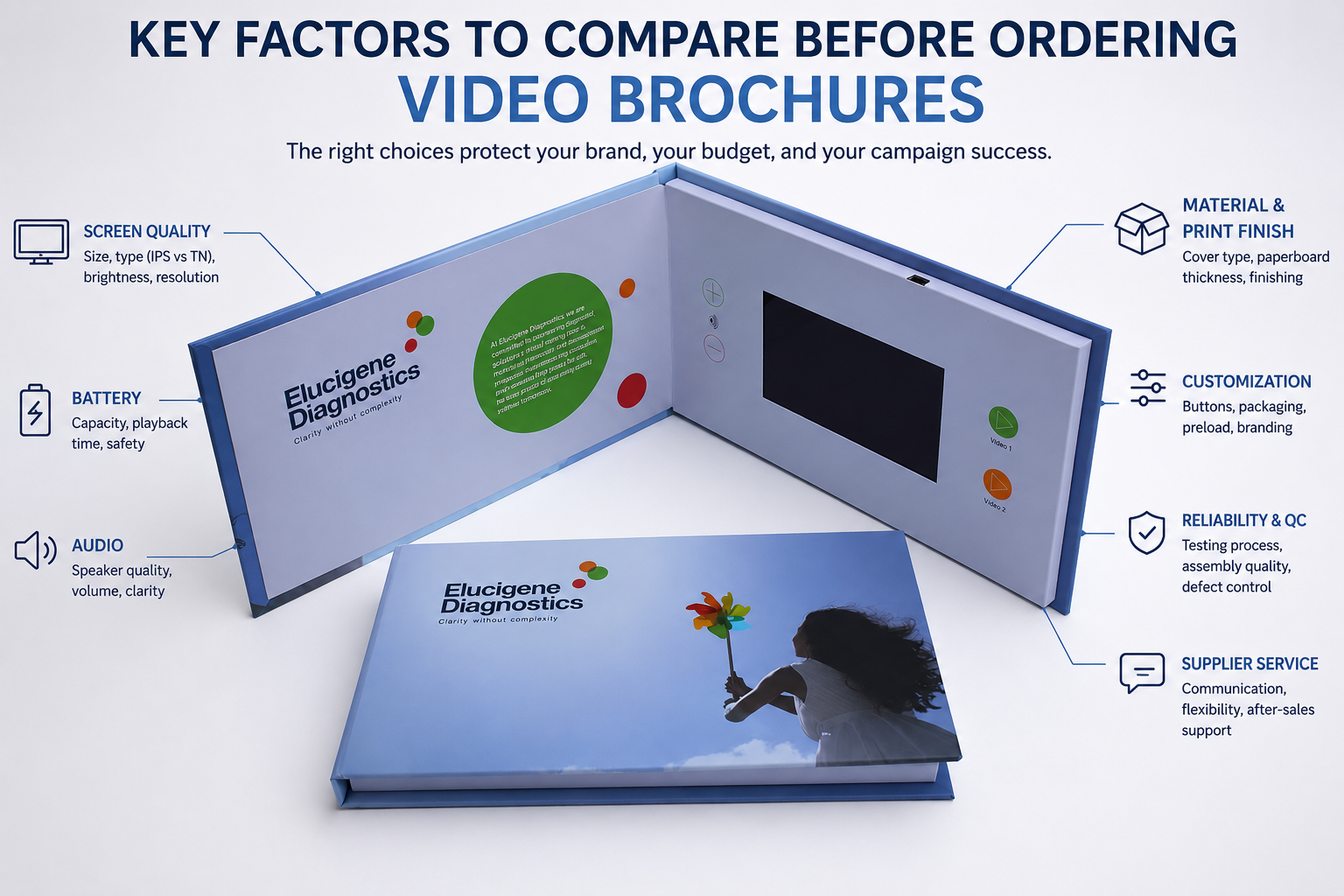
Many buyers compare video brochures by unit price only. Then they discover dim screens, weak batteries, poor print quality, delayed delivery, and damaged packaging when the campaign deadline is already close.
Before ordering video brochures, buyers should compare screen quality, battery reliability, audio performance, material quality, customization flexibility, QC standards, and supplier responsiveness. These factors affect campaign success far more than small differences in quotation prices.
After years of manufacturing custom video brochures for agencies, distributors, and global brands, I noticed most production problems start long before shipping. They usually begin during supplier selection.
Most problems in this industry can be avoided before production even starts.
Why Are Some Video Brochure Quotes So Cheap?
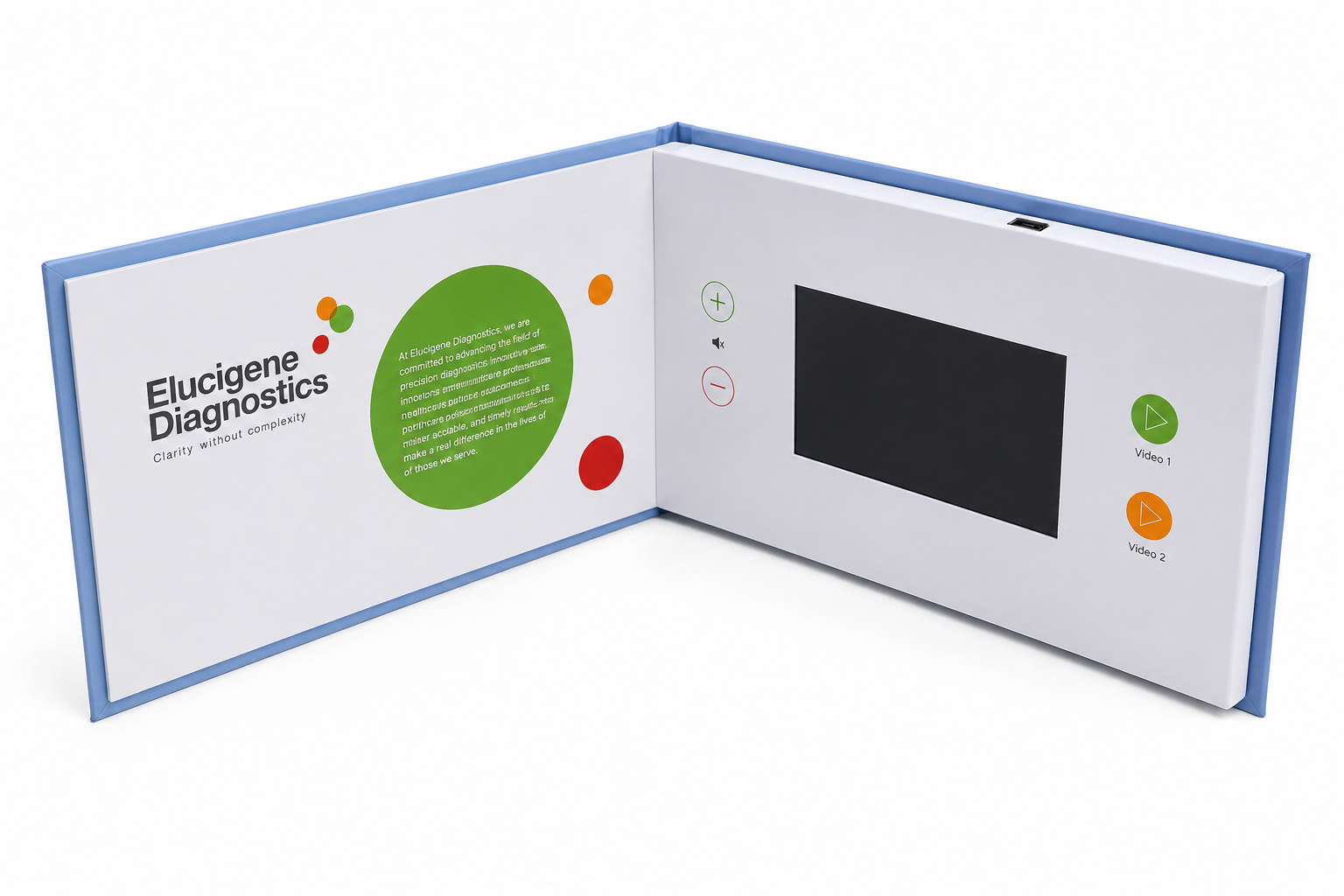
Extremely low video brochure quotations usually mean downgraded components, weaker QC standards, outsourced assembly, or unrealistic production promises.
This is one of the biggest misunderstandings in the market.
Many brochures look similar in supplier photos. But the internal components and production standards can be completely different.
Common Areas Where Factories Reduce Costs
| Component | Premium Version | Cheap Alternative |
|---|---|---|
| Screen | IPS panel | TN panel |
| Battery | Certified lithium battery | Low-grade battery |
| Speaker | Large high-volume speaker | Small low-volume speaker |
| Memory | Stable branded chip | Generic unstable chip |
| Packaging | Thick rigid board | Thin soft cardboard |
| QC Process | Full playback testing | Random spot checks |
Many buyers do not discover these differences until production is already finished.
That is why comparing specifications matters more than comparing photos.
Cheap Quotes Often Hide Production Risks
Some suppliers reduce prices by:
- skipping aging tests
- outsourcing assembly
- lowering screen brightness
- using recycled LCD panels
- reducing foam protection
- rushing packaging
I have even seen brochures advertised as 2000mAh perform closer to 1200mAh during actual playback testing.1
The brochure may still function initially. But long-term reliability becomes much worse.
Should You Compare Screen Quality or Just Screen Size?
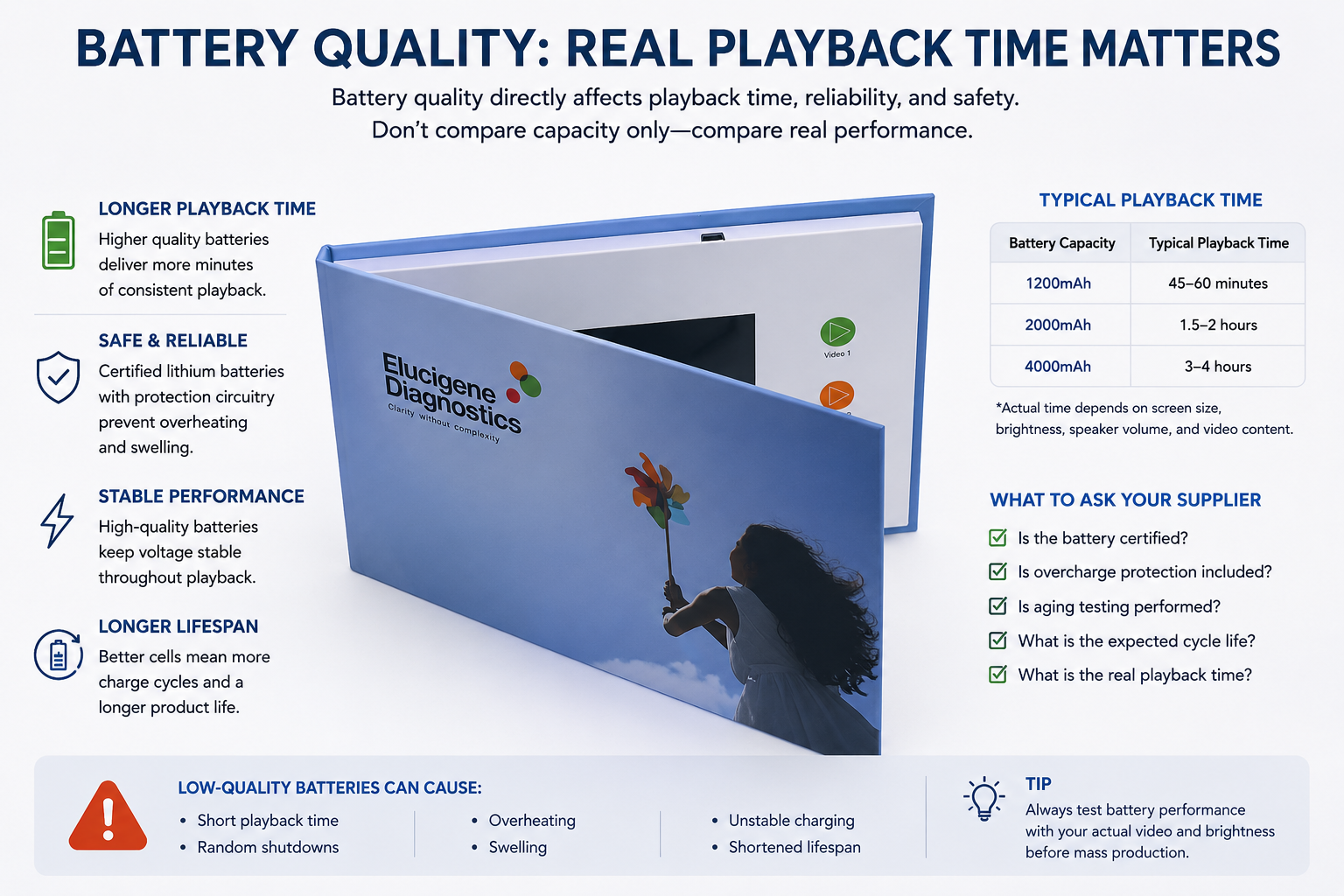
Most buyers focus on screen size first. But screen type, brightness, and viewing angle usually matter more than size itself.
A premium 5-inch screen often looks better than a cheap 7-inch screen.
IPS vs TN Screens
Many suppliers never clearly explain this difference.
| Screen Type | Advantages | Weaknesses |
|---|---|---|
| IPS | Better color and wider viewing angle | Higher cost |
| TN | Lower cost | Washed-out colors and poor side viewing |
TN screens often appear faded during:
- exhibitions
- meetings
- retail displays
- sales presentations
For premium campaigns, I usually recommend IPS screens because they create a much stronger first impression.
Brightness Matters More Than Buyers Expect
Some factories quietly reduce brightness to lower costs and improve battery runtime.
But low brightness becomes obvious in:
- hotel lobbies
- trade show environments
- office meeting rooms
- retail stores
For high-end projects, I usually recommend:
- IPS screens
- brightness above 350 nits
- HD resolution when possible
The screen is the first thing users notice when they open the brochure.2
Why Should You Compare Battery Quality Carefully?
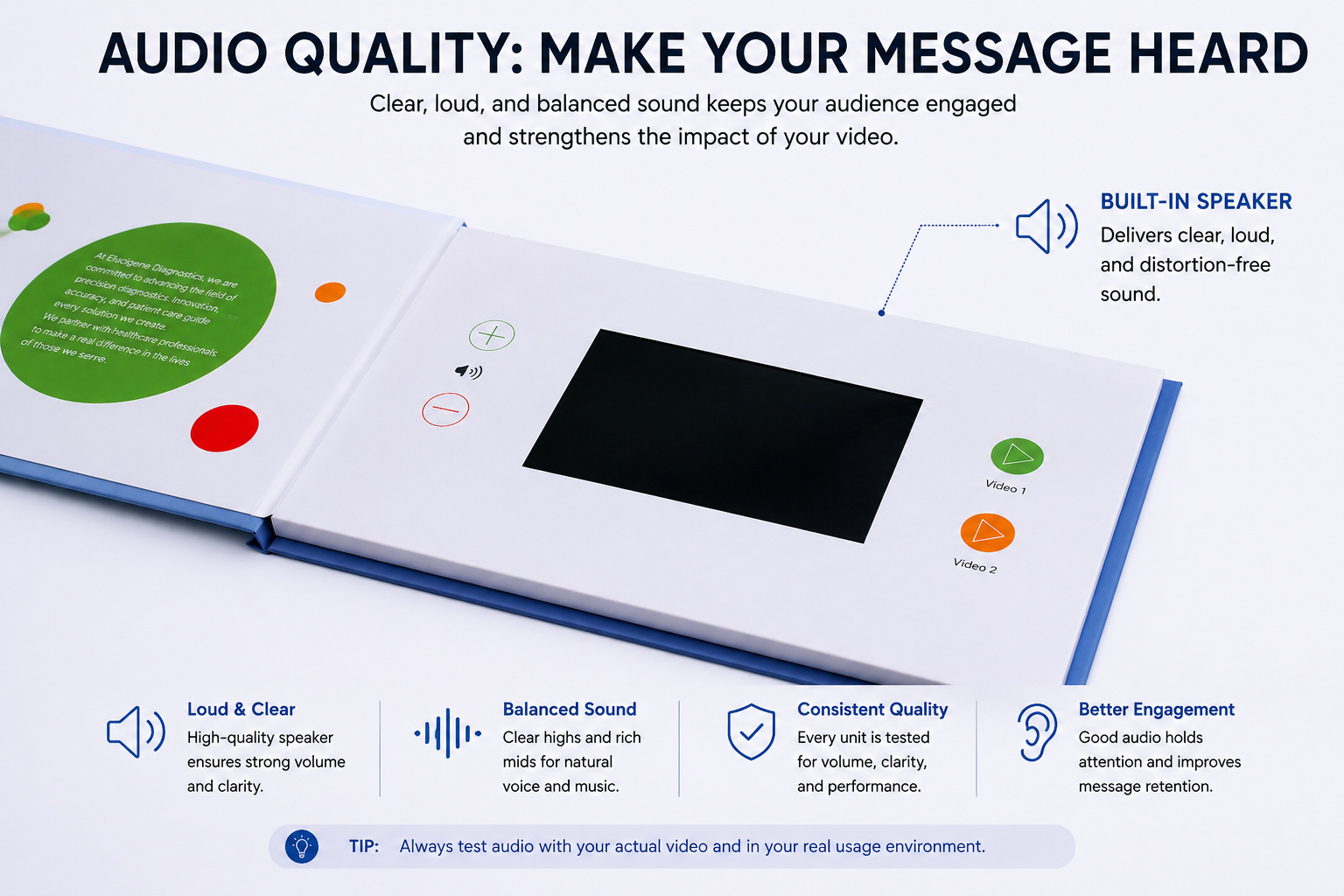
Battery quality affects playback time, charging stability, shipping safety, and overall product lifespan.
Many low-cost brochures use downgraded batteries with inflated specifications.
Real Playback Time Matters
Factories often advertise battery capacity but avoid discussing actual playback duration.
Playback time depends on:
- screen size
- brightness
- speaker power
- video resolution
| Battery Capacity | Typical Playback Time |
|---|---|
| 1200mAh | 45–60 minutes |
| 2000mAh | 1.5–2 hours |
| 4000mAh | 3–4 hours |
If brochures will circulate during exhibitions or sales meetings, this becomes extremely important.
Cheap Batteries Create Long-Term Problems
Low-quality batteries may cause:
- overheating
- swelling
- unstable charging
- shortened lifespan
Before ordering, I always recommend asking suppliers:
- Is the battery certified?
- Is overcharge protection included?
- Is aging testing performed?
- What recharge cycle life is expected?
Professional suppliers should answer these questions clearly.3
Why Does Material Quality Matter So Much?
People judge the brochure before they watch the video. Material quality strongly affects perceived brand value.
This part is often underestimated.
Hardcover vs Softcover
| Type | Best Use |
|---|---|
| Softcover | Direct mail campaigns |
| Hardcover | Luxury presentations |
| Magnetic box | VIP gifting |
| Rigid packaging | Product launches |
Hardcover brochures feel much more premium.
But they also increase:
- weight
- shipping cost
- production complexity
Paperboard Quality Changes Everything
Buyers should compare:
- board thickness
- rigidity
- paper type
- surface texture
This directly affects:
- hand feel
- durability
- perceived luxury
Thin cardboard immediately makes the product feel cheaper.
Premium Finishes Also Matter
Popular finishing options include:
- matte lamination
- soft-touch coating
- spot UV
- foil stamping
- embossing
Soft-touch finishes feel excellent but scratch more easily during shipping.
Many factories never mention this tradeoff.
What Does A Reliable QC Process Actually Look Like?
Reliable suppliers provide transparent QC procedures instead of vague promises like “100% quality guaranteed.”
Buyers should ask what testing is actually performed.
A Real QC Process Should Include
| QC Stage | What Gets Checked |
|---|---|
| Screen testing | dead pixels and brightness |
| Battery testing | charging stability |
| Playback testing | video loading |
| Button testing | response consistency |
| Packaging QC | scratches and dents |
| Shipping tests | carton durability |
Some suppliers skip full playback testing because it requires more labor.
That increases defect risk later.
Hand Packaging vs Machine Packaging
This detail is often overlooked.
Machine assembly is faster.
But careful hand packaging usually creates:
- cleaner presentation
- fewer scratches
- better alignment
- stronger unboxing experience
Premium campaigns often benefit from more detailed manual inspection.
Ask For Real Production Photos
I usually recommend asking suppliers for:
- assembly line photos
- QC videos
- packaging process photos
- warehouse photos
Real factory environments reveal a lot about actual capability.4
Recommended Video Brochure Setups By Use Case
| Use Case | Recommended Setup |
|---|---|
| Trade shows | 5-inch IPS hardcover |
| Luxury gifting | 7-inch magnetic box |
| Real estate presentations | HD screen with multiple buttons |
| Direct mail campaigns | slim softcover brochure |
| Investor presentations | hardcover with premium audio |
| Medical marketing | high-brightness IPS screen |
Choosing the correct setup usually improves campaign effectiveness far more than simply choosing the cheapest option.
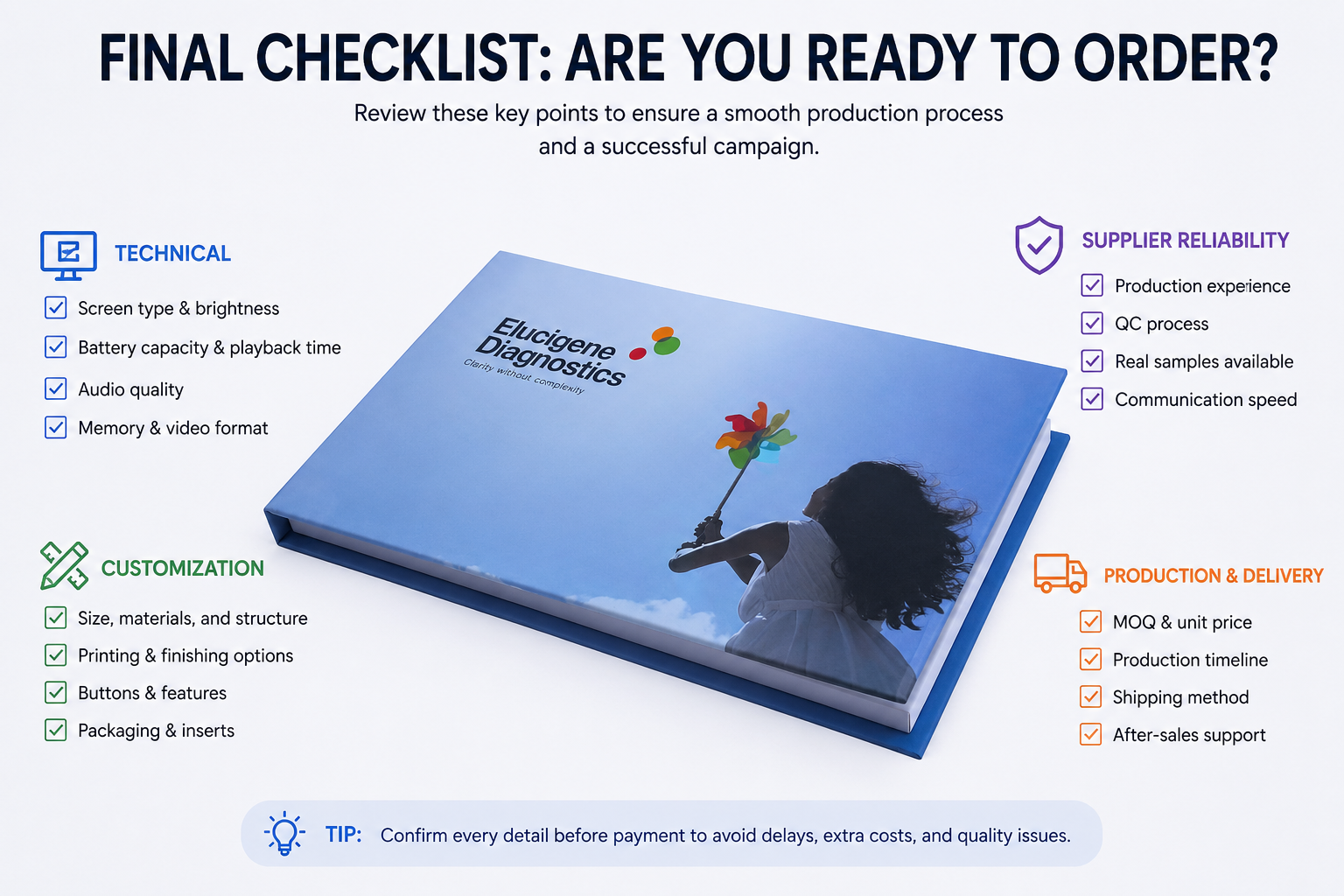
Final Checklist Before Ordering Video Brochures
Before paying a deposit, buyers should confirm every important detail carefully.
Technical Specifications
- IPS or TN screen?
- Brightness and resolution confirmed?
- Actual battery capacity verified?
- Audio quality tested?
- Memory capacity sufficient?
- Video format compatibility confirmed?
Supplier Capability
- Printed sample approved?
- QC process documented?
- Packaging protection verified?
- Communication responsive?
- Timeline realistic?
- Shipping method confirmed?
Most problems in this industry can be avoided before production even begins.
The key is comparing the right things instead of comparing price alone.
Conclusion
The cheapest video brochure quotation often becomes the most expensive mistake after production starts.
If a supplier avoids technical questions, refuses physical samples, or promises unrealistic timelines, that is usually a warning sign.
The right supplier protects your campaign quality, delivery schedule, and brand reputation long after production begins.
-
Many low-cost video brochure factories reduce pricing by using downgraded batteries, recycled screens, or weaker QC standards. ↩
-
IPS screens usually provide better viewing angles and color consistency than TN panels, especially in trade show or retail environments. ↩
-
Battery certification and playback testing are important for shipping safety and long-term product stability. ↩
-
Real production photos and QC videos often reveal more about factory capability than catalog images alone.