

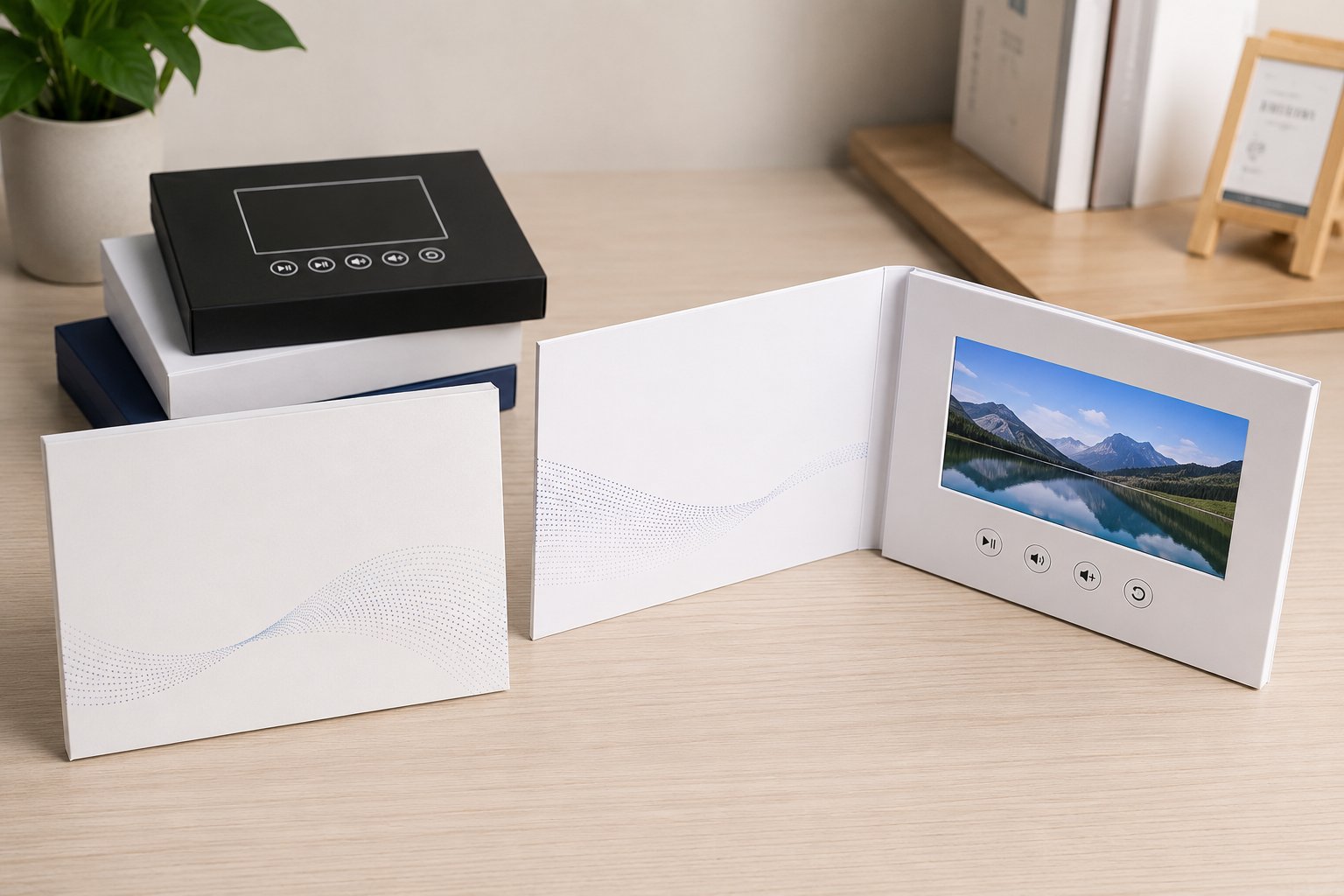
Many video brochure projects fail long before delivery. Delays, weak QC, poor batteries, and slow communication usually destroy campaigns quietly.
A reliable video brochure manufacturer should offer stable production quality, realistic lead times, responsive communication, strong QC systems, and real customization capability. The best suppliers also explain production limitations honestly instead of promising everything during the quotation stage.
Most buyers compare pricing first. I understand that. But after years in this industry, I noticed something repeatedly:
Cheap video brochures often become expensive later.
The hidden costs usually appear during:
- delayed launches
- replacement shipments
- battery failures
- reprints
- damaged screens
- event disruptions
- post-sale technical support
Many suppliers look similar online. But production pressure exposes the real difference.
Why Do So Many Video Brochure Projects Fail?
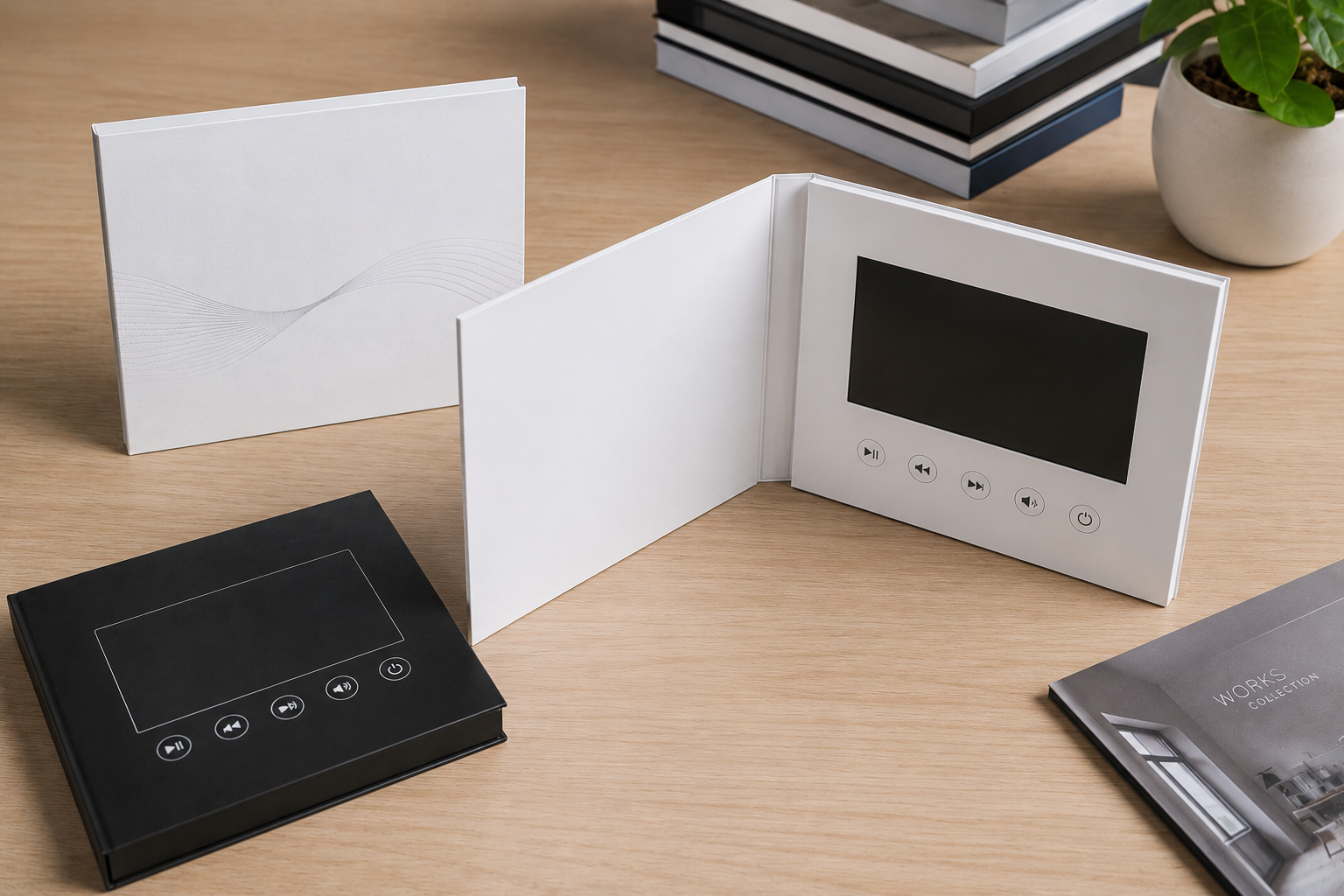
Small manufacturing mistakes can quietly ruin expensive marketing campaigns. Many buyers only discover supplier problems after mass production begins.
Most failed video brochure projects come from weak supplier management, poor QC systems, unrealistic timelines, and limited manufacturing experience.
I have seen buyers switch factories three or four times before finding a stable supplier. The problem is that almost every supplier website says the same things:
- high quality
- professional service
- factory direct pricing
- fast delivery
But real manufacturing quality only appears under pressure.
For example:
- Can the supplier handle urgent revisions?
- Can they maintain consistency across 5,000 units?
- Can they solve playback issues after delivery?
- Can they manage shipping delays professionally?
Those are the real tests.
Common Problems Buyers Face
| Problem | Common Cause |
|---|---|
| Scratched screens | Weak packaging process |
| Video playback failure | Poor motherboard testing |
| Color inconsistency | Weak print calibration |
| Delayed delivery | Factory overbooking |
| Slow communication | Small or disorganized sales team |
| Battery swelling | Low-grade battery sourcing |
| USB loading problems | Weak firmware compatibility |
Many buyers also underestimate how many supply chains a video brochure combines.
A single unit may include:
- LCD screens
- lithium batteries
- PCB boards
- speaker systems
- magnets
- rigid packaging
- foam inserts
- printing materials
- USB programming
- firmware setup
That means your supplier is managing multiple production systems simultaneously.1
One Important Detail Many Factories Hide
Most factories outsource part of the process.
This is normal in China manufacturing. Outsourcing itself is not the problem.
The real issue starts when suppliers lose control over outsourced production.
I always recommend asking one simple question:
“Which production steps are handled in-house?”
This question reveals a lot.
Some suppliers only assemble products but outsource:
- printing
- electronics testing
- battery sourcing
- firmware setup
- packaging assembly
That creates communication gaps and inconsistent QC.
Experienced manufacturers usually answer technical questions very directly.
Weak suppliers often avoid specifics.
What Should You Check Before Choosing a Manufacturer?
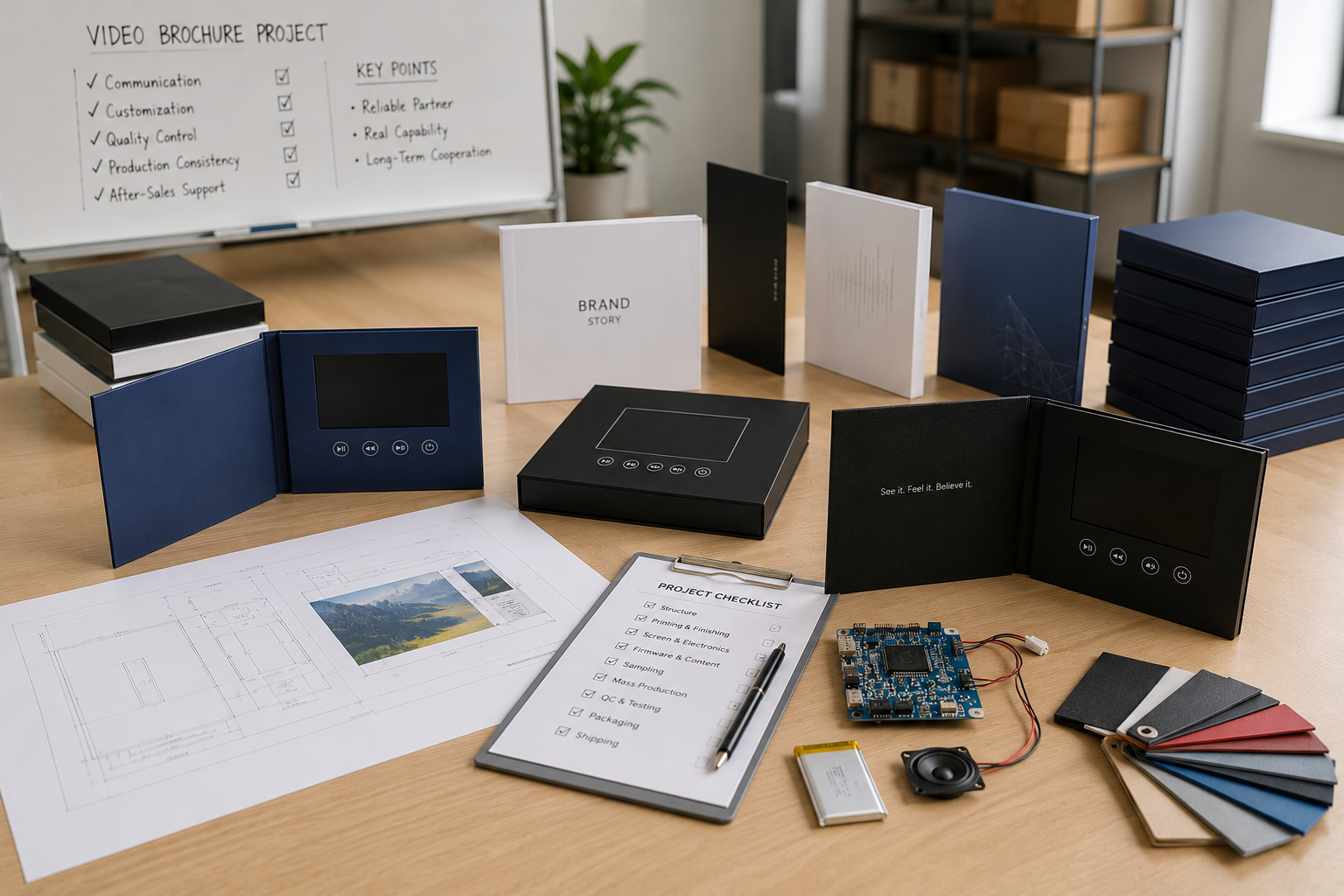
Many buyers choose suppliers too quickly because the sample looks impressive. But samples and mass production are completely different stages.
Before placing bulk orders, buyers should evaluate communication quality, QC systems, customization capability, production consistency, and after-sales cooperation.
A polished sample does not guarantee stable production.
Some suppliers invest heavily in samples but struggle badly during large-volume orders.
Communication Quality Predicts Production Quality
I personally think communication quality predicts production quality.
If a supplier replies slowly before payment, communication usually becomes worse later.
Reliable manufacturers normally provide:
- realistic production timelines
- direct technical answers
- clear shipping estimates
- organized quotations
- fast revision feedback
- practical recommendations
Weak suppliers often avoid details because their internal coordination is poor.
MOQ Flexibility Matters More Than Buyers Expect
MOQ is not just about quantity.
MOQ reveals how flexible a supplier actually is.
Some factories advertise low MOQ online but quietly reject small projects later. Others accept low quantities but dramatically increase unit pricing.
In reality, many agencies and startup brands need:
- prototype testing
- investor samples
- pilot campaigns
- internal approval rounds
A flexible manufacturer usually understands these situations better.
Evaluate Real Customization Capability
Customization separates true manufacturers from basic assembly suppliers.
Ask whether the supplier supports:
- custom box structures
- foam insert design
- auto-play sensors
- magnetic closures
- branded UI systems
- custom firmware logic
- different screen sizes
- premium finishing options
Experienced factories also explain tradeoffs honestly.
| Feature | Real Production Tradeoff |
|---|---|
| Soft-touch lamination | Better feel but scratches easier |
| Large battery | Longer playback but thicker product |
| IPS screen | Better viewing angle but higher cost |
| Embedded magnets | Premium feel but slower assembly |
These details matter during real production.2
Ask About After-Sales Technical Support
This part is extremely underrated.
Many problems happen after delivery, not during production.
For example, clients often:
- upload unsupported video formats
- use incorrect USB formatting
- request playback logic changes later
- want volume adjustment modifications
We once had a client drag large MOV files directly into the internal storage. Some older motherboard versions could not properly recognize the codec format.
From the client perspective, it looked like a product defect.
In reality, it was a content compatibility issue.
This is why supplier cooperation matters.
A good manufacturer should provide:
- usage tutorials
- troubleshooting guides
- remote support
- firmware update tools
- technical troubleshooting assistance
I honestly think the real product lifecycle begins after the client starts loading their own videos.3
How Important Is Quality Control for Video Brochures?
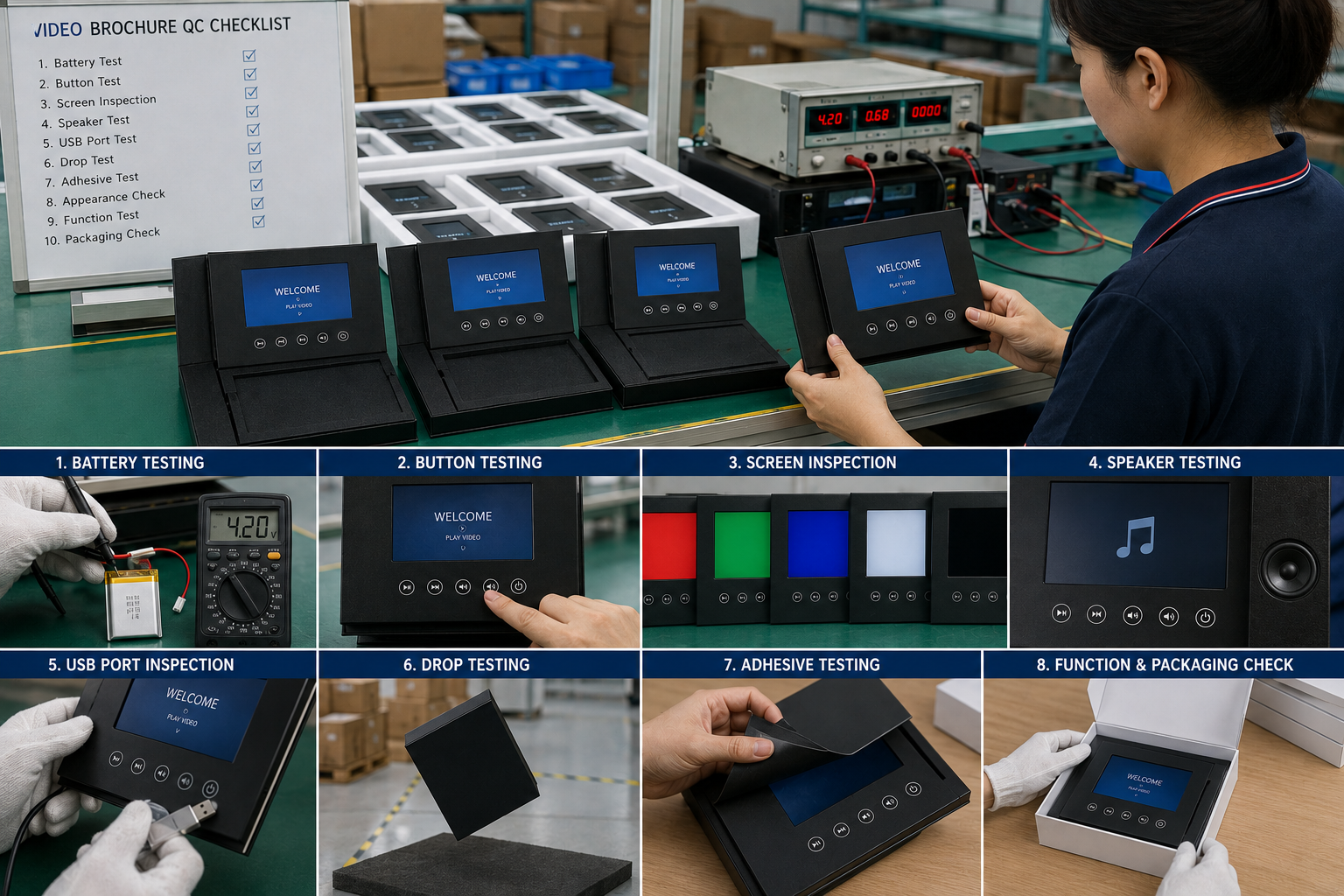
Quality control is probably the biggest difference between average suppliers and reliable manufacturers.
Video brochures combine electronics and luxury packaging. That creates more failure points than standard printed packaging.
Strong QC systems reduce screen defects, battery problems, print errors, and shipping damage.
Important QC Areas Buyers Often Ignore
Many buyers only inspect printing quality.
But electronics testing matters even more.
| QC Area | Why It Matters |
|---|---|
| Battery testing | Prevent charging failures |
| Button testing | Avoid playback issues |
| Screen inspection | Detect dead pixels |
| Speaker testing | Prevent distorted sound |
| USB port inspection | Ensure file transfer works |
| Drop testing | Reduce shipping damage |
| Adhesive testing | Prevent screen separation |
Battery Quality Is Extremely Important
Battery quality gets overlooked constantly.
Cheap batteries create major risks:
- swelling
- overheating
- charging failure
- short playback lifespan
Reliable manufacturers usually source higher-grade lithium batteries because replacement costs later become much more expensive.
Buyers should ask clearly about:
- battery capacity
- supplier source
- cycle testing standards
- UN38.3 certification
- MSDS availability
Pre-Shipment Testing Matters More Than Samples
Many factories only test samples carefully.
Mass production requires systemized testing.
At scale, even small defect rates become serious.
| Order Quantity | 2% Defect Rate |
|---|---|
| 100 units | 2 failed units |
| 5,000 units | 100 failed units |
| 20,000 units | 400 failed units |
That can easily destroy direct mail campaigns or trade show launches.4
Should You Choose a Factory or a Trading Company?
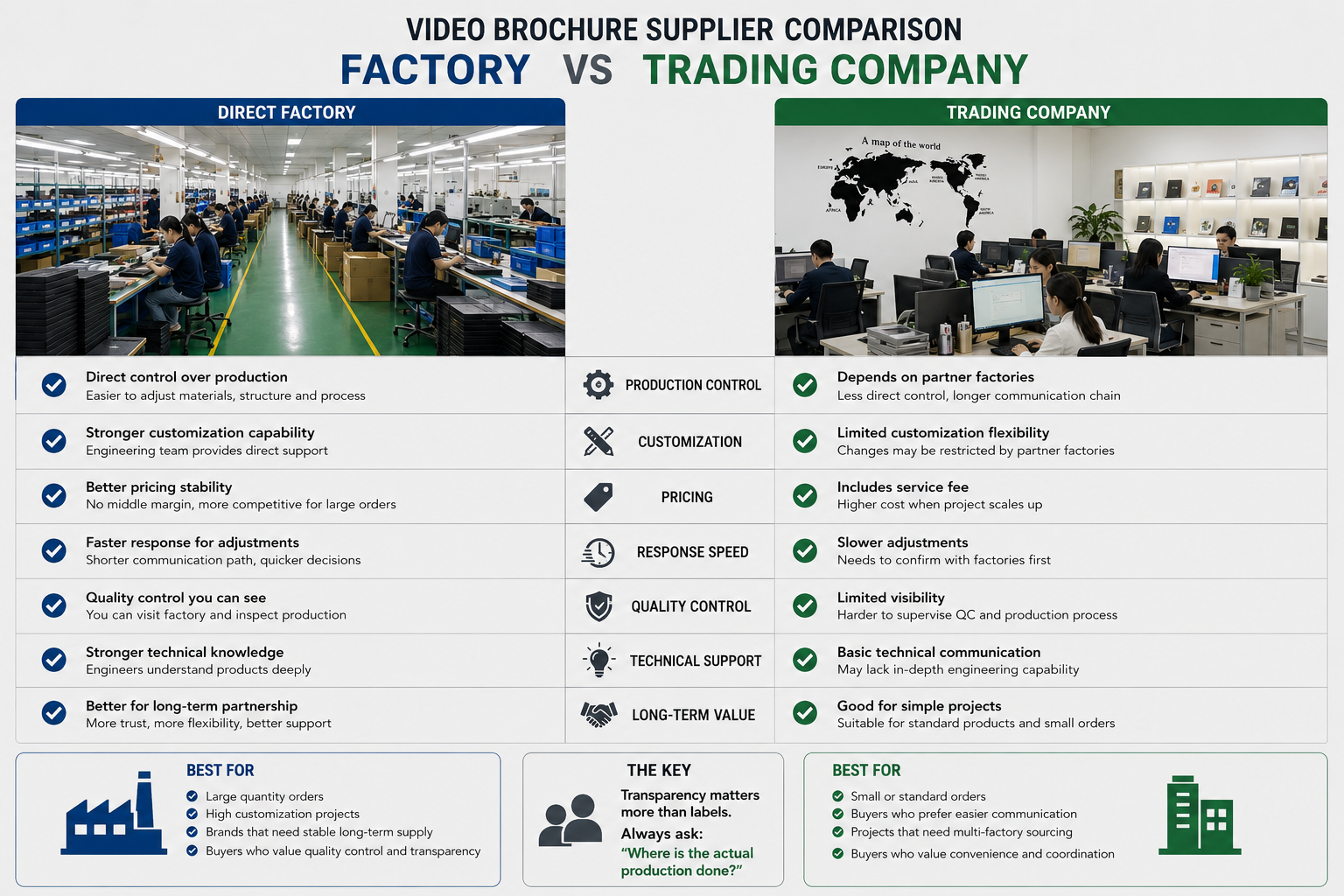
Many buyers cannot clearly tell the difference between factories and trading companies.
Both can appear professional online.
Factories usually offer better customization control, production visibility, and long-term pricing stability. Trading companies sometimes provide smoother communication but less direct production control.
Chinese Factories Often Have Better Pricing But Weak Online Visibility
This is something many overseas buyers misunderstand.
A lot of strong Chinese factories are actually difficult to find online.
Many real factories are not good at:
- SEO
- website design
- Google Ads
- English copywriting
Meanwhile, many trading companies rank very well in Google.
That means:
“Easy to find” does not always mean “best for manufacturing.”
Some highly capable factories are buried on page two or three of search results.
I usually recommend buyers also search:
- Made-in-China
- trade show exhibitor lists
- Alibaba supplier history
- import databases
- LinkedIn company activity
Advantages of Working Directly With Factories
Direct factories usually provide:
- faster production adjustments
- stronger technical knowledge
- more customization flexibility
- direct QC supervision
- better long-term pricing
This becomes important when campaigns scale.
Large projects often require:
- urgent revisions
- packaging modifications
- firmware changes
- shipping adjustments
Factories usually respond faster because communication chains are shorter.
When Trading Companies Can Still Be Useful
Some trading companies are actually very organized.
Good trading firms sometimes offer:
- stronger English communication
- easier coordination
- multi-factory sourcing
- lower management pressure
But buyers should still ask where production actually happens.
Transparency matters more than labels.
Download the Video Brochure Supplier Checklist
Before placing a bulk order, I strongly recommend using a structured supplier evaluation process.
We prepared a practical checklist buyers can use to compare factories, evaluate QC systems, and avoid common sourcing mistakes.
👉 Download the checklist here:
Video Brochure Manufacturer Selection Checklist
Conclusion
A good video brochure manufacturer should reduce stress instead of creating more problems.
Strong communication, realistic timelines, stable QC, honest technical guidance, and reliable after-sales cooperation matter far more than the lowest unit price.
Footnotes
-
Most video brochure projects combine electronics assembly, printing, packaging, and firmware programming into a single production workflow. ↩
-
Premium customization usually increases production complexity, assembly time, and shipping considerations. ↩
-
Many playback problems come from unsupported codecs or improper file formatting rather than hardware failure. ↩
-
Even small defect percentages become expensive during large-scale campaign distribution.