

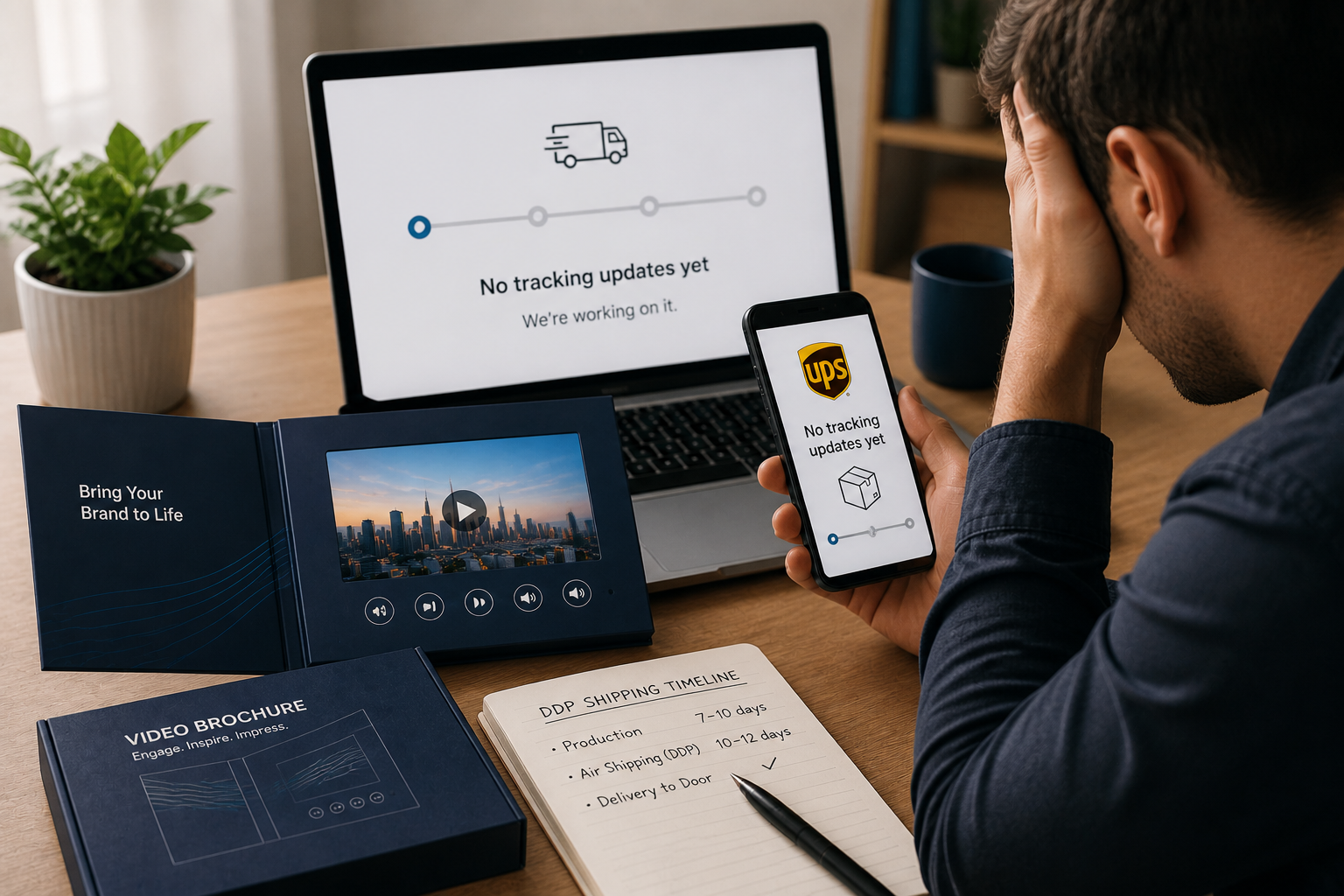
“Why does the UPS tracking still show no updates? Did the shipment actually leave China?”
One US client emailed us this question almost every day for a week after receiving her tracking number. That anxiety is extremely common with first-time DDP shipping buyers.
Many companies importing video brochures from China underestimate how complicated international shipping becomes once lithium batteries, customs clearance, and tariffs enter the process.
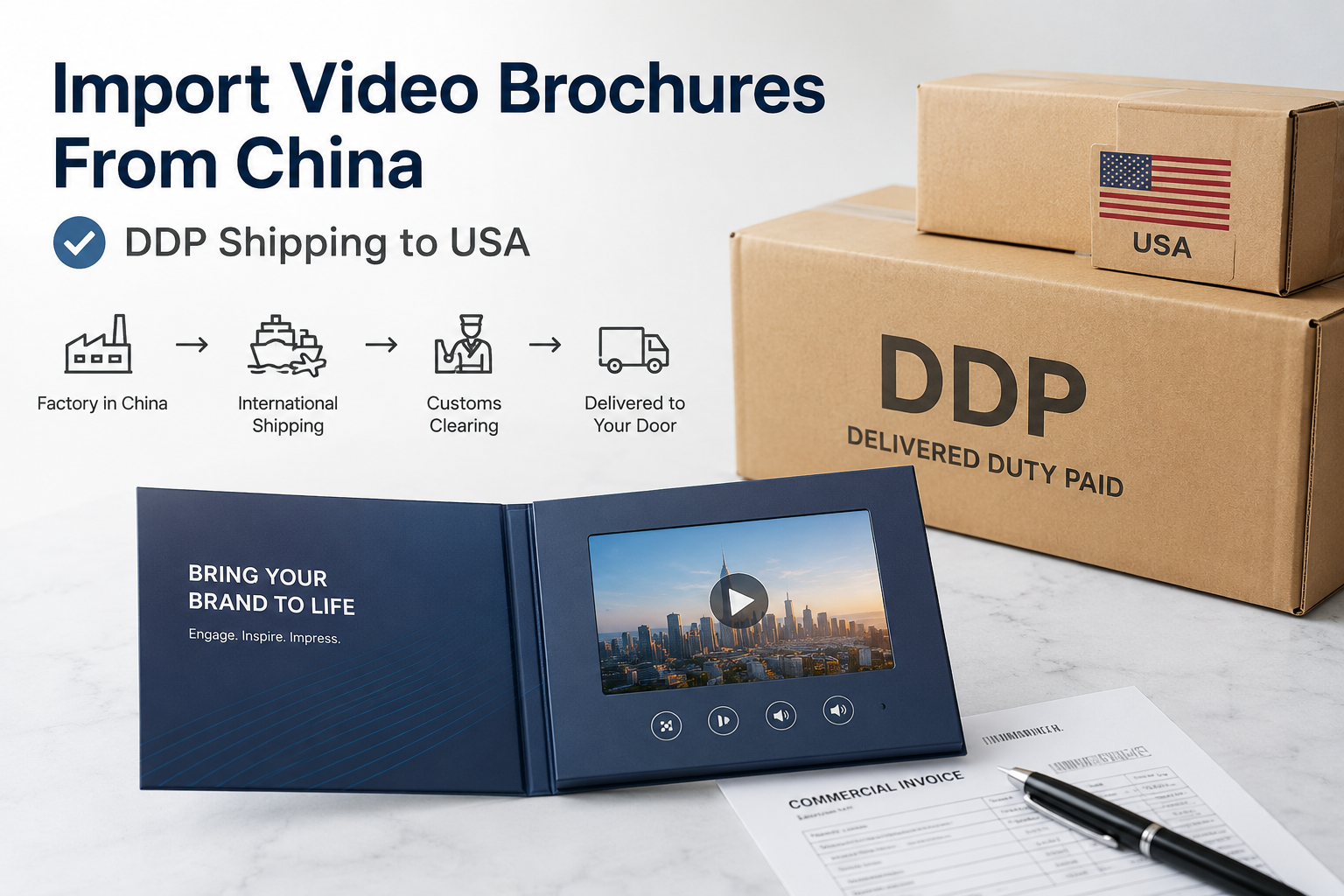
Most experienced US buyers choose DDP shipping because it combines freight, customs clearance, import duties, and final delivery into one predictable process with fewer surprises.1
For video brochures with LCD screens and rechargeable batteries, DDP shipping is often the most practical option under current US import conditions.
Why Do Most US Buyers Prefer DDP Shipping?
Many buyers focus heavily on unit pricing during quotation discussions. But shipping problems usually become the real issue after production finishes.
DDP shipping removes much of the operational complexity from importing.
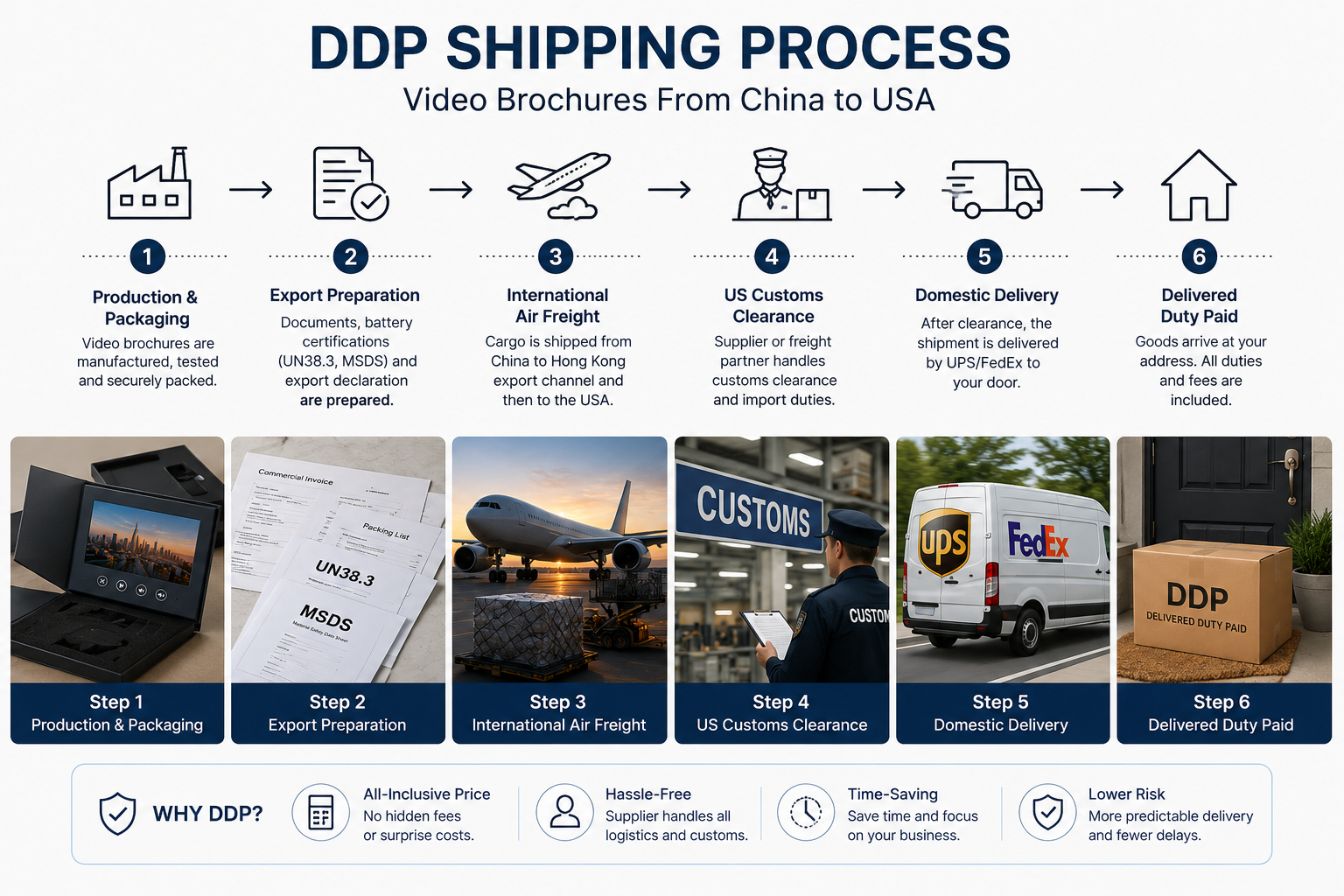
Under DDP terms, the supplier or freight partner typically handles:
- export paperwork
- air freight booking
- customs clearance
- import duties
- local delivery
For many marketing agencies and small businesses, this is much easier than coordinating multiple logistics companies independently.
Predictable Costs Matter More Than Cheap Freight
Under FOB or EXW shipping terms, buyers may receive separate invoices later for:
- import tariffs
- customs brokerage fees
- local trucking
- storage charges
- duty collection fees
This creates budget uncertainty.
Under DDP shipping, most of these costs are already included in the quotation.
This is especially important now because US tariff policies can change quickly. Some buyers are shocked when they discover even small sample shipments can generate significant customs charges.
Video Brochures Are Not Simple Printed Products
Many buyers assume video brochures ship like ordinary paper brochures.
That is not true.
Video brochures usually contain:
- lithium batteries
- LCD screens
- speaker components
- memory boards
This creates additional shipping compliance requirements.2
Because of battery regulations, experienced freight handling becomes very important.
How Does DDP Shipping Actually Work?
Many first-time buyers think DDP simply means “door-to-door delivery.”
In reality, the logistics process is more complicated behind the scenes.
Step 1: Production and Export Preparation
After artwork approval, the factory handles:
- video brochure assembly
- battery installation
- charging tests
- packaging production
- carton packing
At this stage, shipping planning already matters.
Large rigid boxes increase dimensional shipping weight significantly.
For example:
| Product Type | Shipping Impact |
|---|---|
| 4.3-inch mailer brochure | Lower freight cost |
| 7-inch hardcover brochure | Medium freight cost |
| 10-inch magnetic gift box | Higher dimensional weight |
Many buyers underestimate how strongly packaging style affects total landed cost.
Step 2: Hong Kong Export Transit
For many lithium battery shipments, cargo first moves from mainland China into Hong Kong export channels before entering UPS or FedEx systems.
This is where confusion often begins.
Many buyers receive a tracking number immediately, but the courier website shows no updates for several days.
Some buyers panic at this stage and assume the shipment has not moved.
In reality, the cargo is often already moving internationally.
Step 3: US Customs Clearance and Tracking Activation
This is one of the most misunderstood parts of DDP shipping.
In many battery shipments, tracking numbers only begin updating after the cargo reaches the United States and clears customs.3
Once tracking activates, delivery usually moves very quickly.
Experienced suppliers normally explain this process before customers become anxious.
Good communication matters heavily during this stage.
Why Marketing Agencies Often Choose DDP
Marketing agencies usually care more about delivery reliability than logistics optimization.
A delayed campaign can destroy ROI immediately.
I often see this with:
- product launches
- real estate campaigns
- investor kits
- medical conferences
- luxury direct mail campaigns
Agencies Usually Do Not Have Import Teams
Most agencies do not have:
- customs brokers
- freight coordinators
- import compliance staff
They simply want campaign materials delivered correctly and on time.
DDP works well because the supplier handles most shipping coordination.
Campaign Timing Is Extremely Sensitive
This is where many buyers make mistakes.
They finalize artwork too late and leave almost no shipping buffer.
For custom video brochures, realistic timelines are often:
| Stage | Typical Timeline |
|---|---|
| Sampling | 3–7 days |
| Production | 12–18 days |
| DDP air shipping | usually 10–12 days |
| Sea freight | 25–40 days |
For important events, I usually recommend adding at least one extra week of buffer time.
International freight disruptions happen every year.
What Problems Can Still Happen With DDP Shipping?
DDP reduces complexity. But it does not eliminate all risk.
Many first-time importers misunderstand this.
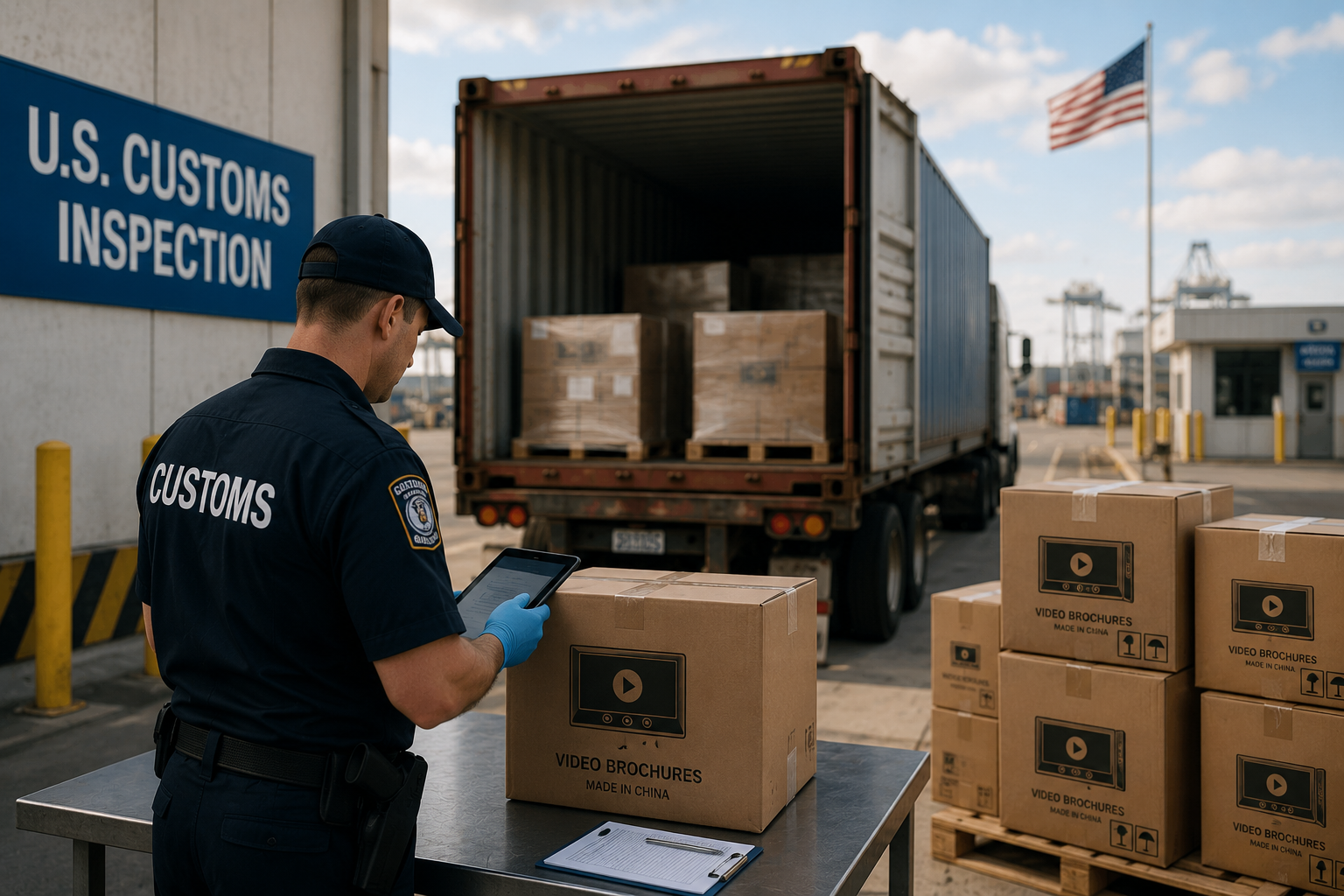
Customs Inspections Can Still Cause Delays
Even experienced freight forwarders cannot fully control customs inspections.
This becomes more common when shipments involve:
- lithium batteries
- large shipment quantities
- incomplete documentation
- unusual declared values
During inspection periods, delays can still happen.
Tracking Delays Create Buyer Anxiety
The most common customer complaint is usually:
“Why does the tracking still show no updates?”
This happens frequently with DDP battery shipments because tracking activation often happens later in the logistics chain.
Many factories fail to explain this clearly.
That communication gap creates unnecessary stress.
Peak Seasons Increase Congestion
Shipping delays become more common before:
- CES
- holiday campaigns
- Chinese New Year
- major trade show seasons
Freight congestion and customs backlogs increase heavily during these periods.4
Experienced buyers usually schedule production earlier to reduce risk.
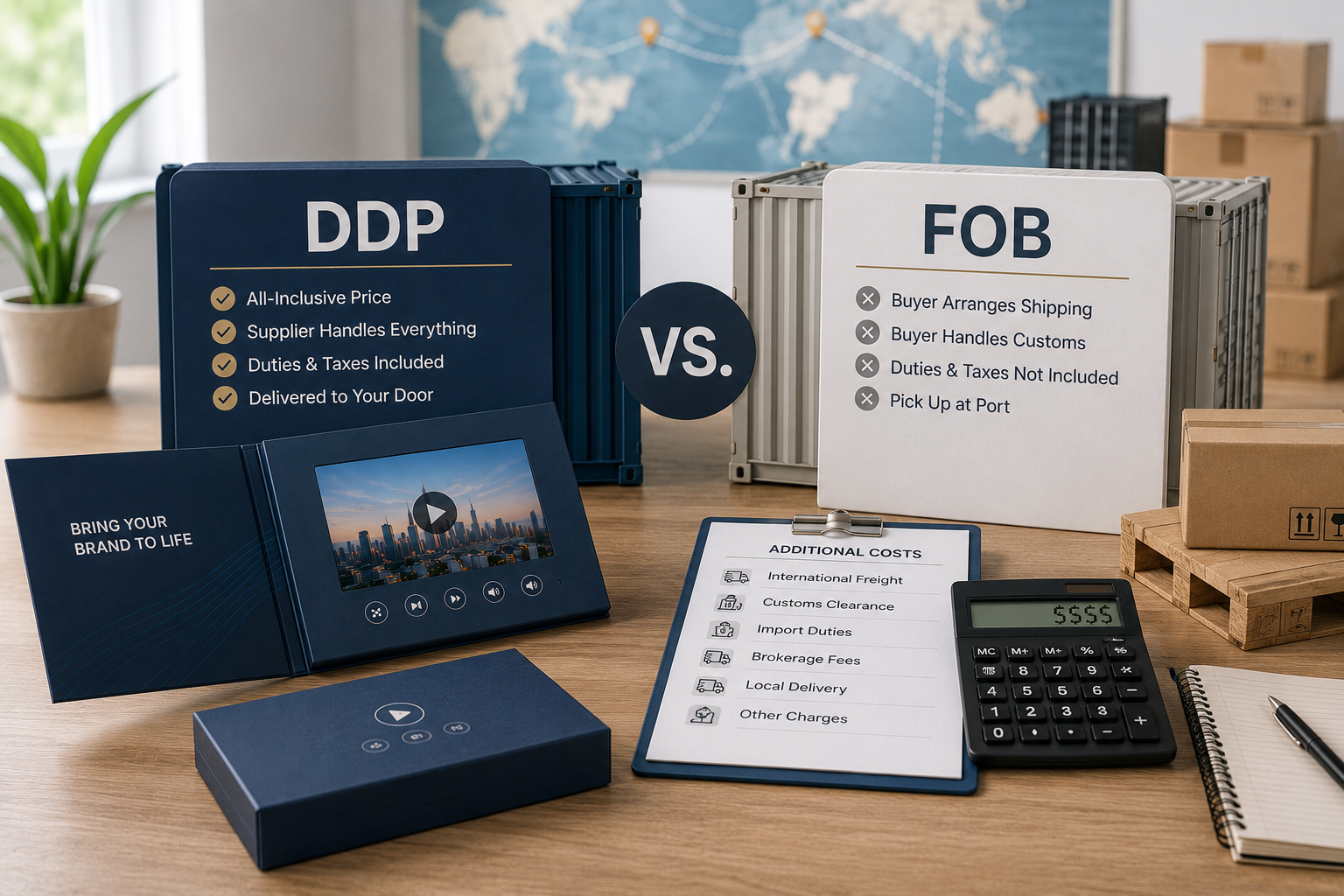
DDP vs FOB: Which Is Better for Video Brochures?
There is no universal answer.
The best option depends on the buyer’s experience level and logistics structure.
!
For most small and medium US buyers, DDP is usually the simpler option.
| Factor | DDP | FOB |
|---|---|---|
| Customs handled by supplier | Yes | No |
| Import duties included | Usually | No |
| Easier for first-time buyers | Yes | No |
| Freight control | Lower | Higher |
| Risk of surprise charges | Lower | Higher |
| Suitable for campaign projects | Very suitable | Depends |
When FOB Makes More Sense
FOB may work better for:
- large distributors
- experienced importers
- companies with freight contracts
- container-level buyers
These companies often optimize freight costs across multiple suppliers.
Why Most Video Brochure Buyers Still Choose DDP
Most video brochure customers are not large importing corporations.
They are:
- marketing agencies
- healthcare brands
- SaaS companies
- event organizers
- real estate developers
These buyers usually value simplicity, predictable costs, and smoother delivery coordination more than small freight savings.
How Buyers Can Reduce Shipping Problems
Most shipping problems begin before cargo even leaves the factory.
Planning matters more than many buyers realize.
Confirm DDP Coverage Clearly
Before payment, buyers should confirm:
- whether tariffs are included
- whether residential delivery is included
- whether remote area surcharges apply
- whether local delivery fees are covered
Clear communication prevents future disputes.
Leave Extra Time for Campaign Launches
This is one of the biggest lessons I have learned from years of video brochure exports.
Buyers often focus heavily on production speed but ignore shipping uncertainty.
Even with experienced DDP freight channels, delays can still happen because of:
- customs inspections
- weather disruptions
- flight congestion
- holiday backlogs
Campaigns should always include shipping buffer time.
Choose Suppliers With Battery Export Experience
Video brochures are not ordinary packaging products.
Factories must understand:
- battery compliance
- export documentation
- protective packaging
- freight coordination
- customs handling
Cheap suppliers sometimes create expensive shipping problems later.
Conclusion
Most US buyers choose DDP shipping for video brochures because it simplifies importing, reduces customs stress, and creates more predictable landed costs. For campaign-based projects, reliable execution usually matters more than finding the absolute cheapest freight option.
-
DDP stands for Delivered Duty Paid under Incoterms rules. Under DDP terms, the seller is responsible for transportation, customs clearance, duties, and delivery to the buyer’s destination. ↩
-
Video brochures usually contain lithium batteries and LCD screens, which require additional export compliance documents such as UN38.3 and MSDS certifications for air shipping. ↩
-
In many DDP battery shipments, UPS or FedEx tracking numbers may not update immediately because cargo is first consolidated through Hong Kong export channels before entering the US courier scanning system. ↩
-
Shipping timelines vary depending on customs inspections, holiday congestion, battery regulations, weather disruptions, and destination location within the United States. ↩