

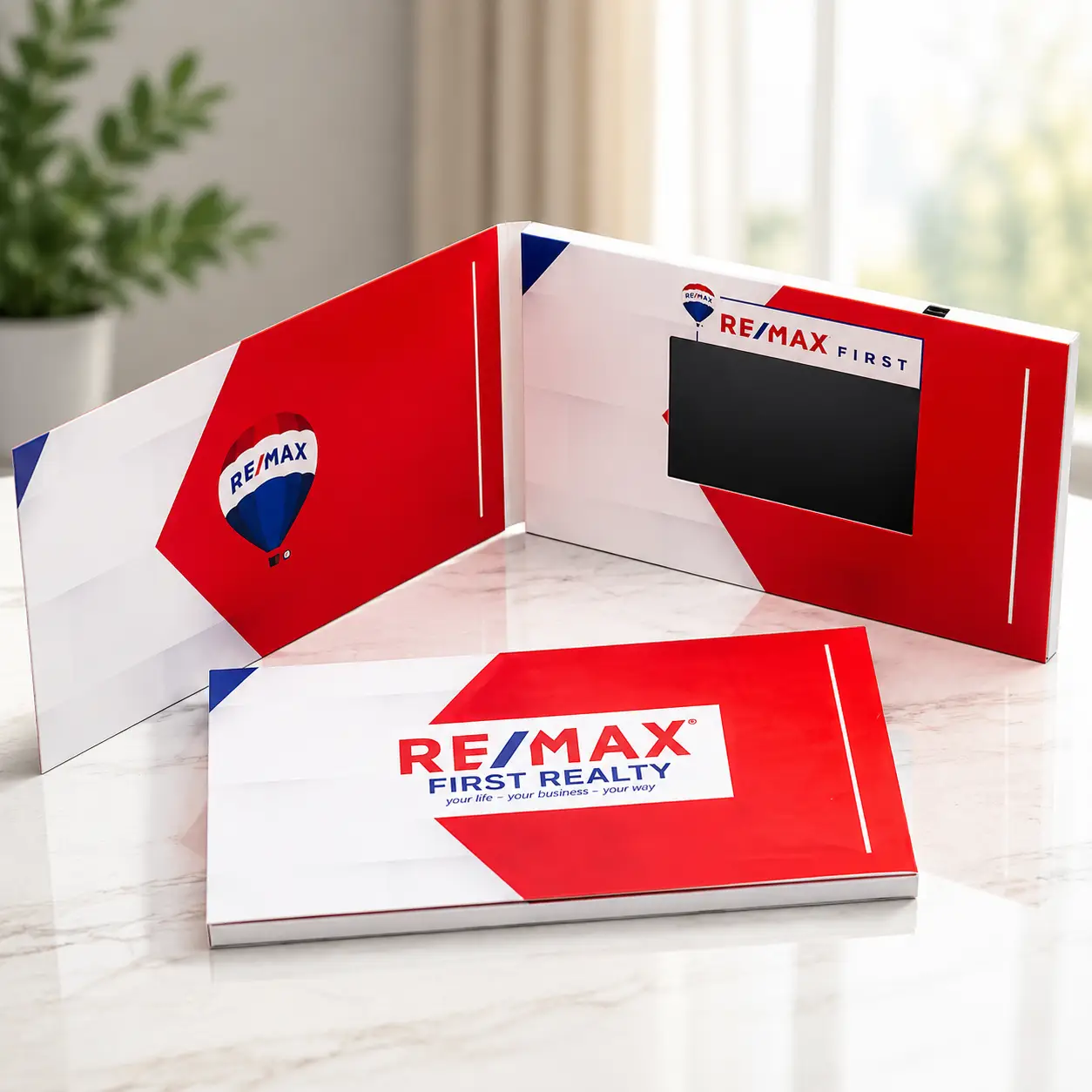
Sellers usually meet with more than one agent before deciding who lists their property. In most cases, the agents are offering similar commission structures and similar services. What changes the outcome is often the listing presentation itself — specifically, how clearly and how confidently the agent shows their marketing plan.
This is the gap that video brochures are increasingly used to fill. Instead of describing a marketing strategy verbally or walking through a printed folder, the agent hands the seller something that opens and plays a video automatically — showing the strategy rather than explaining it.
Why the Listing Presentation Is Where Agents Win or Lose
A listing presentation is typically the final step before a seller commits to an agent. By this stage, most sellers have already done research and met with competing agents. What they are evaluating in the room is harder to put into words — but it usually comes down to confidence in the agent’s professionalism and clarity of the marketing plan.
A printed brochure or a PDF on a laptop screen does not always communicate that confidence. A video brochure does something different: the seller opens it, the screen lights up, and a video begins playing immediately. There is no waiting for a laptop to load, no link to click, no app to open. The experience itself becomes part of the impression.
This matters because sellers in that meeting are not only evaluating what the agent says about their marketing plan — they’re also evaluating how confidently the agent can present it. An agent who hands over a brochure and lets it speak for itself, rather than narrating every point, comes across differently than one relying entirely on conversation. The format itself becomes part of how prepared the agent appears.
How Real Estate Agents Configure Video Brochures for Listings
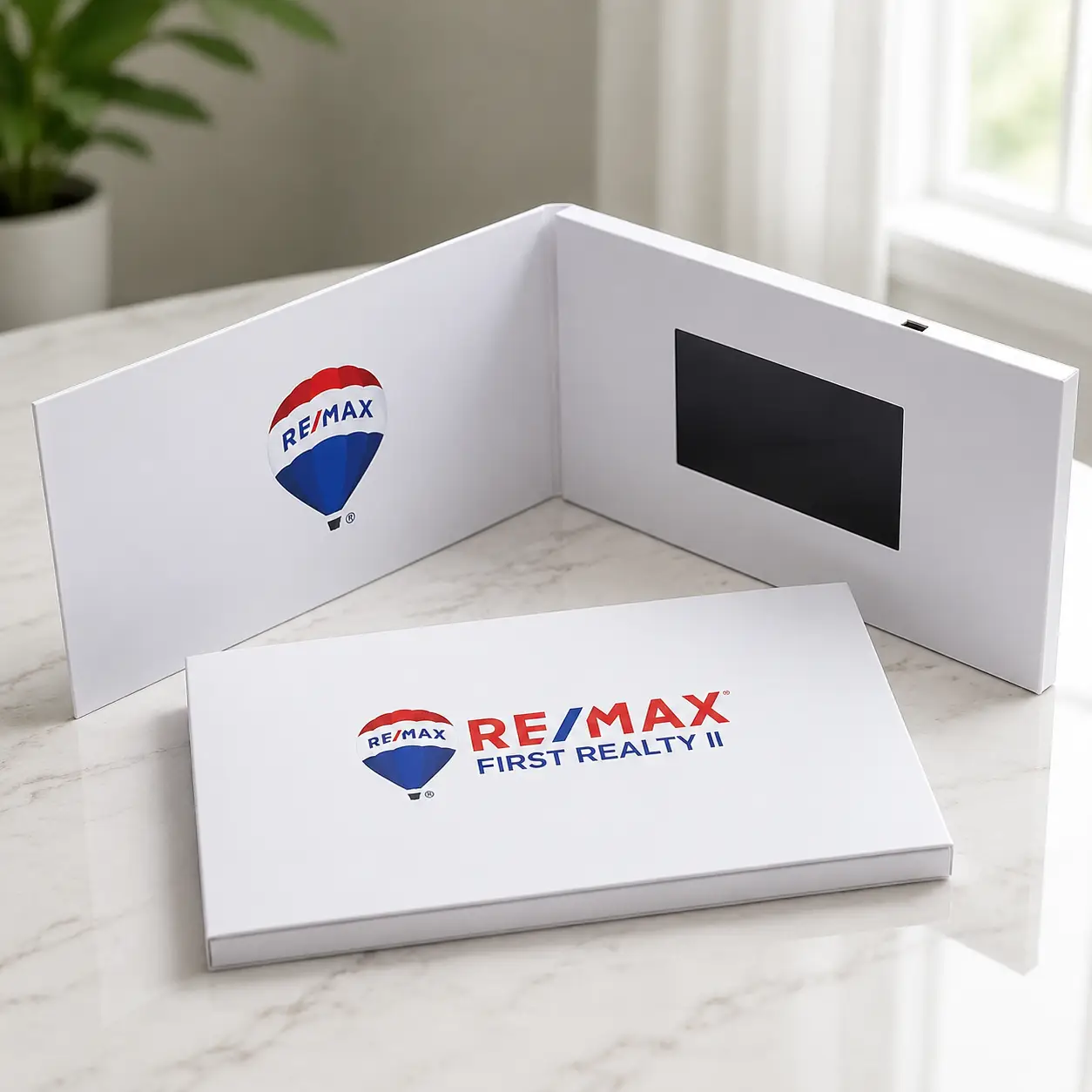
Based on projects completed for real estate clients, the video brochure used for listing presentations is typically loaded with a short sequence covering the agent’s introduction, their marketing approach for the property, and in some cases examples of previous listings.
The screen size matters more than buyers initially expect. Real estate clients most often request the 4.3" and 5" formats for listing presentation use1 — compact enough to hand across a table during a seller meeting, large enough that the video is easy to watch without strain.
One real estate client confirmed this directly when comparing options for a campaign:
"Can I get a quote for the smallest 4.3\" size in quantities of 25 and 50, please?"
This reflects how most real estate orders begin — not with a large campaign commitment, but with a small batch sized to test the format in actual seller meetings before deciding whether to scale up.
Why Agents Start with Small Quantities
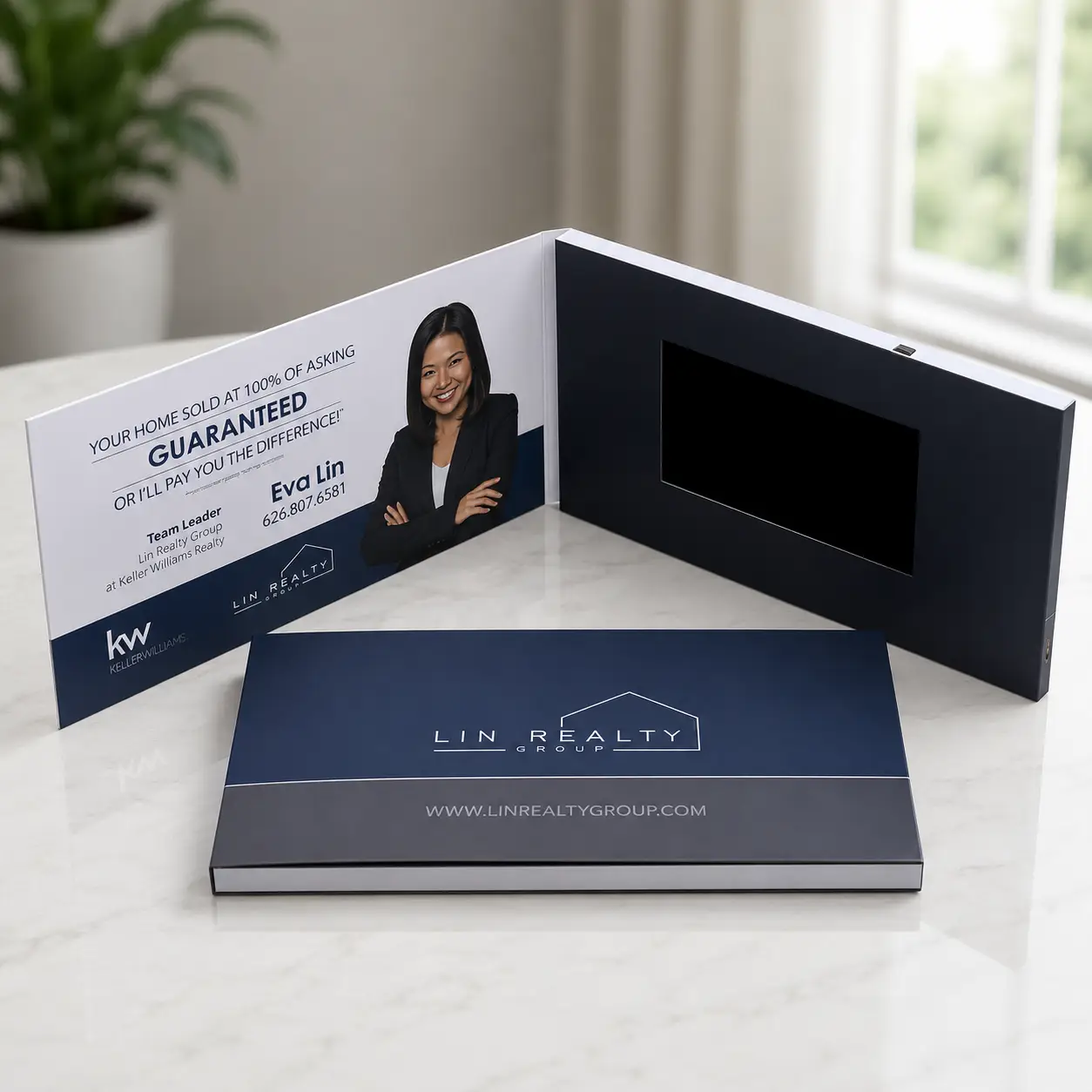
Real estate agents and brokerages rarely place large initial orders for video brochures. Instead, most projects begin with 25 to 50 units2 — enough to use across a handful of listing presentations and gauge how sellers respond.
This cautious approach makes sense. A listing presentation tool is only valuable if it actually changes the outcome of the meeting. Agents want to see that effect firsthand before committing budget to a larger rollout. For agencies and teams managing multiple agents, a small pilot batch also makes it easier to get internal buy-in before expanding the tool across the whole team.
For a full breakdown of how unit pricing changes between a small pilot batch and a larger team rollout — including how design upgrades like hardcover finishes affect the cost — see video brochure pricing for listing presentation campaigns.
What Goes Inside the Video Brochure
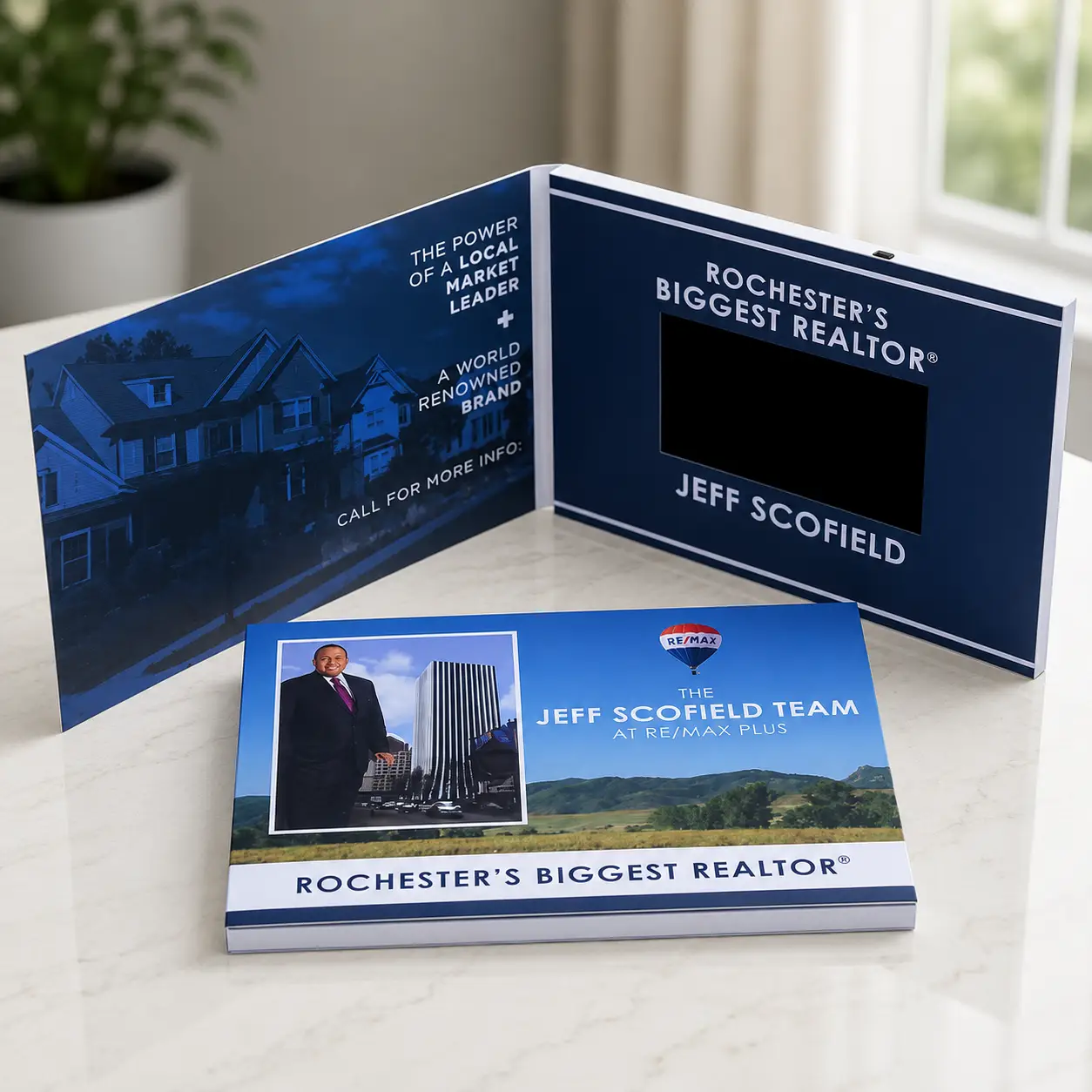
The content loaded onto the brochure is as important as the format itself. For listing presentations, the most effective structure follows a simple sequence: an introduction to the agent, an outline of how the property will be marketed, and — where available — evidence of past results.
Clients frequently ask about video length and memory size at this stage, since the video needs to be long enough to cover this content without feeling rushed, but short enough to hold a seller’s attention during a meeting. This is one of the most common questions we get before production starts:
"I see the memory size, but about how long of a video can you upload?"3
A 2–3 minute video is typical for listing presentations, and most standard memory configurations comfortably support this without any compression issues.
Once a sample has been approved, agents commonly move directly toward finalizing the order. One real estate client, reviewing a completed video brochure design, summed up that moment clearly:
"I think it looks good! How much are we looking at for this design? Does it cost more or is it still the same unit price?"4
This is a common sequence — design approval followed almost immediately by a pricing question, since the agent now needs to confirm budget before moving the project forward internally.
Video Brochures vs Printed Listing Materials
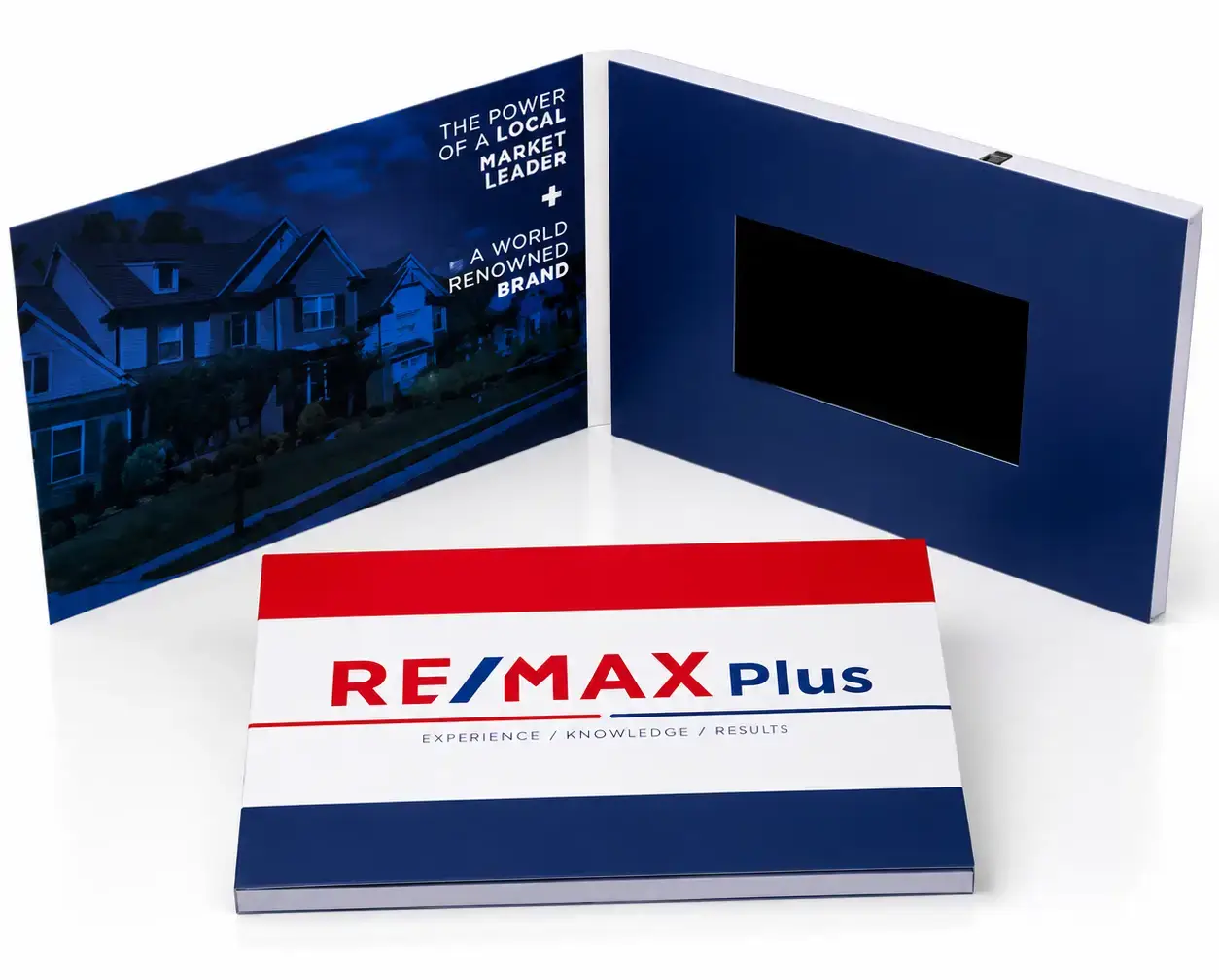
Printed listing presentation folders are still common, but their impact tends to fade quickly. A folder gets set down, flipped through once, and often forgotten by the time the seller compares agents later that week.
A video brochure changes that dynamic. Because it requires the seller to physically open it and watch something play, it creates a moment of engagement that a printed page does not. Agents working in competitive markets — where most other agents are still using standard printed materials — often find that this difference alone is enough to make their presentation stand out.
Where Video Brochures Fit Into a Broader Real Estate Marketing Toolkit
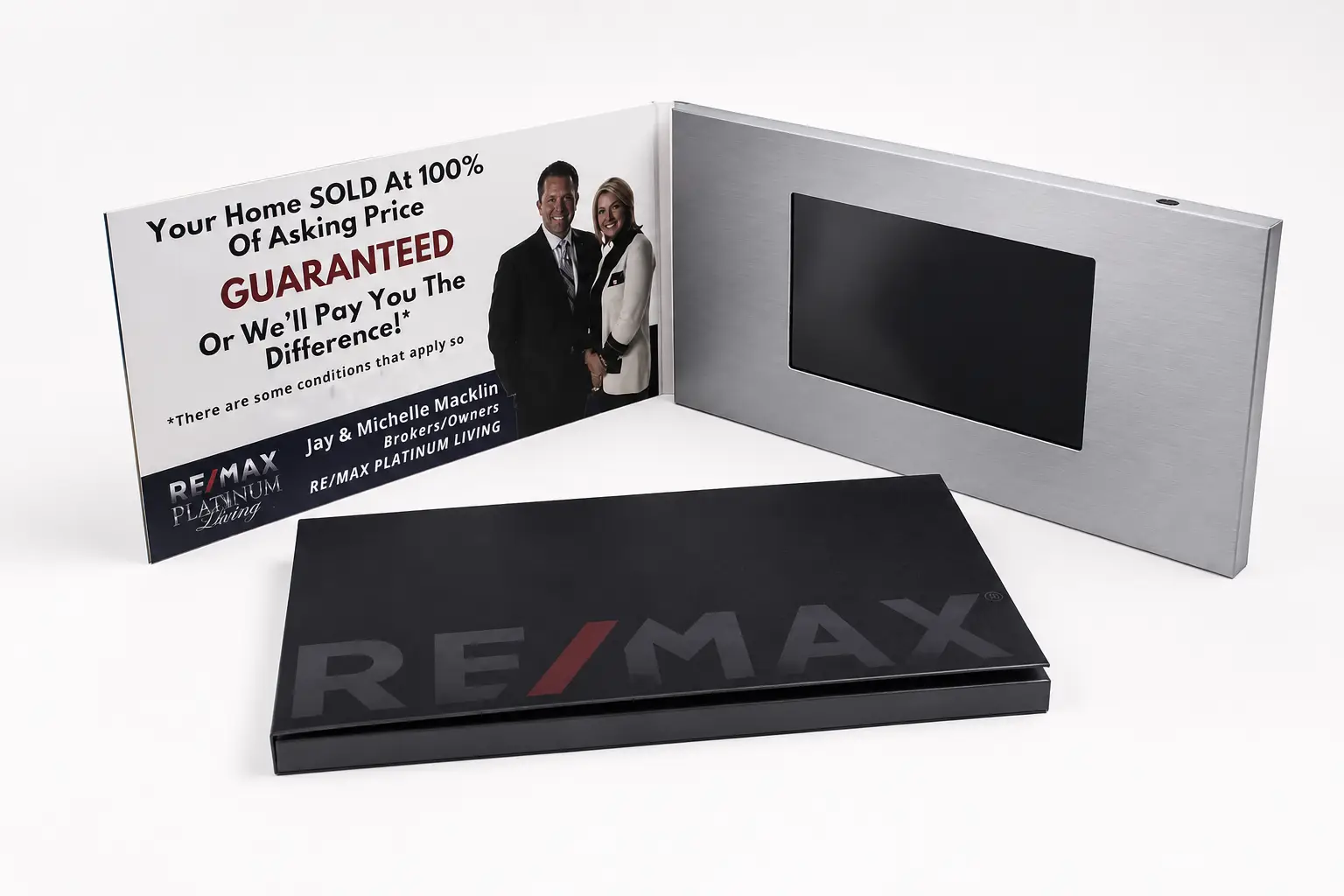
Listing presentations are one of several ways real estate teams use video brochures. Some agents use the same format as a leave-behind after open houses, while marketing teams working on new developments use larger formats for investor and buyer presentations.
For a full overview of how video brochures are used across the real estate marketing process5 — from open house follow-ups to developer and luxury listing campaigns — see video brochures for real estate marketing.
Getting Started
Most real estate clients begin by requesting a sample in the screen size they’re considering, then move to a small pilot batch of 25–50 units once they’ve reviewed the sample and confirmed the configuration. From there, scaling to a full team rollout is a straightforward step once the format has proven itself in actual seller meetings.
We can recommend the right configuration based on your typical listing volume and send a sample before your first pilot order.
Notes
-
Based on real estate inquiries and quotation requests received by CheerTrend between 2015–2026. ↩
-
Pilot orders are commonly used by agencies and brokerage teams before larger campaign rollouts. ↩
-
Quoted from an actual customer email discussing memory requirements and video duration. ↩
-
Real client feedback received during the design approval stage of a video brochure project. ↩
-
Including listing presentations, open house follow-ups, developer marketing, and luxury property campaigns. ↩