

Many buyers think custom video brochure production works like normal printing. It doesn’t. Video brochures combine packaging, electronics, batteries, and logistics together, so small mistakes quickly become expensive delays.
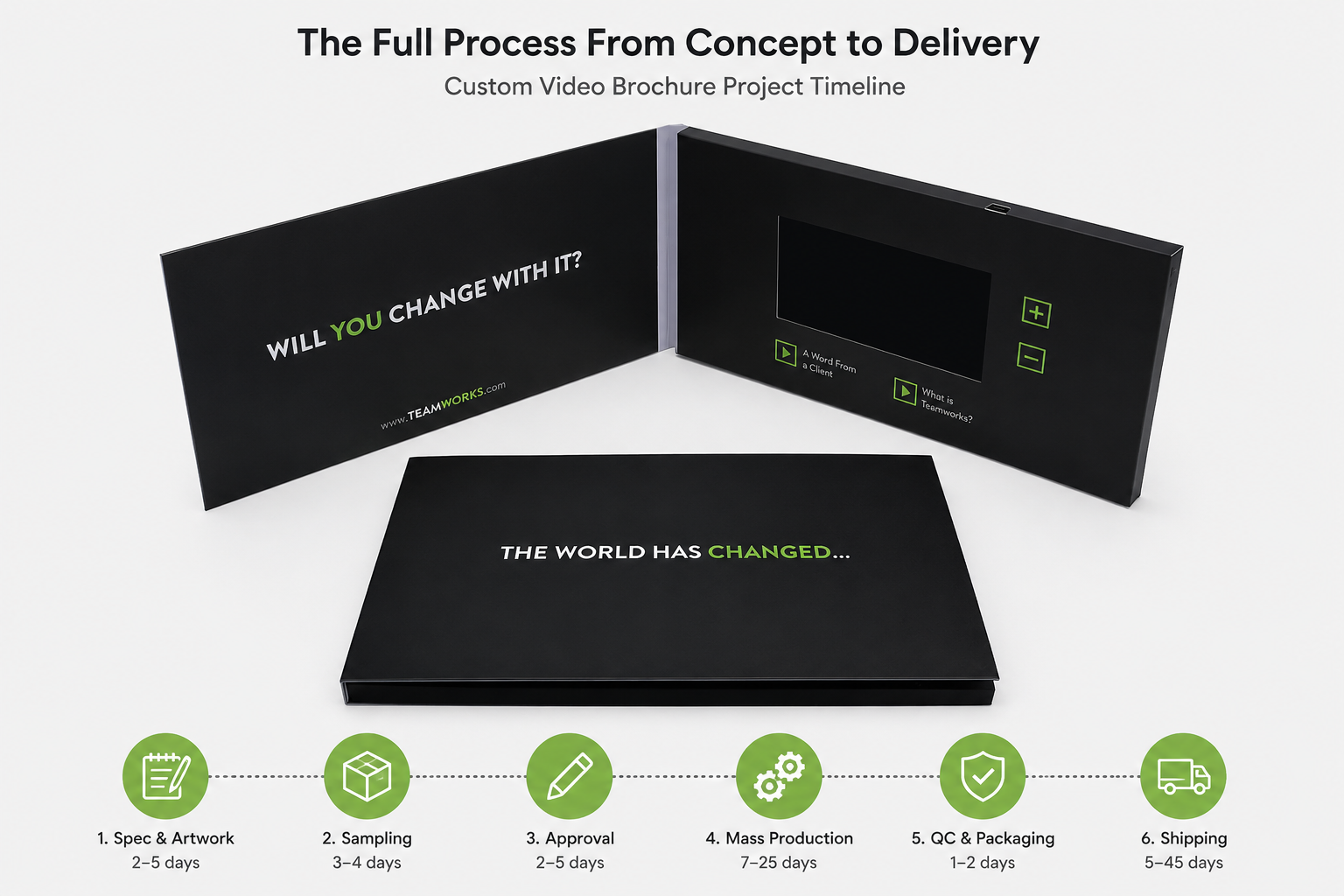
Most custom video brochure projects take around 2–4 weeks from final approval to shipment. The process usually includes specification planning, artwork preparation, sampling, mass production, testing, and international shipping.
Many factories only show the finished product online. But real projects involve much more behind the scenes.
This is how custom video brochure projects usually work in actual factory production.
What Does a Typical Video Brochure Project Timeline Look Like?
One of the first questions buyers ask is:
“How long will the whole project take?”
The answer depends on packaging complexity, quantity, factory scheduling, and approval speed. But most projects roughly follow this structure:
| Stage | Typical Timeline |
|---|---|
| Specification & Artwork Preparation | 2–5 days |
| Sample Production | 3–4 days |
| Sample Revision & Approval | 2–5 days |
| Mass Production | 7–25 days |
| Quality Inspection & Packaging | 1–2 days |
| International Shipping | 5–45 days |
Simple projects usually move faster.
Luxury packaging projects often take longer because rigid boxes, EVA foam inserts, and specialty finishes require more manual work.
I noticed the biggest delays rarely happen during manufacturing itself.
Most delays happen earlier because:
- artwork files are incomplete
- videos keep changing
- approvals move slowly
- shipping plans were never confirmed early
Projects with fast internal approvals almost always move smoother.1
What Should Buyers Prepare Before Starting a Video Brochure Project?
Many buyers contact suppliers before finalizing specifications. That usually creates confusion, changing quotations, and unnecessary revision rounds later.
Before requesting a quotation, buyers should confirm:
- screen size
- packaging style
- quantity
- video content
- shipping destination
- button functions
These details directly affect:
- pricing
- production time
- PCB configuration
- battery size
- carton dimensions
- freight costs
The Most Important Specifications
| Specification | Why It Matters |
|---|---|
| Screen size | Affects PCB, battery, and structure |
| Quantity | Changes unit pricing significantly |
| Video length | Determines memory requirements |
| Packaging style | Affects assembly and freight cost |
| Buttons | Changes PCB setup |
| Shipping country | Affects battery compliance |
Many buyers focus only on the screen size.
But in real projects, packaging style often changes total project cost more than the screen itself.
The Three Most Common Packaging Styles
| Packaging Style | Features | Best For |
|---|---|---|
| Standard Mailer | Lightweight and economical | Large campaigns and giveaways |
| Hardcover Brochure | Better durability and presentation | Corporate marketing |
| Magnetic Gift Box | Premium structure with EVA foam | Luxury branding and gifting |
Large magnetic gift boxes look impressive, but they also increase freight costs quickly because shipping companies charge by volumetric weight.
I often recommend balancing presentation quality with shipping efficiency, especially for international campaigns.
⚠️ Common Mistake:
Many buyers select oversized premium packaging first and only calculate shipping costs later.
Artwork Delays Most Projects — Here’s Why
Many buyers assume production starts immediately after payment.
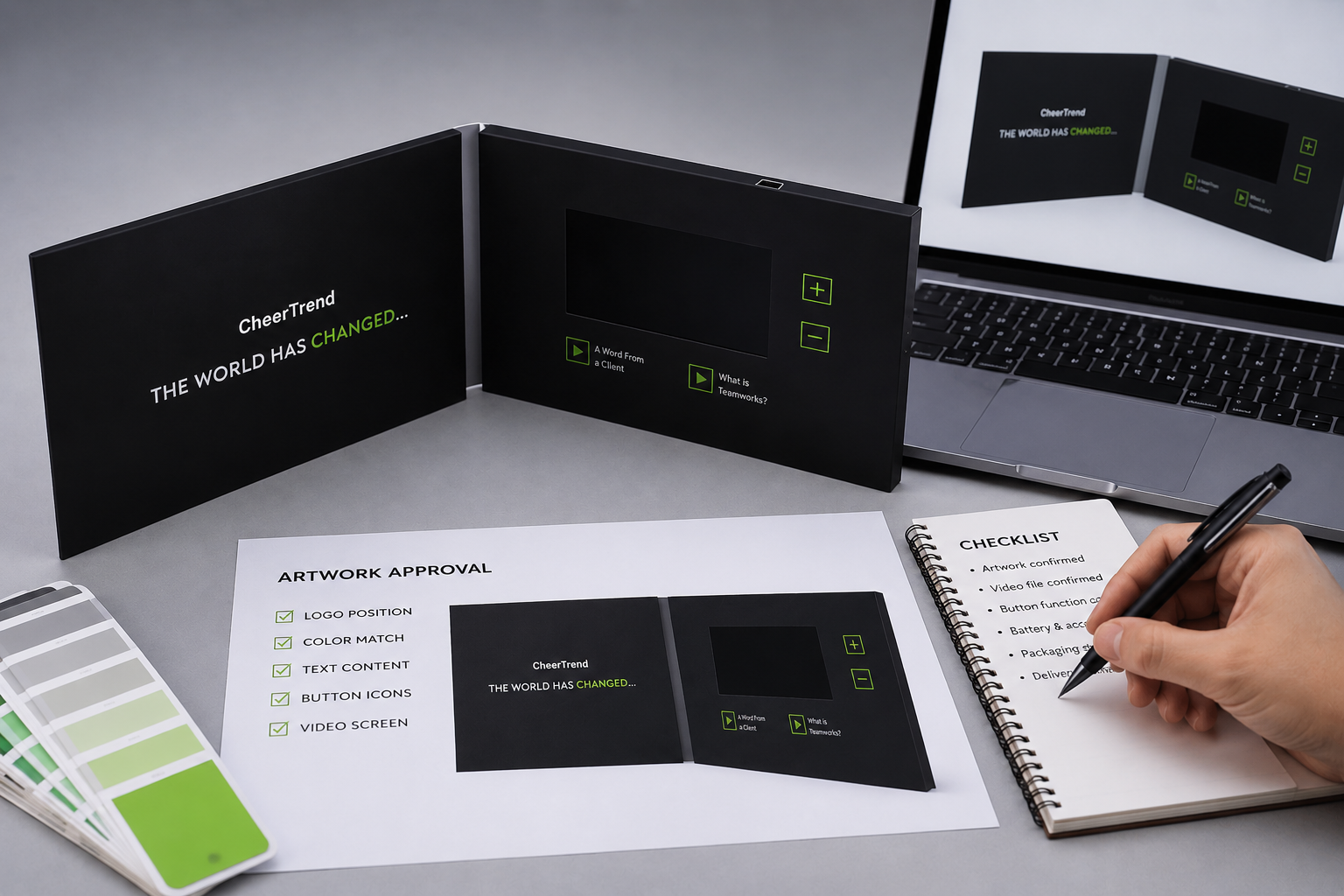
In reality, artwork approval is one of the biggest bottlenecks in custom video brochure production.
Factories usually need:
- dieline confirmation
- bleed areas
- CMYK print files
- logo positioning
- USB opening alignment
- barcode placement
- final video files
I frequently see projects delayed because internal marketing teams continue changing small design details after sampling already started.
That creates chain delays because packaging structure and electronics positioning are connected together.
RGB Files Still Cause Problems
Designers sometimes send RGB artwork because colors look brighter on screens.
But mass production printing uses CMYK.
That means final printed colors may shift slightly if files are not prepared correctly.
Experienced buyers usually confirm print expectations early instead of revising colors later.2
Fast Internal Approval Matters More Than Buyers Expect
In many projects, factories finish their work faster than clients approve it.
Projects often slow down because:
- multiple departments review artwork
- management approvals take time
- videos get revised repeatedly
- branding guidelines keep changing
The smoothest projects usually have one clear decision-maker coordinating feedback internally.
💡 Insight:
The biggest production delays usually happen before manufacturing starts, not during production itself.
Why Is the Sampling Stage So Important?
Many buyers think samples only exist to check appearance.
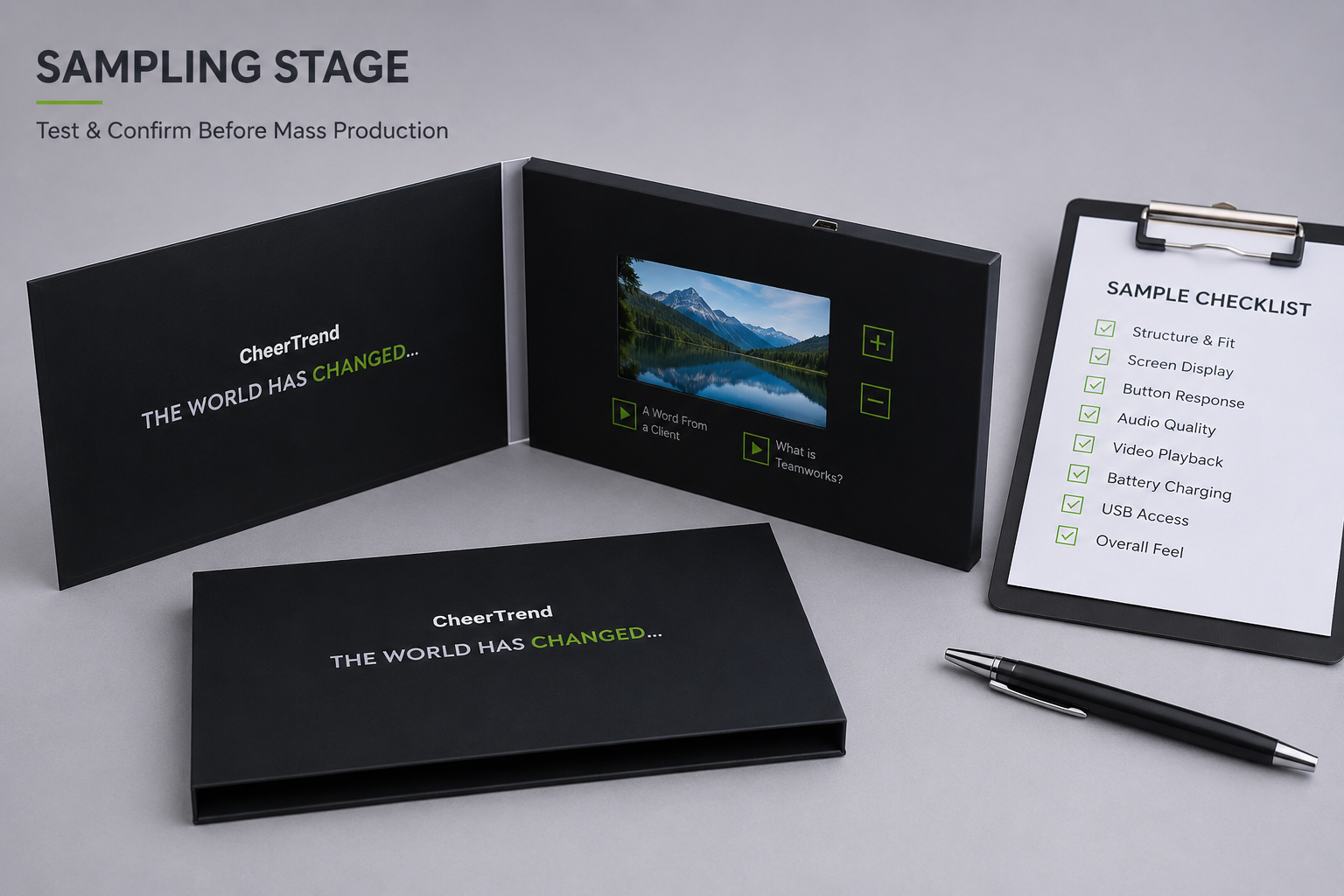
But sampling is actually where factories verify whether the project can work reliably in mass production.
Most custom video brochure samples require around 3–4 days depending on complexity.
What Factories Usually Test During Sampling
A proper sample should verify:
- screen brightness
- button response
- magnet trigger sensitivity
- battery charging
- speaker volume
- USB accessibility
- foam fitting
- playback quality
Many first-time buyers only review appearance.
Experienced buyers usually test how the product actually feels in the user’s hands.
Samples and Mass Production Are Not the Same
This is one of the biggest misunderstandings in the industry.
Samples and production units are made differently.
| Area | Sample Stage | Mass Production |
|---|---|---|
| Printing | Digital printing | CMYK offset printing |
| Assembly | Semi-manual | Standardized production |
| Screen sourcing | Small batch | Larger production batches |
Digital printing helps factories move faster during sampling.
But mass production printing usually delivers sharper detail and more stable colors.
I always explain this early because some buyers expect samples to match final production perfectly.
Small Screen Variations Are Normal
Different LCD batches sometimes show small differences in:
- brightness
- color temperature
- viewing angle
This is normal in electronics manufacturing.3
⚠️ Common Mistake:
Many buyers treat samples as final production standards instead of engineering validation stages.
How Does Mass Production Usually Work?
Once samples are approved, factories begin material purchasing and production scheduling.
Most video brochure orders require around 7–25 days for mass production depending on quantity and factory workload.
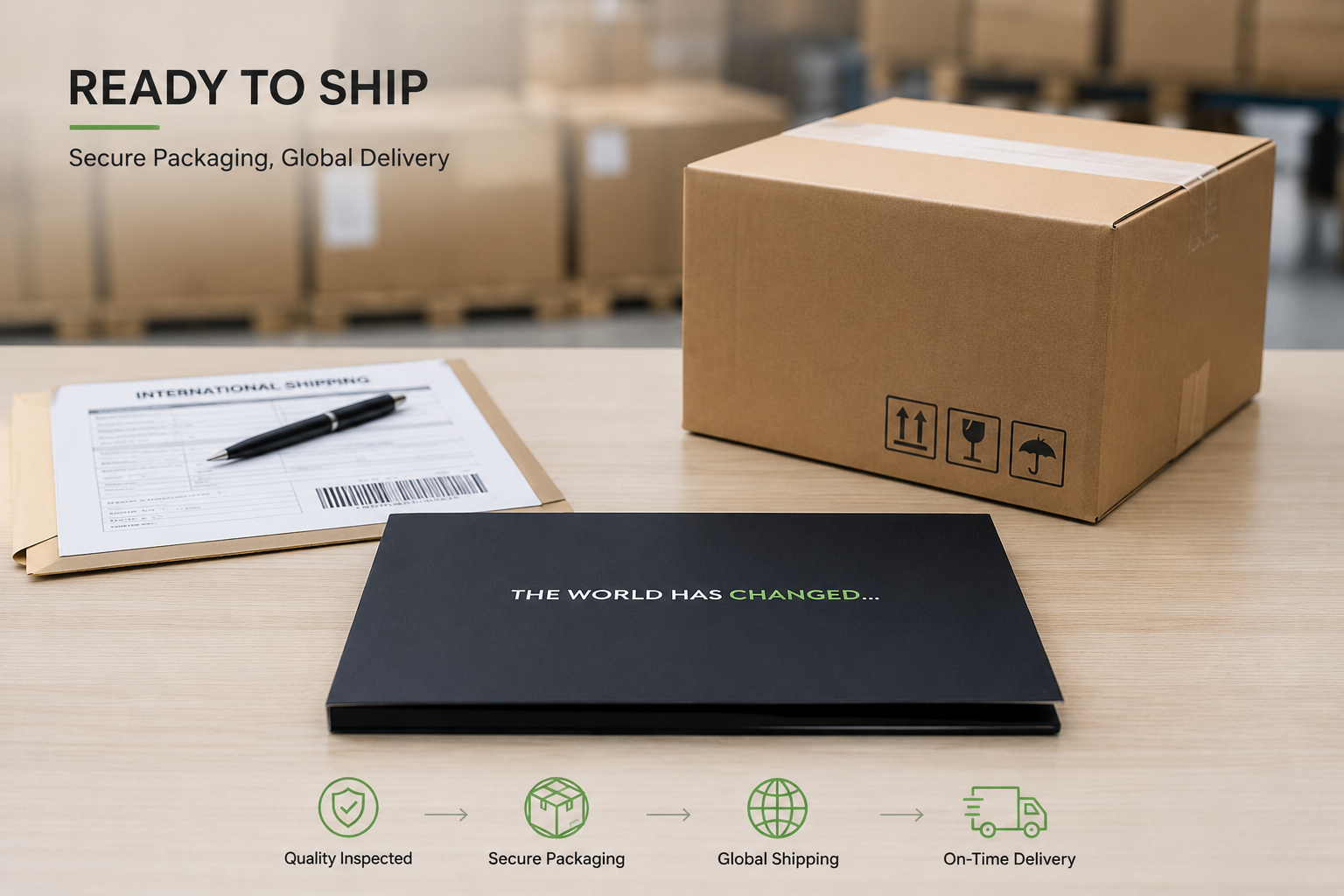
Many buyers see “2-week production” online and assume manufacturing starts immediately after payment.
But real factories usually schedule multiple custom projects simultaneously.
During busy periods, projects may wait several days before entering production.
The Main Production Stages
Most factories organize production like this:
- Material purchasing
- PCB and screen preparation
- CMYK printing
- Die cutting and box forming
- Electronics assembly
- Video uploading
- Testing and QC
- Final packaging
Each stage depends on the previous stage finishing correctly.
That is why late artwork revisions affect the entire schedule.
Video Uploading Is Usually Faster Today
Older production methods required much longer upload times.
Today, optimized systems allow factories to upload videos much faster.
In many standard projects, video uploading can usually finish within one working day.
The bigger delays usually come from:
- artwork revisions
- material shortages
- scheduling queues
- freight booking delays
I noticed most project problems are not caused by one major failure. They usually come from many small details being overlooked early.
Material Availability and Factory Scheduling Matter
LCD screens and memory chips sometimes experience sudden shortages or price increases.
During unstable supply periods, material costs may rise quickly within a short time.
That is why most quotations only remain valid for a limited period.4
Experienced buyers usually ask suppliers:
- What is your current production schedule?
- Are materials currently stable?
- Is this peak season?
These questions are often more useful than simply asking for “fast production.”
Why QC and Shipping Matter More Than Buyers Expect
Video brochures combine printing, packaging, batteries, LCD screens, and PCB electronics together.
That creates far more failure points than standard paper packaging.
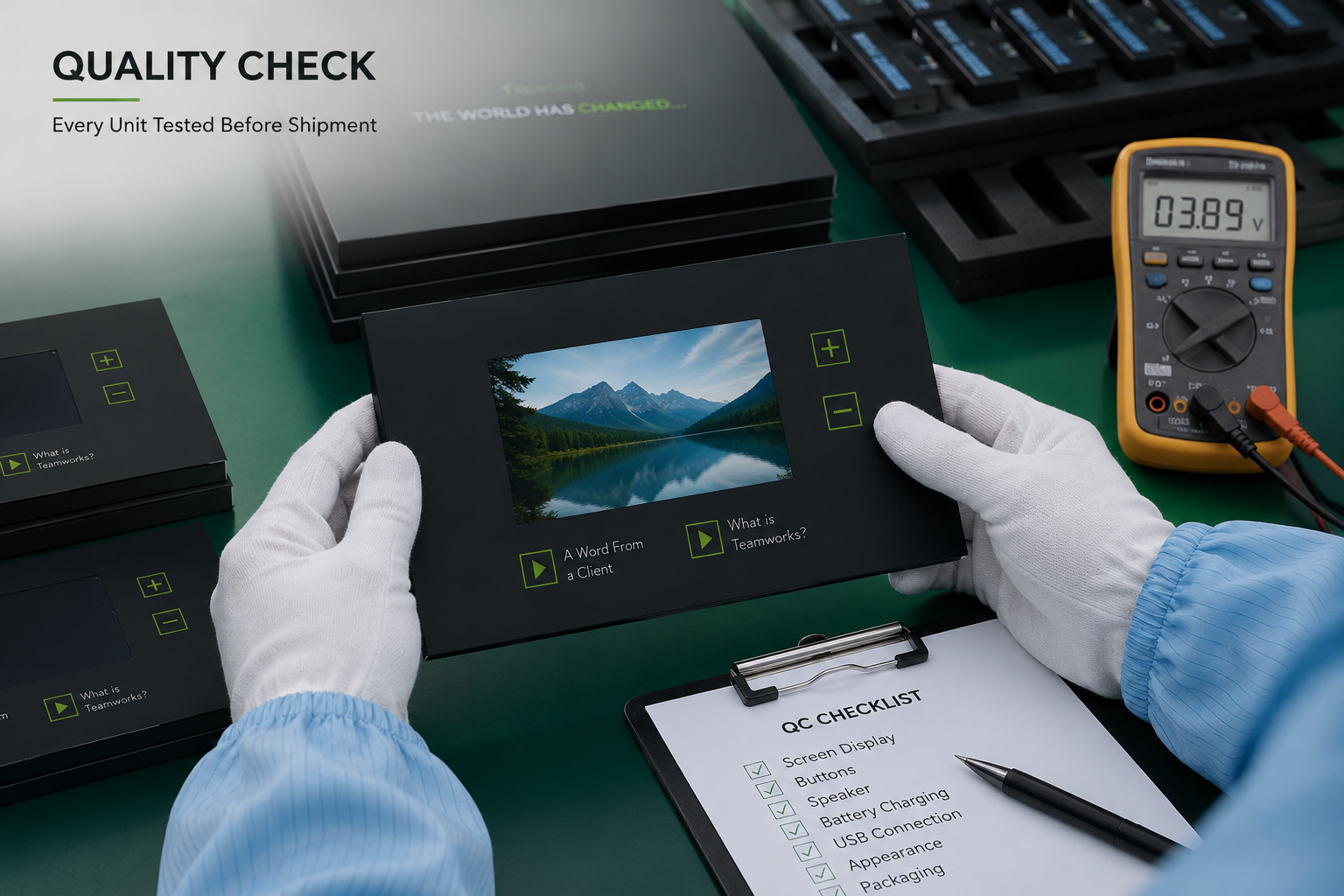
Proper QC should test:
- charging consistency
- playback stability
- button response
- battery performance
- screen defects
- carton durability
Some low-cost suppliers reduce labor costs by limiting testing procedures.
They may skip:
- full playback testing
- battery aging tests
- charging verification
- drop resistance checks
That lowers production cost, but it also increases the risk of defective units arriving after shipping.
Shipping Requires Early Planning
Because video brochures contain lithium batteries, shipping requirements are different from standard printed products.
| Shipping Method | Best For | Delivery Time |
|---|---|---|
| Express | Small urgent orders | 5–7 days |
| Air Freight | Medium-size projects | 7–15 days |
| Sea Freight | Large-volume orders | 25–45 days |
Many buyers assume sea freight is always cheaper.
But smaller sea shipments sometimes become expensive after customs handling, local delivery, port fees, and warehouse charges.
In many mid-size orders, air freight is actually more practical.
⚠️ Common Mistake:
Waiting until production finishes before discussing shipping often creates avoidable delays.
Quick Answers Buyers Often Ask
Can videos be updated after production?
Usually yes. Most video brochures allow video updates through USB connection.
What is the normal MOQ for custom video brochures?
Many factories start around 50–100 units depending on customization.
Can rush orders be arranged?
Usually yes, but rush production often increases labor and freight costs.
What causes the biggest production delays?
Artwork revisions, slow approvals, and incomplete specifications are the most common reasons.
Can video brochures ship internationally with batteries?
Yes, but compliant battery documentation and approved shipping channels are required.
Buyer Checklist Before Starting Production
Before starting your project, confirm these items first:
- Final artwork approved
- Video files confirmed
- Packaging style selected
- Screen size finalized
- Shipping address confirmed
- Internal approvals completed
- Timeline expectations discussed
- Freight method selected
Projects usually move much smoother when these details are confirmed early.
Conclusion
Successful video brochure projects depend less on luck and more on preparation, communication, realistic timelines, and understanding how real factory production actually works.
-
Internal approval delays are one of the most common causes of production slowdowns in custom packaging projects. ↩
-
CMYK printing is the standard method used in mass production packaging manufacturing. ↩
-
Small LCD batch variations are normal across consumer electronics manufacturing industries. ↩
-
LCD panels and memory chips are affected by global electronics supply chain fluctuations. ↩