


The confusion starts earlier than you think
When real estate professionals start looking for a solution, they usually don’t begin with a product name. They begin with a problem:
"I need something I can send to clients that shows a property video."
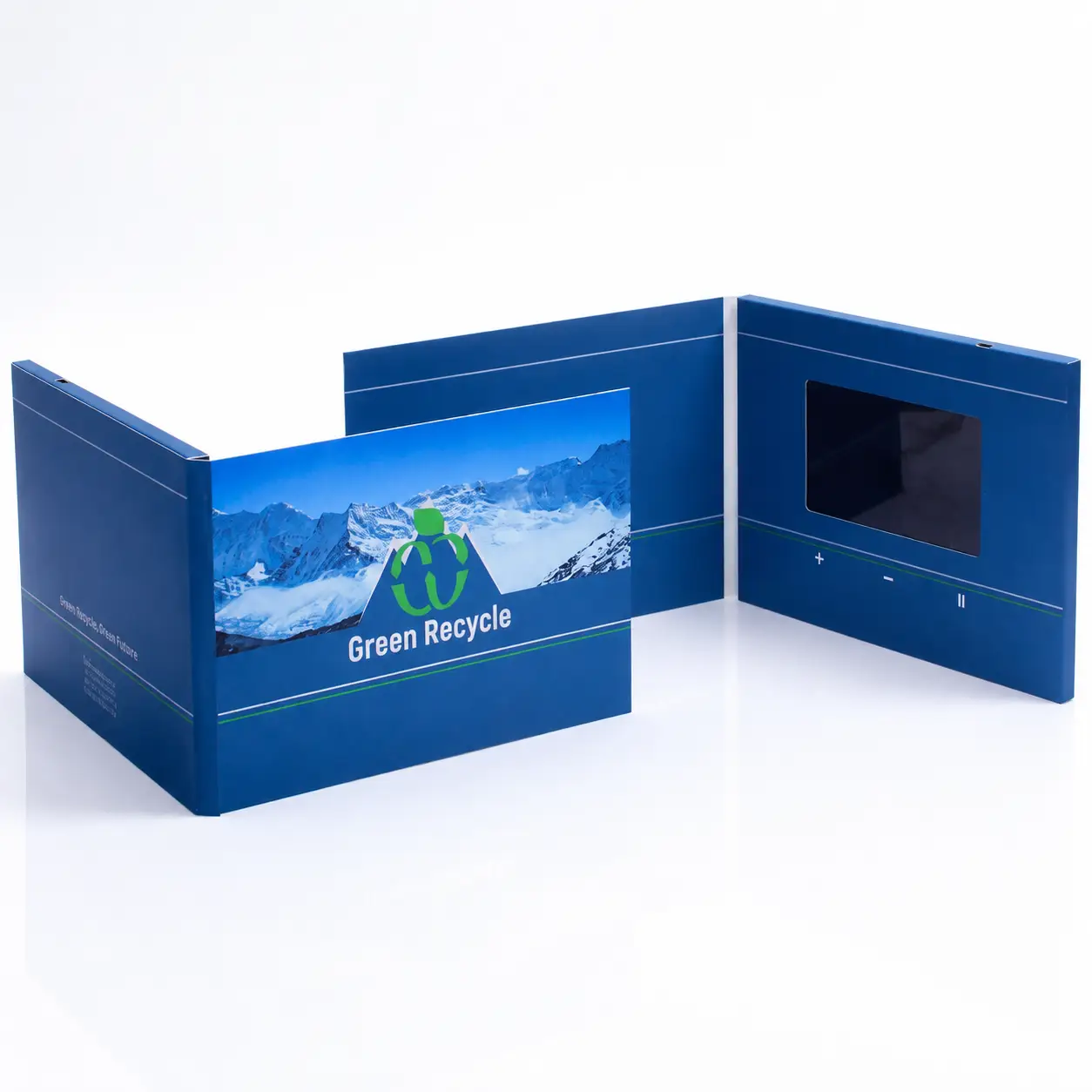
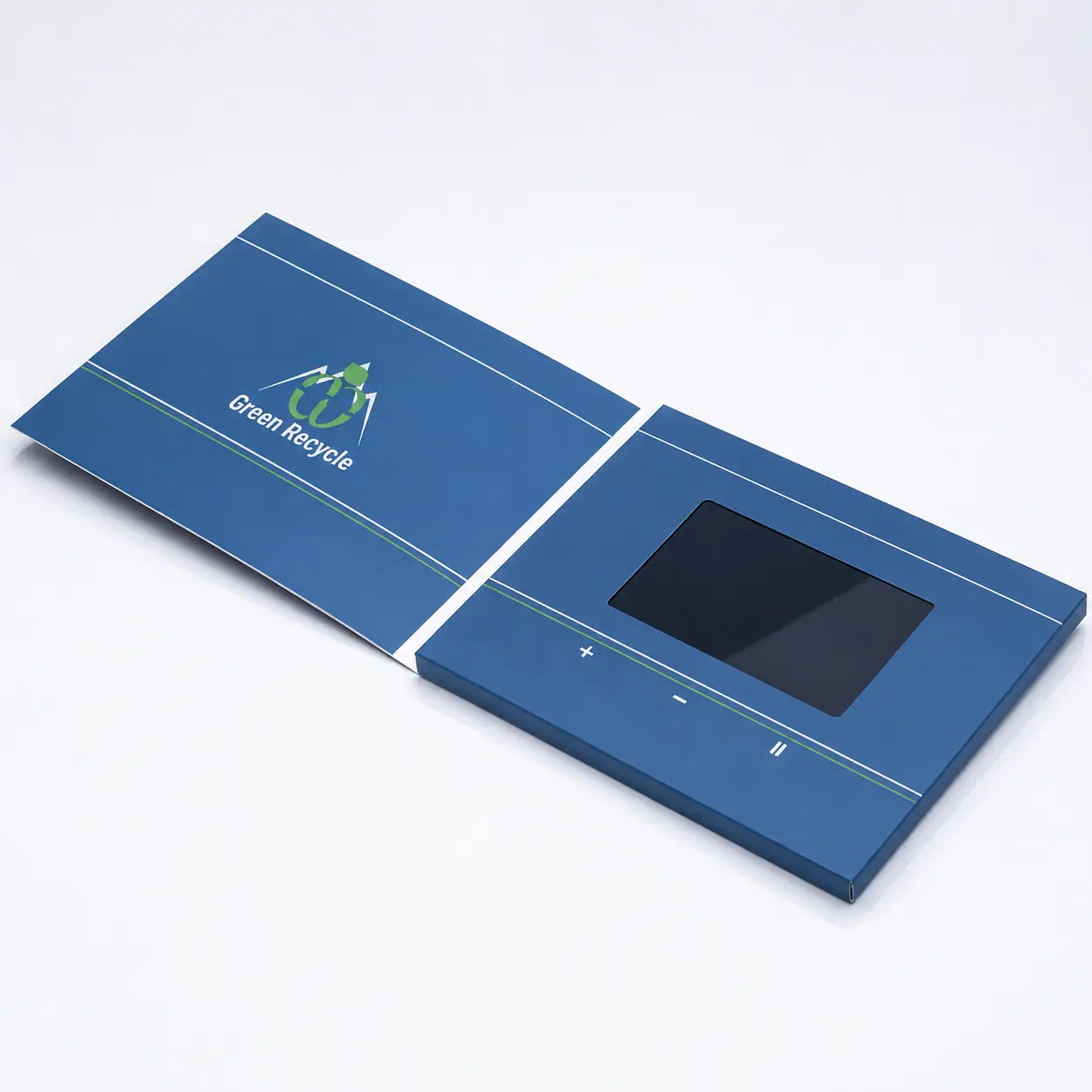
At this stage, most buyers don’t know what to call it. Some search "video mailer," others "video card," others "video brochure," and others "real estate video presentation." All of them are trying to describe the same thing — a printed piece with a built-in screen that plays video automatically when opened.1
This shows up directly in real inquiries. One real estate client, midway through a quotation, paused to confirm exactly what they were ordering:
"I want to confirm, these are for the ‘video mailer cards,’ is that correct?"
The client wasn’t confused about the product. They were confused about what to call it — which is a different problem entirely, and one that the industry’s own terminology doesn’t help with.
Video brochure and video mailer are not two different products
In real-world purchasing behavior, especially in real estate marketing, the distinction between video mailer and video brochure is not a technical decision. It’s a usage description.
"Video mailer" emphasizes the delivery method — it’s going in the mail, or being sent as outreach. "Video brochure" emphasizes the presentation format — it’s a listing tool, a leave-behind, something handed across a table.
But under the hardware, buyers are referring to the same product category: a customizable LCD video print product.2 What changes is not the screen, the battery, or the printing. What changes is how it’s used in the campaign.
Buyers don’t actually make a format decision
Across real estate inquiries, the decision process doesn’t follow the pattern most comparison articles assume — agents weighing "video brochure" against "video mailer" as competing options. Instead, it follows a much simpler path: a client describes what they need it to do, and the format label sorts itself out once pricing and screen options are on the table.
Once that happens, the questions that actually matter take over — screen size, quantity (scaled from a small trial order up to a full campaign rollout), memory capacity based on video length, and cover finish. The "mailer vs. brochure" question rarely survives past the first quotation.

Why framing this as a head-to-head comparison is misleading
Content built around "Video Mailer vs Video Brochure: Which Is Better?" creates a decision point that doesn’t actually exist for the buyer. It isn’t a competition between two products, and it isn’t a comparison in any meaningful sense — it’s a naming variation based on context.
This matters for how a buyer should approach the search. The goal isn’t to compare two products and pick a winner. The goal is to find the right configuration for a real estate video marketing campaign, and that starts with clarification, not comparison.
What actually matters once the naming question is removed
Once the terminology is out of the way, buyers consistently focus on a smaller set of real variables.
Size and presentation impact. Smaller formats suit compact, mail-ready pieces. Larger formats suit in-person listing presentations and agent recruitment material.3 The right size depends on how and where the piece will be used — not on whether it’s labeled "mailer" or "brochure."
Quantity and campaign scale. Most buyers start with a smaller trial run to test quality and response before committing to a larger print run. Exact quantities vary widely by brokerage size and campaign — there’s no fixed threshold, and a good supplier should quote small trial quantities without pushing toward a larger commitment.
Cover finish and presentation quality. Matte, soft-touch, gloss, foil stamping, and spot UV affect how premium the piece feels in a seller’s or investor’s hands — and this is typically a bigger driver of perceived quality than screen size alone.4
Content strategy. What plays on the screen matters more than what the piece is called. A property walkthrough, an agent introduction, a recruitment pitch, and a brand story each call for slightly different pacing and length.
These are the real buying decisions. Naming isn’t one of them.

Frequently Asked Questions
Is a video mailer different from a video brochure?
Not in any meaningful structural way. Both refer to the same LCD video product that plays video automatically when opened. The difference is naming based on usage context, not product design.
Which term should I use when requesting a quote?
Either works. "Video brochure" is more common in manufacturer catalogs and product listings, while "video mailer" is more often used in direct marketing and outreach contexts. A supplier familiar with real estate use cases will recognize both immediately.5
Which one should I choose for my real estate campaign?
There isn’t a choice to make between the two — they’re the same product. The decision that matters is size, quantity, finish, and content, based on whether you’re mailing it to prospects or handing it across a table in a listing presentation.
Related pages
For listing presentations, agent recruitment, and seller pitch use cases, see real estate video brochures. For direct mail campaigns, outreach, and prospecting tools, see video mailer cards.
These two pages aren’t describing competing products. They’re describing the same underlying product, positioned for two different moments in a real estate marketing campaign.
Final takeaway
The real mistake isn’t choosing the wrong product. The real mistake is believing there are two different products to choose from.
Once that confusion is removed, the buying decision becomes faster and far more predictable — because it’s based on what actually changes the outcome: size, quantity, finish, and content.
-
Based on patterns observed across real estate buyer inquiries received by CheerTrend; terminology varies by buyer even when the underlying request is the same. ↩
-
Refers to CheerTrend’s standard LCD video brochure / video mailer product line — see product specifications for the full range. ↩
-
General guidance based on common usage patterns; exact sizing should be confirmed with your supplier based on your specific campaign and presentation context. ↩
-
Cover finish options and their relative cost/impact vary by supplier — confirm available options and pricing at quotation stage. ↩
-
Terminology conventions described here reflect general industry usage and may vary by individual supplier or region. ↩