

How agents present high-end listings
A luxury listing rarely gets a second chance to make a first impression. Sellers in this segment are often comparing several agents before choosing one, and buyers walking into a showing or reviewing a private offering memo expect the presentation quality to match the price point of the property itself. A printed flyer or a static PDF can describe a property. It can’t show the light moving through a room at golden hour, or let a seller actually see the walkthrough video before they’ve committed to listing with you.
This is one reason video brochures have become a recognizable tool in luxury real estate marketing — and why agents sourcing them tend to look for a manufacturer who understands real estate use cases specifically, rather than a generic print supplier.
That’s the gap a video brochure is built to close — but for high-end listings, how it’s built matters more than for a standard mail piece.
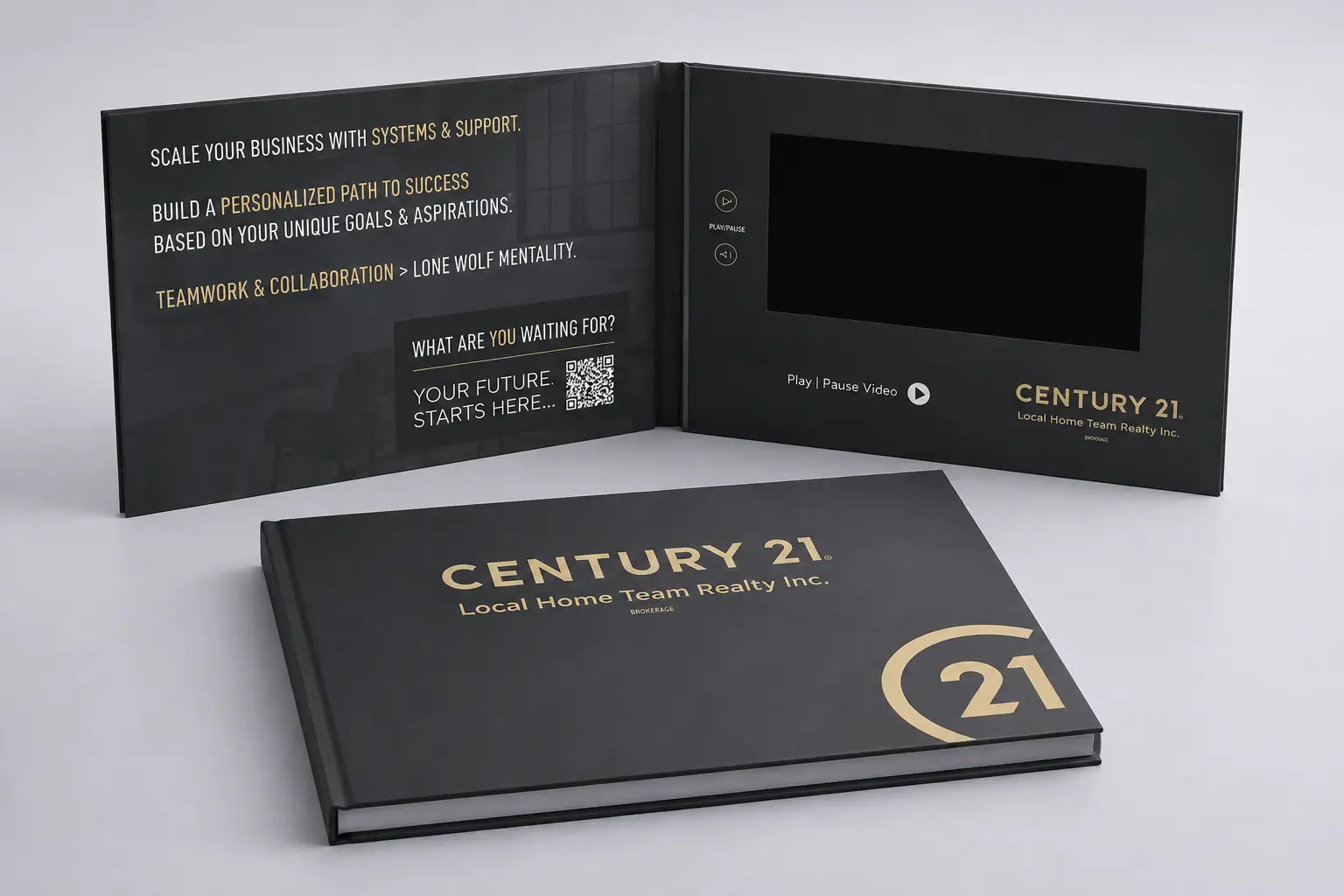
Why luxury agents use video brochures in listing presentations
At the high end of a market, a seller is usually interviewing more than one agent before deciding who gets the listing. Every agent in that conversation can talk about marketing reach, professional photography, and a strong network. Far fewer can hand the seller something that plays a video the moment it’s opened — a walkthrough, a comparable sale, or a personal introduction — while they’re sitting at the kitchen table making the decision.
That’s the specific advantage a video brochure offers in a listing pitch: it’s not just leave-behind material, it’s a moment inside the presentation itself. A static comp sheet or a printed brochure gets reviewed later, if at all. A piece that plays video in the seller’s hands gets engaged with immediately, while the agent is still in the room to frame what they’re seeing.
For buyer-facing use, the same logic applies in reverse — a private offering sent to a short list of qualified buyers, or a piece left at a showing, carries more weight when it does something a typical listing email or PDF can’t.
What changes when the listing is high-end
The underlying product — a printed piece with an embedded screen that plays video on open — doesn’t change based on price point. What does change is the level of finish and customization buyers in this segment tend to expect, because the brochure itself becomes part of how the property (and the agent) is perceived. For a seller deciding between agents, the presentation itself can become part of that decision.
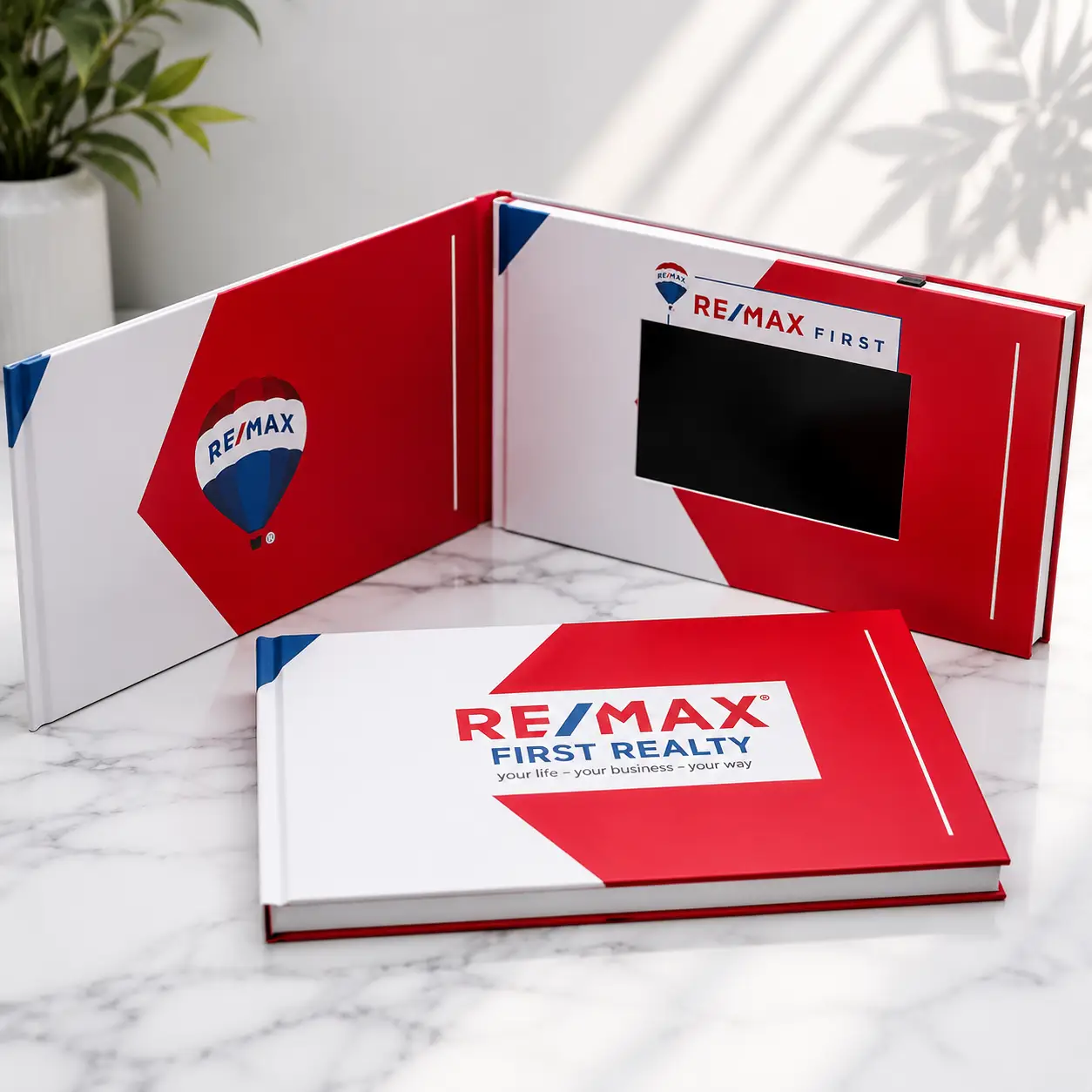
One real example illustrates this well. A returning customer, placing a repeat order, brought in an outside graphic designer specifically to create the brochure cover rather than using a standard template — paired with a 10.1" IPS screen, the largest format available, for a presentation-grade piece rather than a mail-ready one.1 That’s a meaningfully different brief than a standard listing flyer: it’s treating the brochure as a designed object, not a printed handout.
This points to a real distinction worth making for high-end listings:
Screen size. Larger formats — 7" and above — read as more substantial in person, which matters when the piece is being handed across a table during a listing presentation rather than dropped in a mailbox. A 10" screen has noticeably more presence than a 4.3" one when a seller is holding it.
Cover finish. Soft-touch matte, foil-stamped branding, and spot UV accents change how the piece feels before the screen is even switched on. For a luxury listing, that tactile impression often does as much work as the video itself.
Custom design input. Bringing in a graphic designer — rather than dropping a logo onto a stock template — produces a noticeably different result, and is a common step for agents who treat the brochure as part of their personal brand, not just a one-off marketing item.
Video content. A cinematic property walkthrough, drone footage of the grounds, or a personal introduction from the agent all suit a high-end presentation differently than a quick feature highlight reel would for a standard listing.
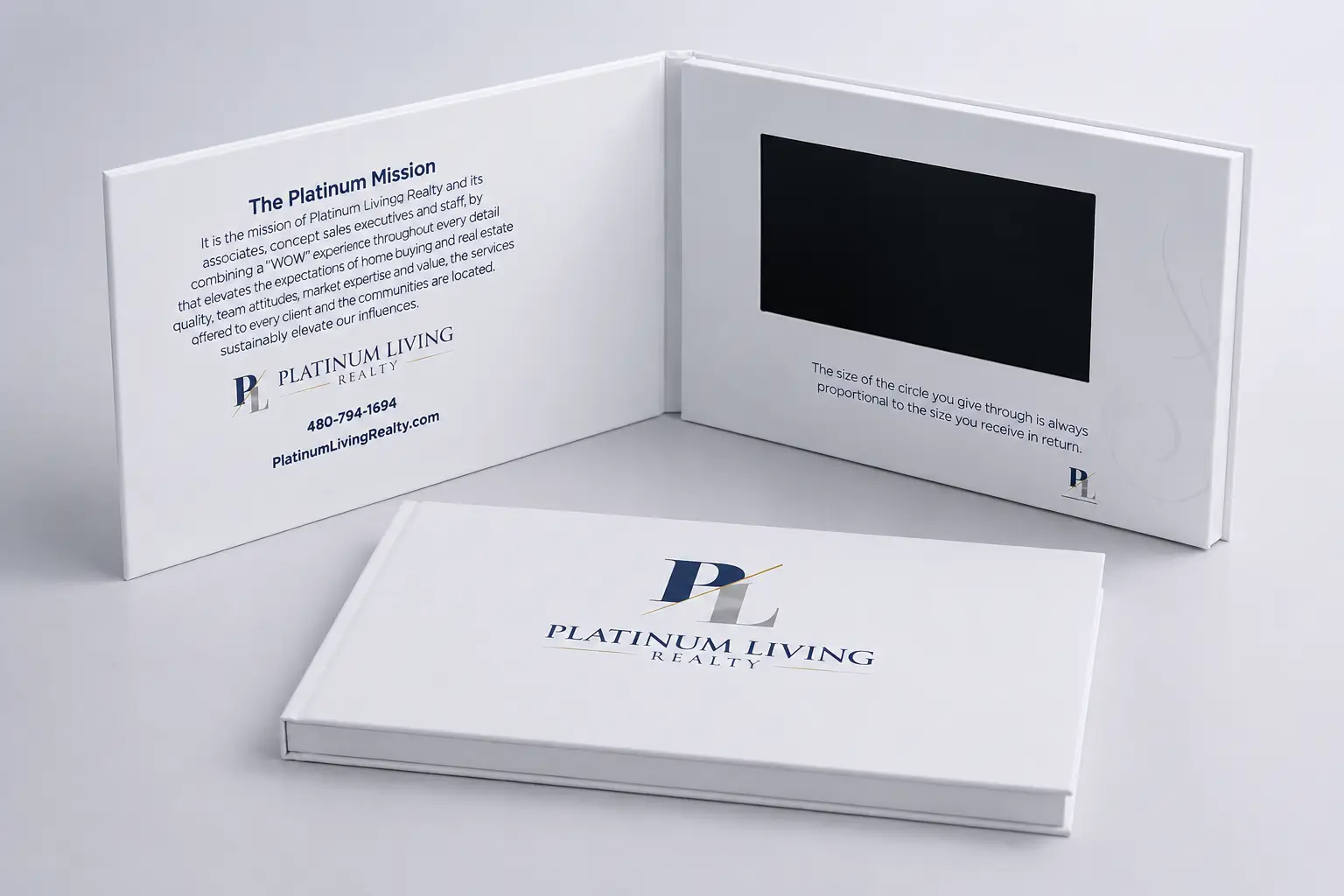
Traditional brochure vs. video brochure for luxury listings
| Traditional brochure | Video brochure | |
|---|---|---|
| First impression | Printed photo and text | Plays a video the moment it’s opened |
| Engagement | Read later, if at all | Engaged with immediately, in the room |
| Differentiation | Comparable to every other agent’s leave-behind | Few competing agents present this way |
| Best suited for | Quick reference, comp sheets | Listing pitches, private offerings, recruitment |
Neither replaces the other entirely — a video brochure still benefits from clean print design and good photography. The difference is what happens in the seller’s hands in the first ten seconds.
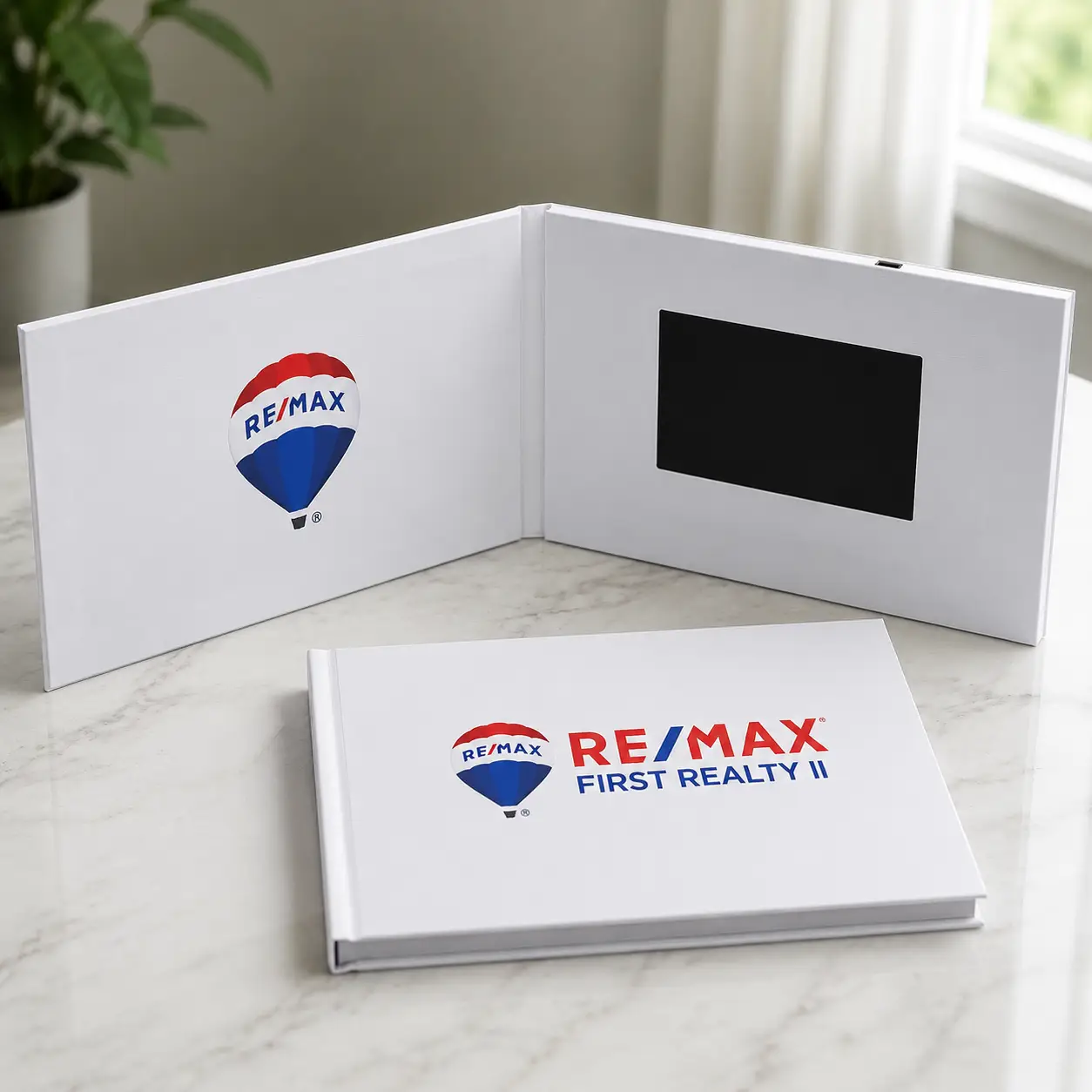
Where video brochures fit in a luxury listing strategy
For agents working at the high end of a market, a video brochure typically shows up in a few specific moments:
The listing pitch. Walking into a seller’s home with a brochure that already contains a polished video — sometimes of a comparable property, sometimes a personal introduction — signals a level of preparation that a printed comp sheet doesn’t.
The private offering. For off-market or invitation-only listings, a video brochure sent to a short list of qualified buyers can carry weight that a generic email link doesn’t, particularly with buyers who are used to being marketed to constantly and tune most of it out.
Investor and developer presentations. For new development or multi-unit luxury projects, a video brochure can serve a similar function to an institutional pitch deck — except it plays the video itself rather than describing it.
Agent branding and recruitment. Some agents use a designed, premium brochure as a calling card independent of any single listing — something left with a referral partner or a prospective seller that represents their personal brand rather than one specific property.
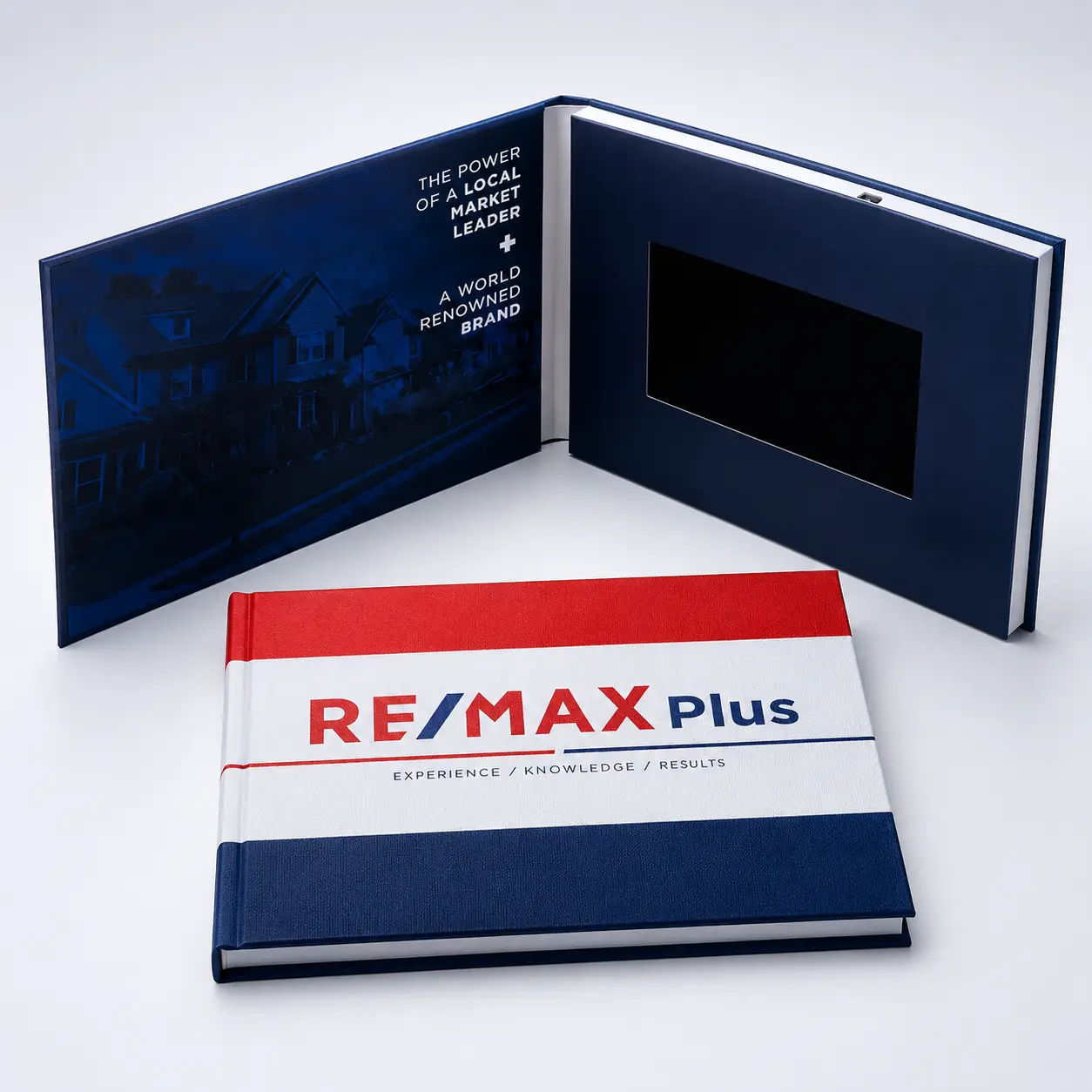
What this doesn’t require
It’s worth being direct about what isn’t necessary here. A luxury positioning doesn’t require the largest screen, the most expensive finish, or a five-figure design budget. The 10.1" example above is one real way an agent chose to use the format — not a requirement. Plenty of high-end listings are presented effectively with a 5" or 7" screen and a clean, well-printed cover. The screen size and finish should match the property and the agent’s personal brand, not an assumption that bigger is automatically better.
What does matter consistently is treating the brochure as a presentation piece rather than a giveaway — which is less about budget and more about the design decisions: a cover that looks intentional, video content that’s been thought through rather than thrown together, and a finish that doesn’t feel like an afterthought.
A note on getting started
If you’re presenting a luxury listing for the first time with a video brochure, you don’t need to start by committing to the largest, most customized version. A small order — a handful of units in the size and finish you’re considering — lets you see the actual print quality and screen brightness in person before deciding how far to take the design for a full listing campaign or a repeat order down the line.
Related pages
For general guidance on getting started with video brochures in real estate, see real estate video brochures. For pricing across screen sizes, finishes, and quantities, see our pricing guide. If you’d like to see and hold the print quality and screen brightness before deciding on a design direction, you can also request a sample.
-
Based on a real customer order; specific identifying details have been generalized. Screen size and finish choices reflect one buyer’s decision and are not a recommended standard for all luxury listings. ↩