

A Procurement Guide for B2B Buyers
Receiving two quotes for the same video brochure project — one at $8 per unit, another at $20 — is not unusual. The gap is rarely a mistake or a negotiating tactic. It almost always reflects real differences in what each supplier is actually delivering.
This guide explains what drives those differences, how to read a quote accurately, and what to evaluate before committing to a supplier.
What’s Actually Inside a Video Brochure
Price comparisons don’t make sense without a clear picture of what’s being priced.
The main components inside a standard video brochure — each has a budget version and a reliable version.
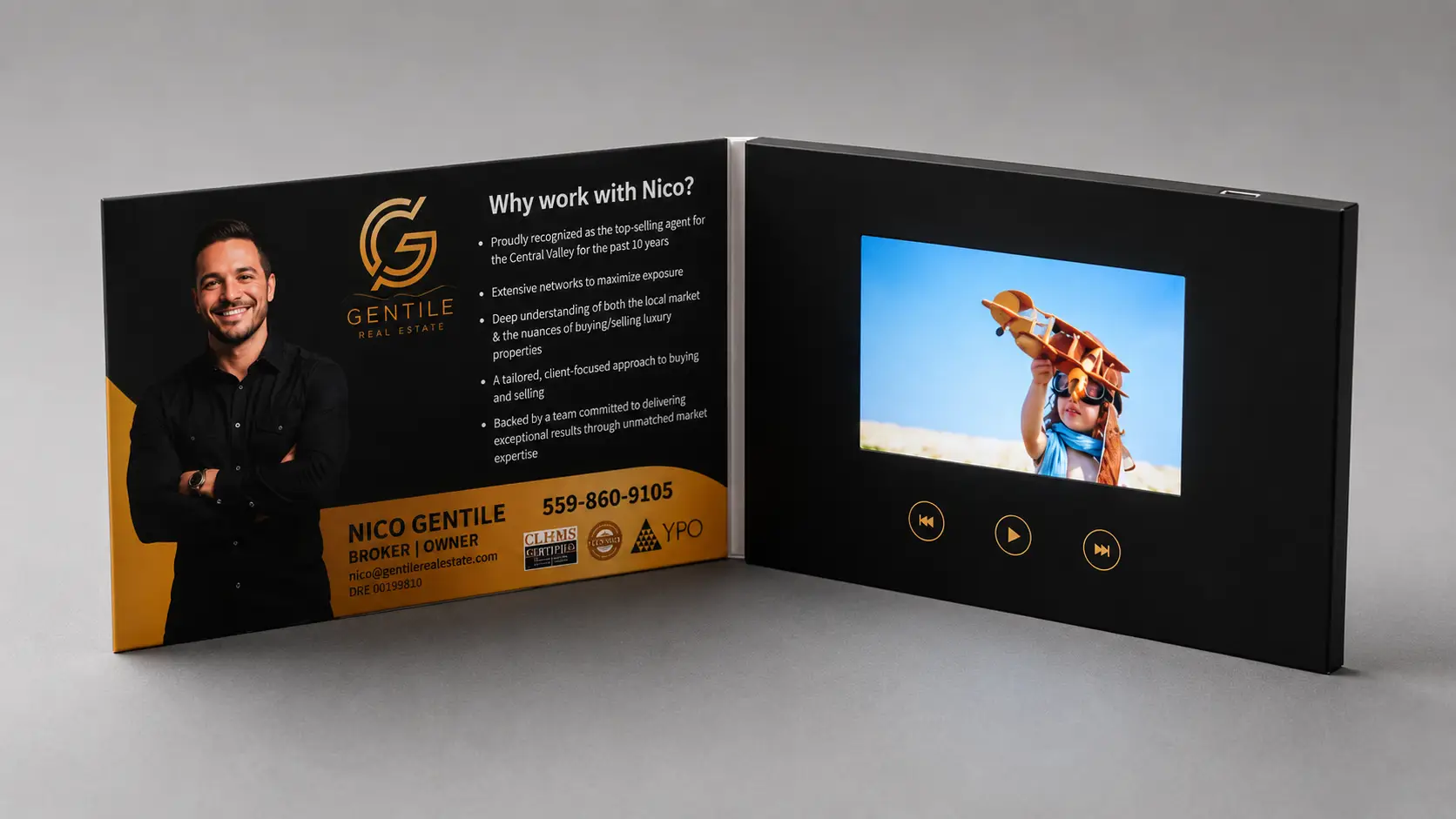
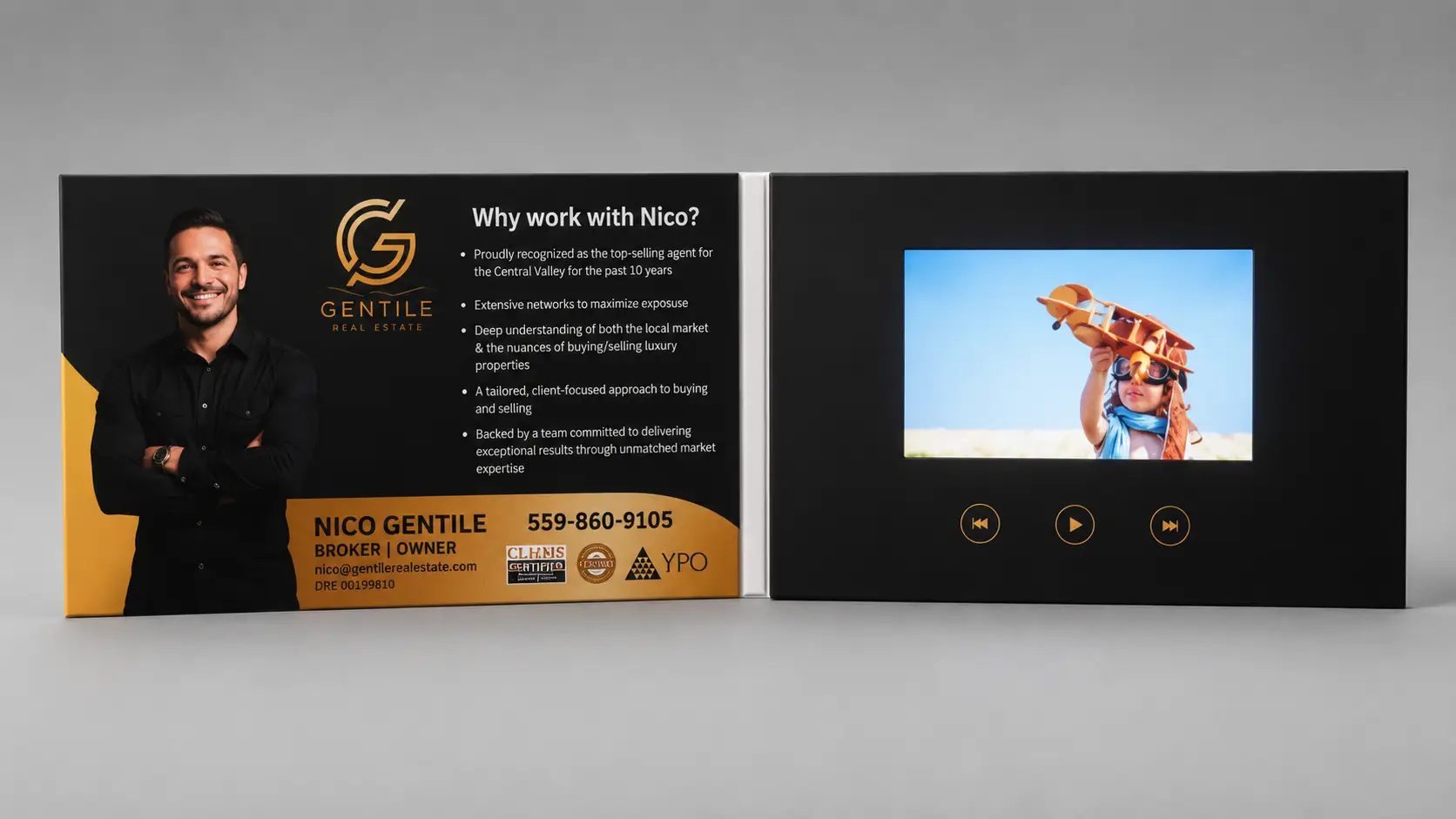
A video brochure isn’t a printed piece with a screen attached. It’s a product that combines several distinct components — each with its own cost range and quality tier:
- LCD screen — the largest single cost driver
- Rechargeable battery — affects playback reliability and lifespan
- Motherboard and speaker — determines playback stability and audio quality
- Manual assembly — wiring, alignment, gluing, unit-level testing
- Printed packaging — cover material, structure, surface finishing
- Video preloading — software setup and content loading before shipment
- QC inspection — functional testing before the order leaves the factory
Every one of these has a budget version and a reliable version. Suppliers who compete on price are cutting costs somewhere in this list. The question is where — and whether that trade-off matters for your specific project.
Major Cost Drivers
Screen Type and Size
The LCD screen typically accounts for the largest share of unit cost.1
IPS panels (right) offer visibly better color accuracy and brightness compared to standard TFT (left).
| Screen Type | Visual Quality | Typical Use Case |
|---|---|---|
| TFT | Basic | Entry-level promotions |
| IPS | Premium | Sales presentations, real estate |
| HD IPS | Luxury | High-end campaigns, VIP gifting |
IPS panels offer wider viewing angles, better color accuracy, and higher brightness. The price difference between TFT and IPS is meaningful — but so is the visual difference when a client opens the brochure in a meeting.
Screen size compounds this further. Larger panels require larger batteries, heavier packaging structures, and higher freight — costs that ripple through the entire unit price.
Battery Quality
Battery quality is one of the least visible factors in a quote, and one of the most consequential in use.2
Suppliers who reduce costs here typically use lower-capacity or recycled cells. The practical result: shorter playback time, unstable charging behavior, and in some cases, early degradation or swelling. Sourcing reliable battery components requires stricter supplier standards and more thorough incoming testing — both of which carry real cost.
Assembly Standards
Video brochures are still largely hand-assembled. Workers align screens, connect internal wiring, apply adhesives, and inspect each unit before packaging. Factories with higher labor standards produce cleaner edges, more consistent alignment, and better overall durability. That level of assembly costs more — and it shows in the finished product.
Motherboard and Speaker
Cheaper motherboards produce unstable playback: lag, freezing, or inconsistent behavior across units. Weak speakers reduce the overall experience even when everything else looks polished. For a product designed to make a strong first impression, both matter.
Why Quotes Differ — Beyond Components
Hidden Exclusions
A low quote often looks competitive because certain items simply aren’t included yet.
Common exclusions in entry-level quotes:
- Video preloading
- Upgraded battery capacity
- Button controls or magnetic closure
- Premium cover material or hardcover structure
- QC inspection beyond basic visual checks
- DDP shipping (buyer handles all customs and freight)
- Defect support or warranty coverage
These items are typically presented as optional upgrades during production. By the time the project is complete, the total cost has shifted — sometimes past the price of the more transparent supplier.
Factory vs. Trading Company
A manufacturer that controls LCD assembly, printing, packaging, and final testing under one roof has better cost control, faster internal communication, and clearer accountability when issues arise.
Trading companies coordinate across multiple suppliers. This model can add markup, introduce communication delays, and create gaps in quality oversight — particularly when artwork revisions or production problems require quick decisions.
Shipping Terms
Shipping terms change the real landed cost more than most buyers anticipate.3
| Term | What It Means | Buyer Handles |
|---|---|---|
| EXW | Pickup from factory door | Freight, customs, duties, local delivery |
| FOB | Supplier ships to port | Customs, duties, local delivery |
| DDP | Supplier delivers to destination | Nothing |
An EXW quote at $10/unit can easily land higher than a DDP quote at $13/unit once freight, customs, and local delivery are factored in. For buyers in the US and UK, DDP creates more predictable project costs and fewer logistics variables to manage.
How to Evaluate Suppliers
Standardize the Comparison
Most quote confusion comes from comparing products that aren’t actually equivalent. Before drawing any conclusions from pricing, align the specifications:
- Screen type (IPS or TFT?) and brightness rating
- Battery capacity
- Whether video preloading is included
- Packaging structure (softcover, hardcover, magnetic closure?)
- Shipping terms
- QC process and inspection stages
- Defect handling policy
Two quotes built on different specs aren’t comparable. The cheaper one may simply include less.
Request a Sample

A physical sample review before mass production is standard practice for brand-level projects.
A sample reveals what photos and spec sheets cannot. Playback smoothness, charging behavior, screen brightness, button response, packaging feel, and print quality all become immediately clear during physical testing.
In the video brochure category, buyers who skip samples and order based on online listings are consistently more likely to encounter quality issues at delivery.4 For any project where brand presentation is the point, a sample review before mass production is standard practice.
Assess Communication Quality
Communication quality is a reliable predictor of how a project will actually run.
Suppliers who answer specification questions clearly and quickly — screen type, battery capacity, QC process, defect policy — demonstrate both product knowledge and project transparency. Suppliers who respond vaguely, deflect details, or change specifications mid-discussion are showing you something about how they manage production.
For international projects with tight timelines, this matters as much as the product specs themselves.
Questions Worth Asking Before You Commit
These questions help surface the real differences between suppliers before production starts:
- Is the screen IPS or TFT — and what is the brightness specification?
- What battery capacity is standard, and what does an upgrade involve?
- Is video preloading included in the quoted price?
- How many QC inspections are performed, and at what production stages?
- What is the defect handling process after delivery?
- Is DDP shipping available to my country?
- Can you share production photos from a recent comparable project?
The answers — and the speed and clarity with which they’re provided — tell you a great deal about how the supplier manages projects.5
Summary: What the Price Gap Actually Reflects

A side-by-side overview of where the real differences show up between budget and reliable suppliers.
| Area | Lower-Cost Supplier | Reliable Supplier |
|---|---|---|
| Screen | TFT or recycled panels | Stable IPS or high-grade TFT |
| Battery | Smaller or untested cells | Tested, stable capacity |
| Assembly | Basic finishing | Cleaner alignment, consistent quality |
| QC | Limited or random checks | Multiple inspection stages |
| Communication | Slow or inconsistent | Organized and responsive |
| Quote Transparency | Hidden costs added later | Included from the start |
| Shipping | Typically EXW | DDP available |
| After-Sales | Limited | Clear defect and warranty process |
| Project Risk | Higher | Lower |
Final Thought
The price gap between video brochure suppliers almost always reflects real differences — in components, assembly standards, service depth, and project risk. The right question isn’t which supplier is cheapest. It’s which supplier’s quality level, communication standards, and execution reliability match what your specific project requires.
For projects where brand presentation is the point, the cost of a failed delivery — replacement units, delayed campaigns, expedited shipping — typically exceeds the savings from the lowest quote.
If you’re comparing configurations or need guidance on screen type, battery options, packaging structure, or landed cost estimates, the CheerTrend team is available to help before you commit to production.
Footnotes
-
Screen cost varies significantly by panel type and size. IPS panels typically cost 30–60% more than comparable TFT panels at the component level, depending on brightness spec and supplier tier. ↩
-
Battery capacity in video brochures is typically rated in mAh. A standard 400–600mAh cell supports 60–90 minutes of continuous playback; lower-capacity or recycled cells may deliver significantly less under real-world conditions. ↩
-
EXW (Ex Works), FOB (Free on Board), and DDP (Delivered Duty Paid) are standard Incoterms defined by the International Chamber of Commerce. Each term shifts a different portion of freight, customs, and risk responsibility between buyer and seller. ↩
-
Sample requests are standard practice in custom manufacturing procurement. For video brochures specifically, key variables — screen brightness, playback stability, packaging rigidity, print registration — are difficult to assess from digital renderings or catalog photos alone. ↩
-
Response time and specification transparency during the pre-sales stage are consistent indicators of a supplier’s project management standards. Suppliers who cannot clearly answer basic technical questions before the order are unlikely to resolve production issues efficiently during it. ↩