


If you’re sourcing custom video brochures in 2026, pricing is usually the first question — and rarely a simple one to answer.
A basic promotional video brochure can cost under $10 per unit.
A premium luxury piece with an IPS screen, rigid box packaging, and high-end print finishes? That can cost several times more.
Both products may look similar in a supplier’s catalog. But the difference is what’s inside.
This guide breaks down:
- What actually drives video brochure pricing
- Where hidden costs tend to appear
- What budget range makes sense for your project
Custom Video Brochure Pricing: Market Overview for 2026
Below is a general price reference for custom video brochures manufactured in China, based on standard bulk orders.^[1]
| Screen Size | Typical Configuration | Typical MOQ | Price Range (USD) |
|---|---|---|---|
| 2.4 inch | Small memory, standard print | 100 pcs | $9 – $14 |
| 4.3 inch | Standard promotional model | 100 pcs | $12 – $18 |
| 5 inch | IPS optional | 100 pcs | $14 – $22 |
| 7 inch | HD screen, larger battery | 50–100 pcs | $18 – $28 |
| 10 inch | Premium presentation format | 50 pcs | $25 – $40 |
Looking for a faster overview by screen size and quantity?
👉View our simplified video brochure price guide →
These prices typically include:
- LCD screen
- Rechargeable battery
- PCB board
- Speaker
- Standard CMYK printing
- USB charging cable
- Basic foam packaging
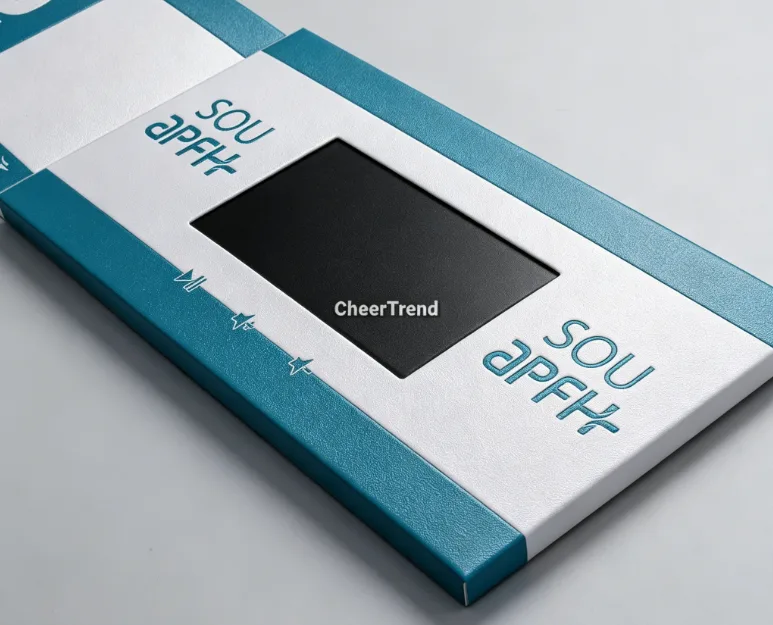
Premium features — upgraded screens, larger batteries, specialty print finishes, or rigid box packaging — are priced separately. They can significantly increase the per-unit cost.
Why Two Quotes for the "Same" Product Can Look Very Different
Many buyers request quotes from three or four suppliers.
They receive prices that vary by 50% or more — for what looks like the same product.
This isn’t unusual.
And it doesn’t always mean one supplier is dishonest.
Video brochures are highly customizable electronic products.
Small specification differences — screen grade, battery cell quality, memory size, assembly standards — translate directly into cost differences.
You can’t see them in photos. But you’ll definitely see them in use.
Understanding what drives those differences is the most practical way to evaluate supplier quotes accurately.
Screen Quality: The Largest Single Cost Driver
Screen quality accounts for a large part of video brochure manufacturing cost.
And it varies more than most buyers expect.
Common screen options include:
- Standard TFT displays (lower end)
- HD screens (higher resolution)
- IPS panels (better brightness and wider viewing angles)
- Touch screens (interactive presentations)
Each step up in screen quality increases both cost and perceived presentation value.
For luxury brands, real estate presentations, and high-value marketing campaigns, IPS screens are usually worth the upgrade.
The visual difference is immediate — especially in well-lit environments.
New vs. Used Screens: A Risk Most Buyers Don’t Check
One of the biggest hidden risks in video brochure sourcing is the use of recycled or refurbished LCD panels.^[2]
Some suppliers use these components to cut costs — without telling you.
The result? Lower brightness, dead pixels, color inconsistency, or early failure.
These problems may not show up during initial testing.
But they surface after products have been in storage or use for several months.
Confirming in writing that your supplier uses new LCD panels is a simple step.
It significantly reduces long-term product risk.
LCD panel prices also fluctuate with global supply chains.
Factories may use overstock inventory or alternative screen suppliers to manage costs.
That’s another reason pricing can vary across manufacturers — even for similar-looking configurations.
Memory Capacity: How Much Do You Actually Need?
Memory size is frequently misunderstood.
Many low-cost quotes are based on very small memory — 128MB or 256MB.
That may only support a single short video at standard resolution.
If your content includes multiple videos, HD playback, or longer presentations, you’ll likely need 1GB, 2GB, or 4GB.
Some projects with large content libraries require 8GB or more.
But here’s the most common mistake first-time buyers make: overestimating how much memory they need.
In many projects, 512MB to 1GB is enough.
Video compression alone can significantly reduce file sizes without noticeably affecting playback quality.
The practical approach? Calculate your actual video file sizes before choosing memory capacity.
Choosing more memory than you need adds cost without adding value.
Battery Quality: Frequently Overlooked, Rarely Unimportant
Battery quality is one of the most underestimated factors in video brochure manufacturing.^[3]
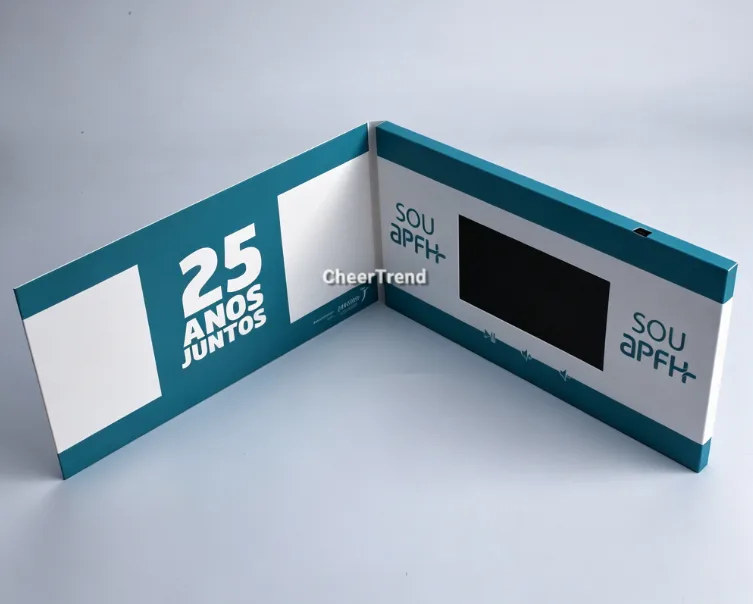
Most buyers focus on battery capacity — the mAh rating.
But battery cell quality matters considerably more.
Low-grade battery cells can cause:
- Short playback times
- Fast performance degradation
- Swelling after extended storage
- Charging instability
A brochure may work fine during initial testing — then fail after sitting in a warehouse for several months.
For large marketing campaigns or international shipments with long delivery timelines, that’s a real financial risk.
Professional buyers always ask suppliers about:
- Battery cell sourcing
- Protection circuitry
- Over-charge and over-discharge protection
These details are rarely volunteered. But they directly affect long-term product reliability.
Printing and Packaging: What the Client Touches First
Printing quality is consistently underestimated — both as a cost factor and as a quality signal.
A brochure may work perfectly. But weak printing immediately lowers perceived value.
In many real-world presentations, packaging quality shapes client perception before the video even starts playing.
Premium print finishes include:
- Soft-touch lamination
- Spot UV
- Gold or silver foil stamping
- Embossing
- Textured paper
- Magnetic closure
- Rigid gift box construction
Each option adds to manufacturing cost.
And when executed well, it adds proportionally to how the product is received.
For industries where brand impression is central — luxury goods, high-end real estate, corporate investor presentations — print quality is never the place to cut your budget.
Typical Budget Ranges by Industry
| Industry | Typical Configuration | Budget Per Unit |
|---|---|---|
| Real Estate | 5" or 7" IPS screen, premium print | $15 – $35 |
| Medical & Healthcare | Reliable playback, educational content | $12 – $28 |
| Luxury Brands | IPS screen, rigid box, premium finishes | $25 – $60+ |
| Education & Training | Higher quantity, standard configuration | $7 – $18 |
| Automotive | Dealership presentations, product launches | $15 – $40 |
| Travel & Hospitality | Resort and hotel introductions | $12 – $30 |
| Non-profit & Government | Fundraising and reporting presentations | $10 – $25 |
MOQ and the Cost of Small Orders
MOQ varies depending on how much customization you need.
| Product Type | Typical MOQ |
|---|---|
| Standard stock model | 1–10 pcs |
| Sample order | 1 pc |
| Standard video brochure | 50–100 pcs |
| Fully customized project | 100–200 pcs |
Small orders cost more per unit.
Why? Setup costs — artwork processing, printing preparation, video loading, button programming, assembly testing — are spread across fewer units.
The per-unit cost difference between a 50-piece order and a 500-piece order can be substantial.
Sample Costs in 2026
Most professional buyers order a sample before committing to mass production.
| Sample Type | Estimated Cost |
|---|---|
| Existing stock sample | $30 – $80 |
| Fully customized sample | $80 – $200+ |
Customized samples typically include printed artwork, video upload, button setup, and packaging verification.
Once approved, keep the sample as a production reference.
It helps avoid misunderstandings about color accuracy, print finish, screen quality, and packaging details during mass production.
Some suppliers apply sample costs as a credit toward bulk orders.
Why Some Factories Price Significantly Lower
Pricing well below market rates isn’t always a sign of manufacturing efficiency.
It often reflects quality cuts that aren’t visible in quotes or product photos.
Common sources of below-market pricing:
- Recycled or lower-grade screens
- Low-quality battery cells
- Reduced quality inspection
- Skipped aging tests before shipment
- Less rigorous assembly standards
These decisions lower manufacturing costs.
But they also increase the risk of product failures, client complaints, and replacement costs after delivery — expenses that usually exceed whatever you saved on unit pricing.^[4]
What to Prepare Before Requesting a Quote
A complete inquiry gets you a more accurate quote — and lowers the risk of price changes after production starts.

Before contacting suppliers, prepare the following:
- Screen size and type preference
- Estimated quantity
- Memory requirement
- Approximate video length and file size
- Battery capacity expectations
- Printing requirements and finish preferences
- Packaging type
- Delivery destination
- Required deadline
Also ask suppliers directly:
- Are the screens new?
- What battery protection features are included?
- Do you perform aging tests before shipment?
- What is and isn’t included in the quoted price?
Shipping and Import Costs
International shipping for video brochures costs more than standard printed materials.
These products contain electronic components and batteries. That affects both freight rates and documentation requirements.
Packaging upgrades — rigid boxes, premium inserts, custom outer cartons — also increase shipping weight and volume, which adds to landed cost.
Budget for shipping, import duties, and local fulfillment from the beginning. That way, you avoid surprises after production is complete.
Summary: Three Practical Budget Levels
| Budget Level | Typical Outcome |
|---|---|
| $7 – $15 per unit | Basic promotional quality |
| $15 – $35 per unit | Professional quality, best overall value |
| $35+ per unit | Premium luxury presentation |
For most businesses, the middle range offers the most reliable balance between appearance, playback performance, and long-term reliability.
The entry-level range works for high-volume promotional campaigns where unit cost is the main constraint.
The premium range is right when the brochure itself is part of the brand experience.
In all cases, the cheapest option carries the most risk.
Quality problems in video brochure manufacturing rarely appear immediately.
They tend to surface after delivery, after distribution, and after the chance to fix them has passed.
Ready to Get an Accurate Quote for Your Project?
If you have a project in mind and want real pricing based on your exact specs, we can help.
Send us your requirements, and we’ll provide a detailed quote within 24 hours — including:
- Screen options
- Memory recommendations
- Print specifications
- A free design mockup
Footnotes
^[1]: Pricing based on bulk orders (MOQ 100–500 units) from Chinese manufacturers as of May 2026. Exchange rate: 1 USD ≈ 7.25 CNY.
^[2]: Recycled LCD panels are sometimes sourced from discarded smartphones, tablets, or factory rejects. Always request a certificate of new components.
^[3]: Battery cells graded A (highest) to C (lowest). Grade C cells are common in sub-$10 video brochures and typically fail within 6–12 months.
^[4]: Aging tests simulate 2–4 weeks of usage over 48–72 hours. Factories that skip this step save $0.50–$1.50 per unit but increase failure risk by an estimated 15–25%.